
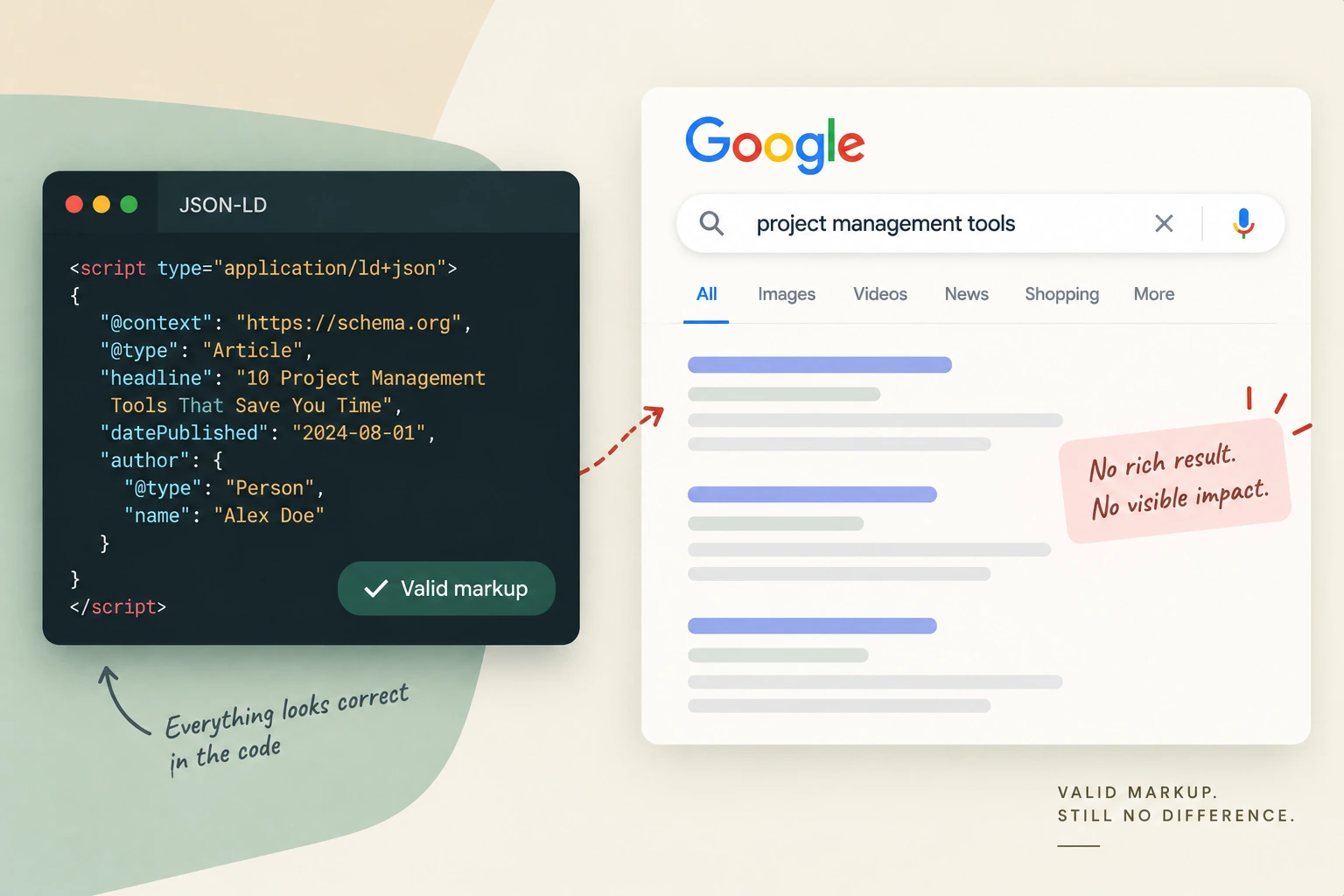
Structured data establishes eligibility for a rich result rather than influencing ranking, so its value depends entirely on whether a feature exists for your content type. HowTo rich results were removed in 2023 and FAQ rich results were removed in 2026, which means a large number of Indian sites are maintaining markup that now renders nothing. For a B2B services firm selling by enquiry there is usually no rich result available at all, and implementing schema will produce no visible change.
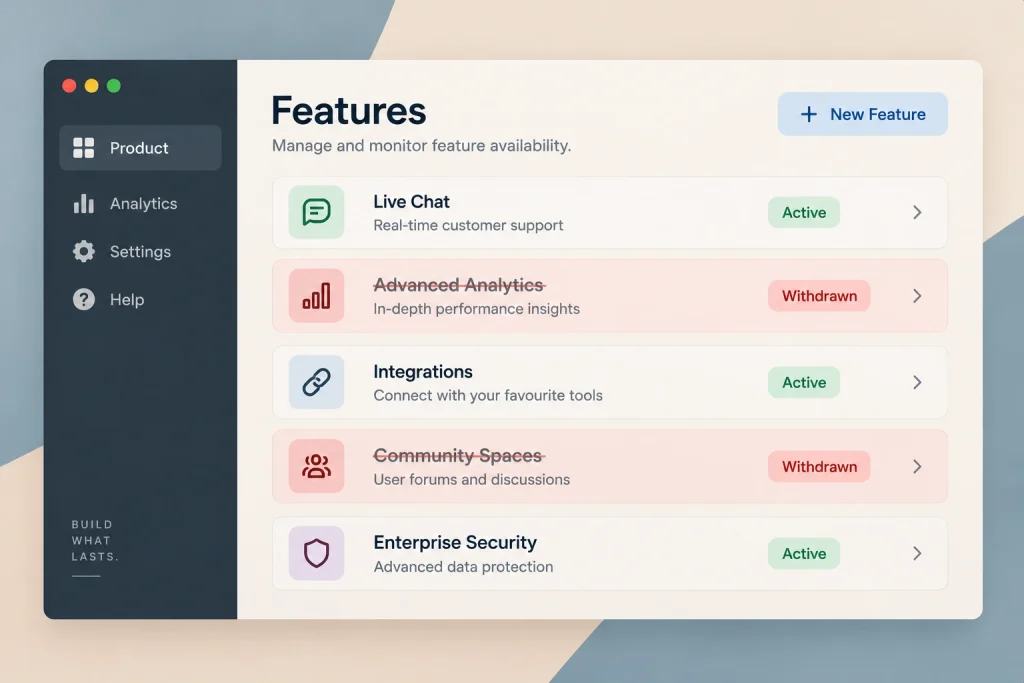
There is a good chance your website contains structured data for two things that no longer exist.
HowTo rich results were removed in 2023. FAQ rich results were cut back in 2023 to a narrow set of government and health sites, and removed altogether in 2026.
Those two were the most commonly implemented types on Indian business sites, because they were easy to add, easy to demonstrate in a report, and for a while they visibly expanded your entry on the results page.
The markup is still there. It is still valid. It renders nothing.
Nobody sends an email when a feature is withdrawn, so a great many sites are carrying it, and a smaller but real number are still paying somebody a monthly fee that includes maintaining it.
What schema was ever doing
The confusion underneath this is worth clearing up, because it explains why the removals matter so much.
Google’s position has been consistent: structured data helps it understand what a page contains, and makes the page eligible for a rich result.
Eligibility. Not ranking.
Which means the entire practical value of schema sits downstream of two separate questions. Does a rich result exist for this kind of content? And will Google choose to show it for this query, on this device, for this searcher?
You control neither. You control only whether you are in the pool.
That is a reasonable thing to spend an afternoon on. It is not a traffic intervention, and it should never have been sold as one.
The inventory: what still renders
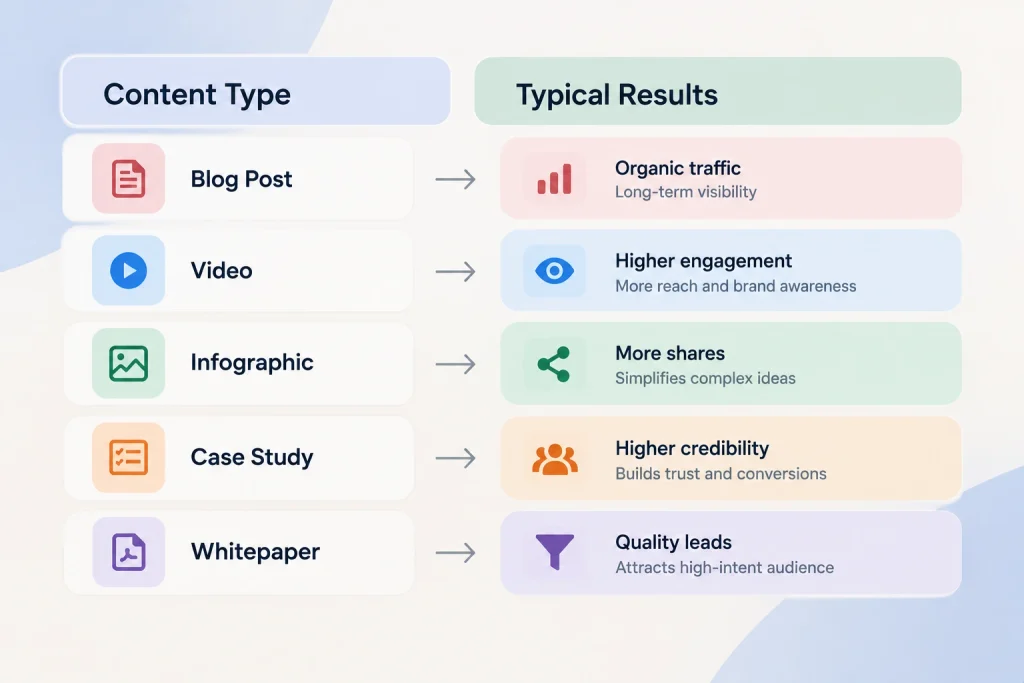
So the useful exercise is to work out whether anything on your site can produce a visible result at all.
Products with price and availability can. If you sell things online, this is the highest-value markup available to you and it is worth doing carefully, because the displayed price and stock status affect whether somebody clicks.
Events with dates and locations can. Job postings can. Recipes can. Videos can. Breadcrumbs render, modestly, replacing the URL line with a readable path.
Reviews and ratings can — with a condition covered below that trips up a large number of Indian sites.
Articles are understood better with markup and can qualify for news surfaces, though for most business blogs there is no distinctive visible change on the ordinary results page.
Now the uncomfortable part. If you are a B2B services firm — an agency, a consultancy, a manufacturer selling through enquiry rather than checkout — there is no rich result for what you do. No feature exists for a consulting page. You can implement organisation and breadcrumb markup correctly and see no visual difference anywhere.
That is worth doing for comprehension. It is not worth a line item that implies traffic, and if somebody has sold it to you that way, that is the conversation to have.
The review markup trap
This one is common enough in India to deserve its own warning.
Google’s guidance disallows review markup where a business publishes ratings about itself on its own site. Testimonials on your homepage, marked up so stars appear beside your listing, are the exact thing the guidance excludes.
The trouble is that several popular plugins generate it automatically. Somebody installs a reviews or testimonials plugin, it emits rating markup, and the site is now shipping something disallowed without anyone deciding to.
Review markup works where the ratings come from a genuinely independent source and the page’s purpose is to carry them. It does not work as decoration on your own sales copy.
If you have stars on a testimonials section, check what your plugin is emitting. Most people are surprised.
When your plugins are arguing with each other
The other very common failure is quieter.
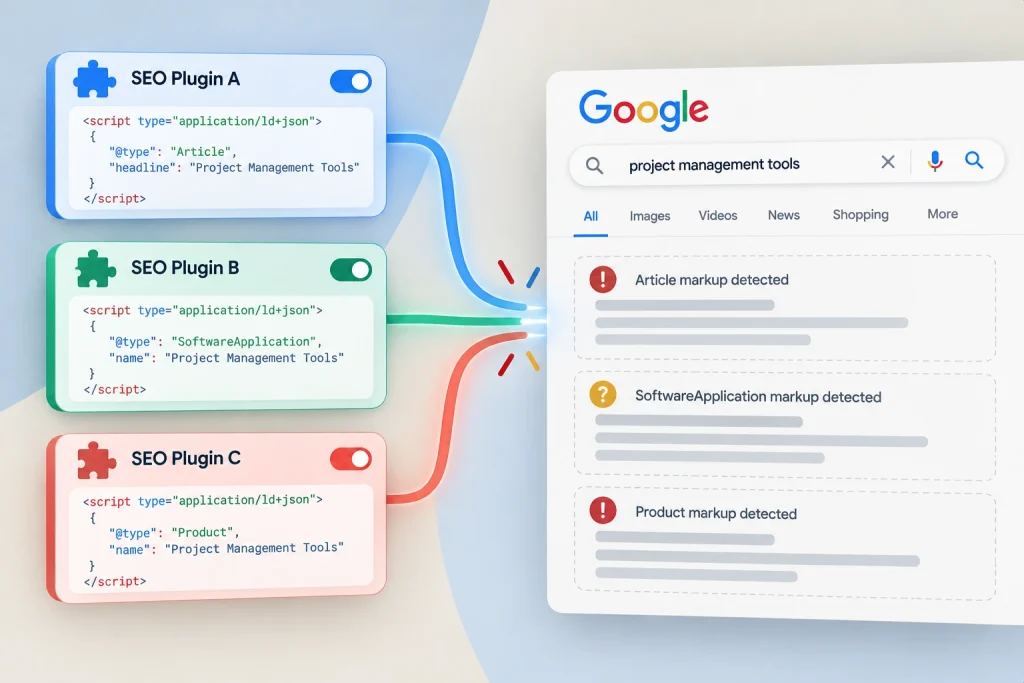
A WordPress site accumulates plugins. The SEO plugin emits organisation and article markup. The reviews plugin emits ratings. The page builder emits its own set. The theme adds another.
The result is several blocks of structured data on one page, describing overlapping entities, sometimes contradicting each other on the same field.
Google is fairly tolerant of this and will usually pick something sensible. But conflicting output makes it harder to diagnose anything, and occasionally the thing it picks is not the one you wanted.
The diagnostic takes five minutes. Run the page through Google’s Rich Results Test and read what it reports the page is eligible for. Then open the Enhancements section of Search Console and look at what Google has actually detected across the site, and at whether anything is throwing errors.
If you find three sets of markup, the fix is to switch off the sources you did not choose rather than to add a fourth.
The rule that catches people out
One principle underlies all of Google’s structured data guidance and it is worth stating plainly: markup must describe content that is visible on the page.
Marking up FAQs that are not written on the page, prices that are not shown, ratings that do not exist — these are not clever workarounds. They are the thing the guidelines specifically prohibit, and manual action for structured data spam is a real outcome.
The version of this we see most often is not deliberate. Somebody removes a section from a page and the markup describing it stays behind.
If you do sell products, the detail matters
For Indian ecommerce this is the one type with money attached, so it is worth being precise about.
The price in your markup has to match the price a visitor sees on the page. That sounds obvious and it breaks constantly, usually because the displayed price and the marked-up price disagree about tax. If your page shows a GST-inclusive figure and your markup carries the pre-tax number, you are advertising a price you will not honour, and the mismatch is one of the more common reasons product listings get flagged.
Availability has the same problem in slower motion. Stock status marked as in stock while the page says otherwise is a poor experience for the person who clicked and a fair reason for Google to stop trusting the feed.
Currency should be stated explicitly. And if the same product appears at different prices for different visitors, the markup should carry the price the page actually shows.
Get those four right and product markup earns its cost. Get them wrong and you have automated a promise you cannot keep.
How to implement it, and who should not
Google’s stated preference is JSON-LD — a block of structured data in a script tag rather than attributes woven through the HTML.
That preference has a practical benefit beyond compliance. Because the markup sits separately from the page content, it is easy to read, easy to validate and easy to remove. It is also, for the same reason, easy to forget, which is how markup outlives the section it described.
For most Indian businesses the honest recommendation is to not hand-code any of it. An established SEO plugin will emit organisation, article and breadcrumb markup competently, and that covers everything a services site can use. Hand-written JSON-LD on a site nobody maintains becomes stale within a year and then describes a page that has changed.
Hand-coding is worth it for the one type that produces a visible result and touches revenue — usually products — where you want control over exactly what is being asserted.
One more question that comes up: should you go and strip the dead FAQ markup off two hundred pages?
Not urgently. It renders nothing and it does no harm. But it does mean your site is asserting something you no longer intend, and the next person to work on it will assume it is deliberate. Remove it the next time you touch those pages, and take it off the retainer today.
What about AI search
The obvious question in 2026 is whether structured data helps you appear in AI-generated answers.
We are not going to answer that here, because it deserves its own treatment and because the honest position involves several claims that are not settled. That is a separate article and it is coming.
What we will say is that the case for schema does not currently rest on it. Implement what produces a result you can see, for reasons you can state.
What to actually do
Identify the single content type on your site that maps to a rich result you could plausibly get. For most Indian businesses that is products, events, jobs, or nothing.
If it is nothing, implement organisation and breadcrumb markup once, correctly, and move on. Do not let it stay on a retainer.
If it is something, implement that one type properly, validate it, and check Search Console a fortnight later to confirm Google has detected it.
Then go and check whether the pages are in the index at all, because markup on an unindexed page is decoration — a status we have written about in pages Google read and declined to keep.
And if author credibility is the point — as it is for professional firms — the markup is the last step, not the first. Our article on building real author pages first covers the order.
What we cannot tell you
We cannot tell you that schema affects ranking, because Google says it does not and there is no way for anyone outside Google to test that claim properly.
We cannot tell you which types will still render in two years. Two have gone in three years and there is no advance notice.
And we cannot tell you what schema contributes inside AI systems, which is why that question is somewhere else.
Final thoughts
Structured data is a translation layer. It tells a machine what a page contains so the page becomes eligible for a way of being displayed.
If no such display exists for your business, translating carefully is still reasonable and it is not a growth lever. If one does exist, implement it once and stop.
Either way, the useful first move is an audit of what you are already carrying — because there is a real chance you are maintaining markup for two features that were deleted while nobody was looking.
If you would like us to run that audit and tell you what is live, dead and disallowed on your site,you can reach out to us on whatsapp at +91 7738844851 .
More in Blog
Keep reading
All articles →


Ready to talk about your growth?
Tell us what's stuck and we'll tell you what we'd do first. Free, 30 minutes, no pitch.