
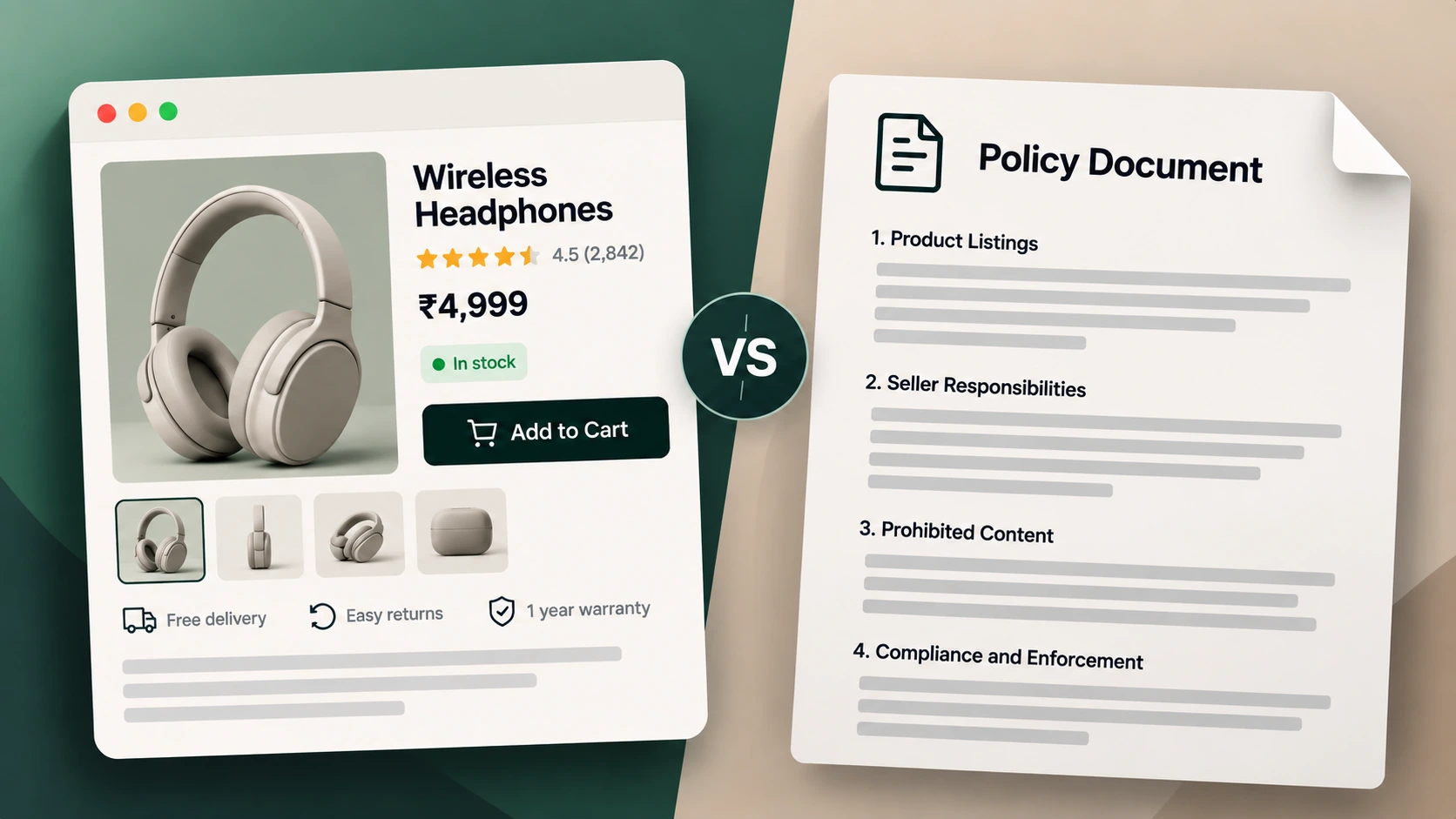
Google’s link spam policy covers links acquired through payment, product exchange or commercial arrangement, and the test is the primary purpose rather than the tactic. Guest posting is reported to be legitimate where an editorial audience genuinely wants the content, and to become a scheme when the purpose is link acquisition across many low-quality sites with keyword-optimised anchors. That description matches the Indian guest-post market closely, and SpamBrain’s enhanced detection was reportedly deployed in the August 2026 update cycle.
Read the link spam policy carefully and you will find something close to a product specification for what is sold locally as link building.
This matters because links are the constraint — the parent article sets out why a low-authority site has no other route to ranking — and because the most commonly sold solution is the one carrying the most risk.
The policy is broader than people assume
Any link acquired through payment, product exchange or commercial arrangement that passes PageRank without being qualified is reported to fall within the link spam policies.
Three words in that sentence do more work than most people notice.
Payment is obvious and everybody assumes it is the whole rule.
Product exchange is not. Sending a free product in return for a link is a commercial arrangement whether or not money moved.
Commercial arrangement is broader still. It covers reciprocal deals, barter, and the “we will feature you if you feature us” arrangements that circulate in Indian business networks and feel like relationship-building rather than link-buying.
And the qualification matters. A paid or exchanged link is reported to be acceptable when it carries a sponsored attribute — which removes the ranking benefit that was the entire reason for buying it. Which is the point. The policy does not forbid the arrangement; it forbids the arrangement passing authority.
The test is the purpose, not the tactic
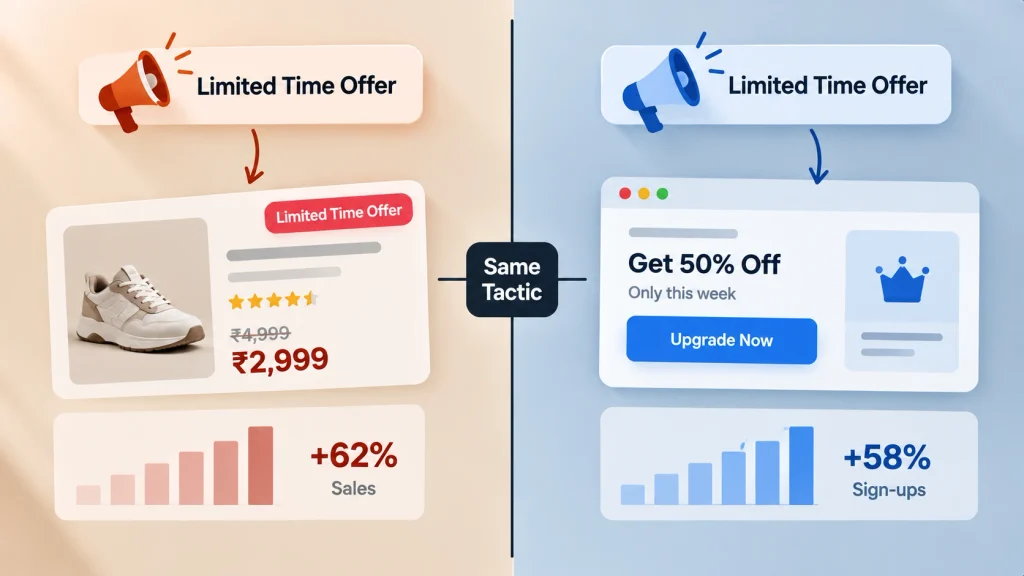
Guest posting is not prohibited, and the pages claiming it is are wrong.
It is reported to be legitimate where the content is genuinely valuable to an editorial audience and the link follows naturally. A practitioner writing something worth reading for a publication that wanted it is doing what the web is for.
It is reported to become a link scheme when the primary purpose is link acquisition — across many low-quality sites, with keyword-optimised anchor text.
Now hold that description against a typical Indian guest-post package. Thirty placements. Sites nobody reads. Content written to carry the link. Anchors reading best CRM software in India rather than the publication’s name or a natural phrase.
Every element of the description is present. That is not an accident of drafting; it is a description of the thing.
And the anchor text is the clearest tell. Editorial links almost never use exact-match commercial phrases, because writers do not write that way. A profile of exact-match anchors across unrelated domains is the pattern that is easiest to detect and hardest to explain.
Two recent changes, pointing the same way
The October 2025 spam update is reported to have explicitly targeted AI-generated guest post farms — thin, machine-written content published at scale to host paid links. That is a large share of the sites in Indian link marketplaces.
And SpamBrain’s enhanced detection is reported to have been deployed in the August 2026 update cycle, which is this month.
Which makes the timing unhelpful for anyone about to buy a package. The specific inventory being sold is the specific inventory recently described and recently targeted.
There is also a quieter risk. Google’s site reputation abuse policy addresses third-party content published on a host site mainly to exploit that site’s ranking signals. A publication that sells placements is exposed under that policy, and a link on a site that loses its standing is worth nothing regardless of what you paid.
What is actually open in India

Here is the part nobody publishes, because it cannot be packaged.
Trade and industry press. India has a deep, under-pitched trade publication sector across manufacturing, logistics, pharma, textiles, chemicals, construction and agriculture. Editors take contributed technical pieces from practitioners and rarely charge for it, because the constraint is good contributors rather than advertising inventory.
Industry associations and chambers. National and state chambers, sector bodies and export councils publish member content, run directories and produce newsletters. Membership is a real cost and the publishing access that comes with it is largely unused by members.
Regional-language publications. Almost entirely unpitched by SEO teams, because outreach is done in English. A Marathi or Tamil business publication has real authority and receives a fraction of the pitches its English equivalent does.
Journalist request services. Indian journalists using source-request platforms are underserved relative to demand. Responding fast, with something specific, works.
Genuine awards and listings. Not the pay-to-enter ones. Sector awards run by associations and publications, where entry is judged.
Academic and institutional citation. Business schools, research centres and student projects cite published data. A dataset nobody else has produced gets cited for years by people you will never meet.
And customers, suppliers and partners. Case studies, integration pages, partner directories. The most obvious source and the one most businesses never ask for.
How many links do you need
Nobody can tell you a number, and every page that gives you one has invented it.
But there is a method, and it takes an afternoon.
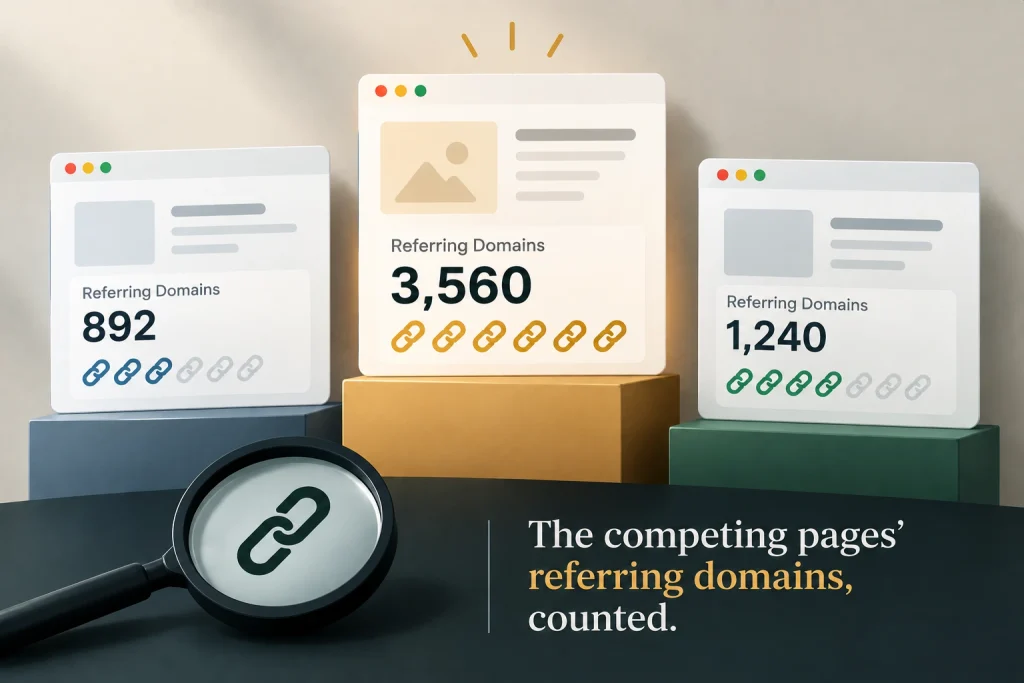
Take the five pages currently ranking for the query you want. Not the domains — the specific pages.
Count the referring domains pointing at each of those pages, and separately at each of those sites.
That is your target, and it is query-specific. A niche technical query might be won by a page with three referring domains. A commercial head term might have five hundred behind every result, which is your answer about whether to attempt it at all — and it feeds directly into how to choose which queries to pursue.
Do this before commissioning any link work, because it converts an open-ended budget into a finite target, and occasionally it tells you the target is unreachable and the query should be abandoned.
You cannot earn links to a services page
Nobody links to “Performance Marketing Agency in Mumbai.” There is no reason to.
Links go to things worth citing — data, tools, research, a genuinely useful explanation of something confusing.
Which means link building begins with building something linkable, and most Indian businesses skip that step and go straight to asking for links to a page nobody would cite.
And then the authority has to move. A link arrives at your research page; internal linking is what carries any of it toward the pages that make money — [which is the lever you control completely and most sites use by accident](https://findise.in/internal-linking-seo/).
One linkable asset, properly built, and an internal linking structure that distributes what it earns. That is the whole architecture, and it is unglamorous enough that almost nobody does it.
What we would do in ninety days
Count the referring domains behind the pages you want to outrank. One afternoon, and it sets the scale.
Build one thing worth citing. A dataset from your own operations, a calculator, a piece of research nobody else has done.
Join the association that publishes in your sector, and actually use the publishing access.
List every trade publication in your industry and find out who edits it.
Ask your five best customers and three closest partners whether they will reference you. Most will, and nobody asks.
And answer journalist requests, quickly, with something specific.
None of that is a package, and that is exactly why it works. [How to pitch it properly is its own subject](https://findise.in/digital-pr-india/) and the next article in this cluster.
Questions we get asked
Is buying backlinks safe in India?
Links obtained through payment, product exchange or commercial arrangement that pass PageRank without qualification are reported to fall within Google’s link spam policies. The market is large; that does not make it safe.
Does guest posting still work in 2026?
Where the content is genuinely wanted by an editorial audience, yes. Where the primary purpose is the link and the anchors are commercial, it is the pattern the policy describes.
How many backlinks do I need to rank?
Count the referring domains behind the pages currently ranking for your query. That is the only honest answer.
What is a good backlink?
One from a site with a real audience, on a page topically related to yours, that a person had an editorial reason to place.
How do I get backlinks for a new website?
Build one thing worth citing first. Asking for links to a services page is the commonest wasted effort in Indian SEO.
What about reciprocal links with partners?
Reciprocal arrangements are a commercial arrangement. Occasional and genuine is different from systematic and negotiated.
Final thoughts
The uncomfortable summary is that the only link-building work worth doing cannot be bought as a monthly package, which is why the market sells something else and calls it the same thing.
Count the domains behind your competition, build one thing worth citing, and use the publishing access you are probably already paying for through a membership you have forgotten about.
If you want that assessment run and the linkable asset identified, you can reach out to us on whatsapp at +91 7738844851 .
More in Blog
Keep reading
All articles →

Ready to talk about your growth?
Tell us what's stuck and we'll tell you what we'd do first. Free, 30 minutes, no pitch.