
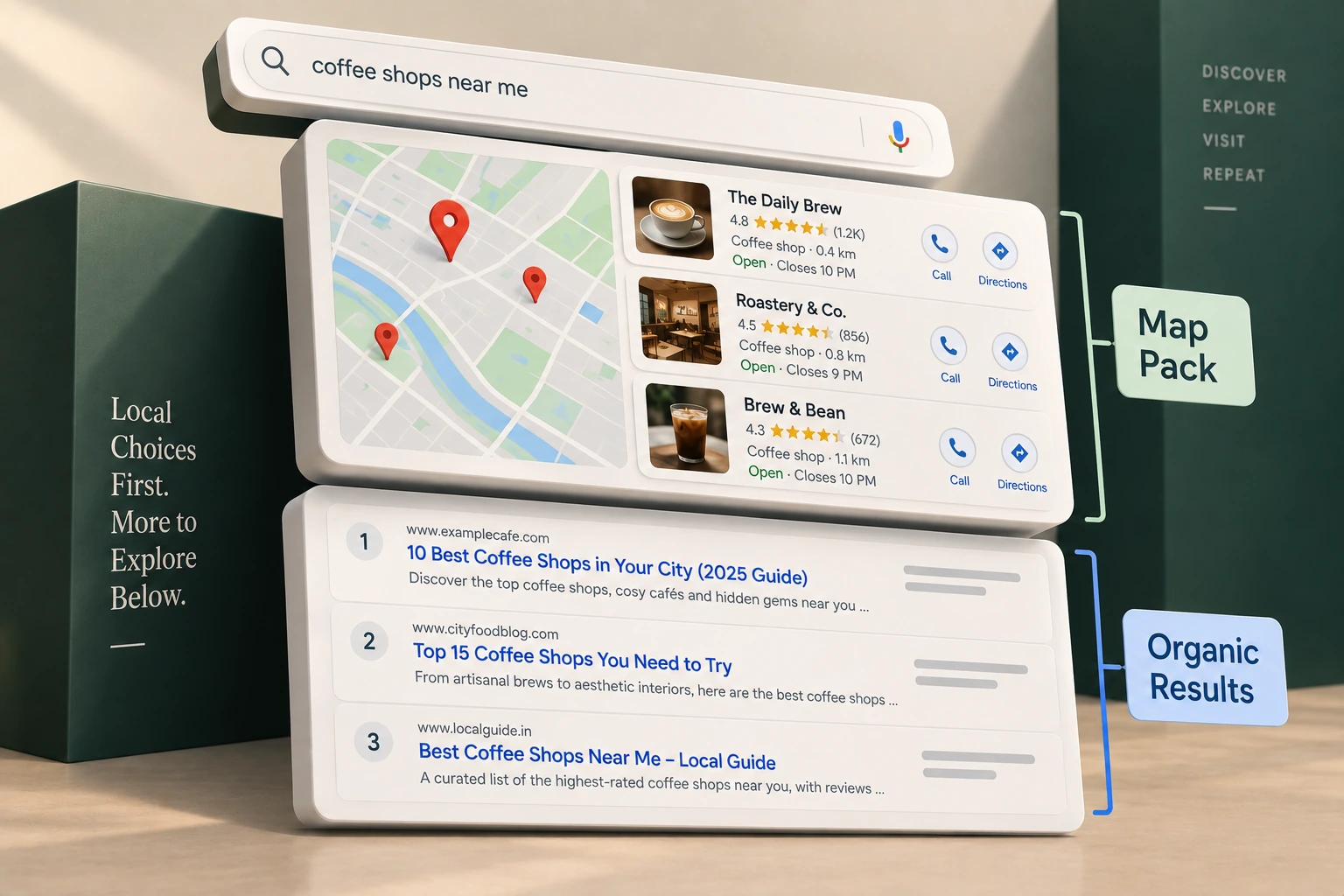
Local search in India is two systems. The map pack ranks Business Profiles on relevance, distance and prominence, and does not read your location pages. The organic results beneath it rank pages. So a set of location pages sold as a route into several areas of a city competes in the second system while most local clicks happen in the first — and distance, which does much of the work, is the one input no amount of marketing changes.
Search for a service and a city in India and you get two things stacked on top of each other.
At the top, a map with three businesses beside it. Below that, ordinary blue links.
These are two different systems with two different inputs, and almost every local SEO package sold in this country is priced on not distinguishing them.
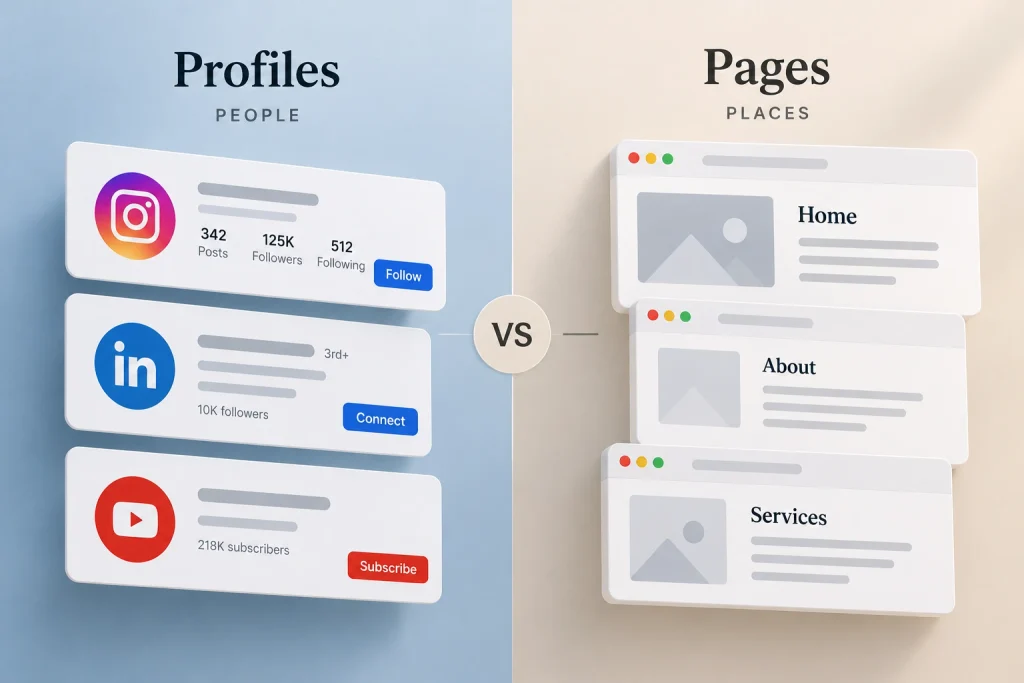
The map pack ranks business profiles. Google’s own guidance describes local results as turning on relevance, distance and prominence. It is ranking entities with addresses, categories, hours and reviews.
The results underneath rank pages, in the ordinary way.
So when an agency sells twelve location pages as a route to appearing across twelve areas of Mumbai, the pages are competing in the second system while the clicks are largely happening in the first.
Distance is doing more than anyone will tell you
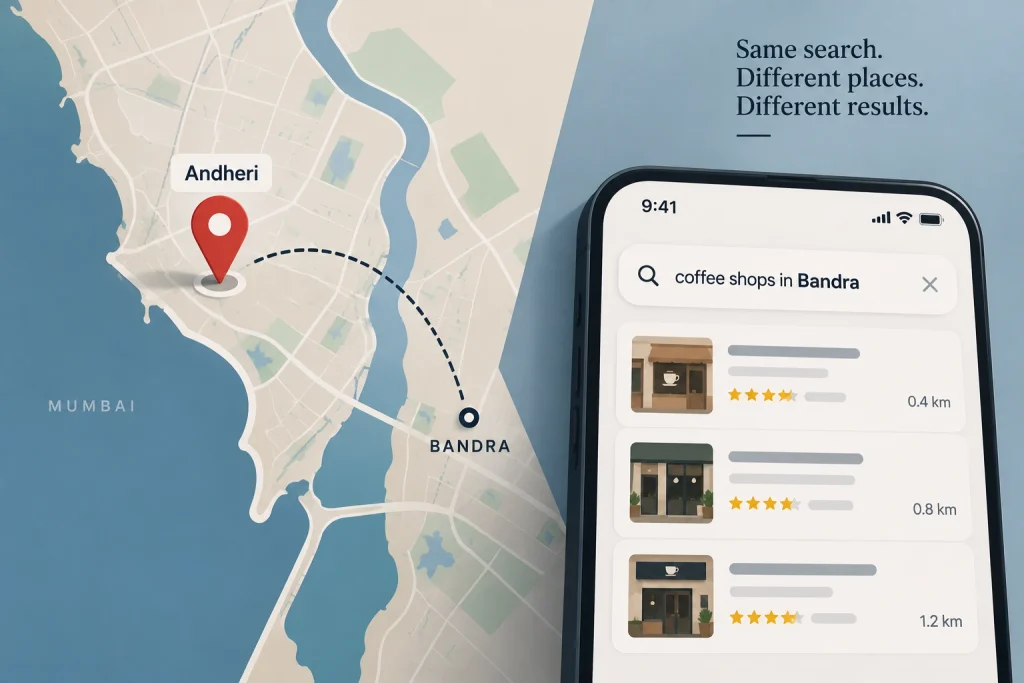
Of the three factors Google names, one is fixed.
A business in Andheri will not appear in the map pack for a search made in Bandra by someone standing in Bandra. Not with better reviews, not with more content, not with a page titled for Bandra, not with a faster site.
The address is the constraint. It is the least discussed thing in Indian local SEO because it is the only part nobody can bill against.
This has a blunt consequence worth sitting with. If your business needs to appear across a city, that is a property decision or a franchising decision before it is a marketing one. An agency that takes a retainer to make a single Andheri address rank across seven suburbs is selling work against a variable it cannot move, and the monthly report will show activity for as long as you keep paying for it.
Where you do have a real address, the same logic works in your favour and is under-used. Businesses routinely fail to appear for their own immediate neighbourhood because the profile is thin, while spending the budget chasing areas they were never going to reach.
So what are location pages for
They still have a job. It is a narrower one than advertised.
Location pages compete in the organic results below the map pack. Those results receive fewer clicks on local queries but they are not nothing, and for less immediate searches — where somebody is researching rather than looking for the nearest option — they matter more.
The condition is that the page has to be real. We have written at length about why eleven of your twelve location pages vanish: a set of pages differing by a city name and a map embed gets read, recognised as saying nothing the first one did not, and left out of the index.
Applied here, that gives a working test. A location page earns its place when it contains things that are true only of that location — work done there, named local conditions, specific pricing or timing that differs, questions people in that area actually ask. If the only local content is the name of the area repeated eight times, it will not be indexed and it would not have helped the map pack anyway.
One good page about one area you genuinely serve beats twelve about areas you do not.
The category field, which almost nobody adjusts
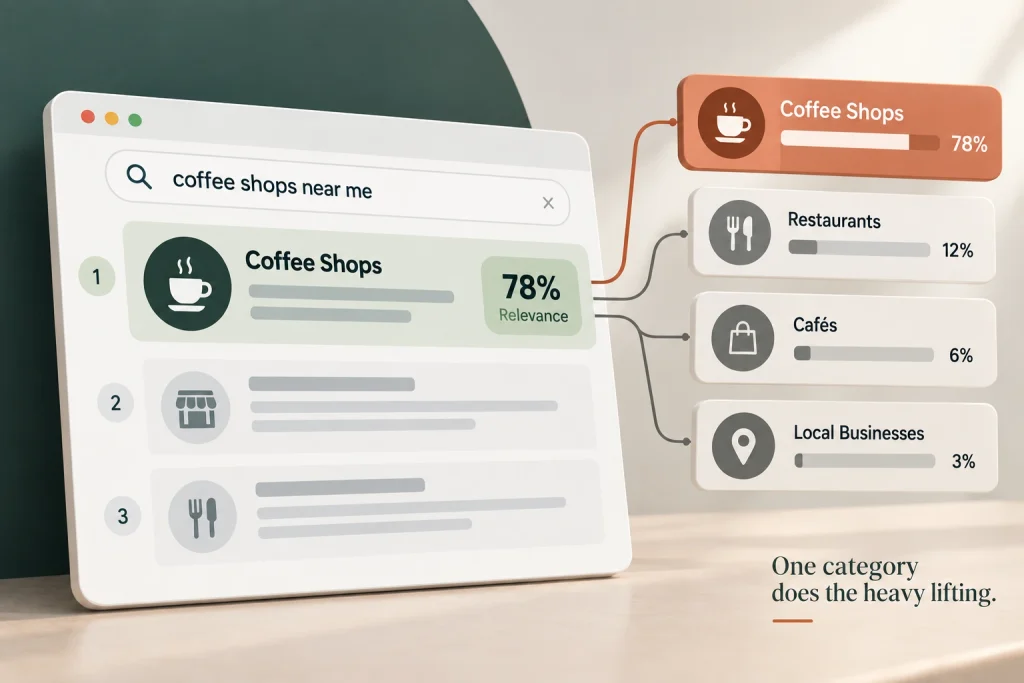
Of the things you can change, the primary category on your profile does a disproportionate share of the relevance work, and it is usually set once during setup and never revisited.
Two things go wrong with it. It gets set to something aspirational rather than accurate — a firm doing bookkeeping listing itself under a broader financial category — which puts it in a competitive set it cannot win. Or it gets set to something narrow and technically correct that nobody searches.
The way to check it is to look at what the businesses actually appearing in your target map pack have selected, and to be honest about which of those describes you.
Secondary categories are worth adding for services you genuinely provide. They are not a keyword field, and stacking them with things you do not do is the kind of inaccuracy that gets profiles suspended.
Everything else on the profile — services, hours, photographs, the description, posts — is worth completing properly and none of it will overcome a distance problem. Complete it because an incomplete profile loses to a complete one at the same distance, which is a real and winnable comparison.
Citations, and the version of that advice worth keeping
The traditional instruction is to build citations — get your name, address and phone number listed across fifty directories, identically.
Most of that is a product rather than a practice. Bulk submission to directories nobody visits is sold because it is easy to deliver and easy to screenshot, and its effect is small.
What is worth keeping from it is narrower and genuinely useful. The handful of places people and platforms actually check should agree with each other, and should agree with your website.
The Indian complication is that many of those listings already exist and you did not create them. Aggregators and local directories generate entries from scraped or submitted data, and they persist for years. A firm that changed office in 2021 frequently still has three listings carrying the old address and a phone number nobody answers.
That is worse than having no listing. Somebody found you, called, got nothing, and moved on — and no analytics platform will ever tell you it happened.
So the exercise is a search, not a submission. Search your business name, your old business name if you have had one, and your phone number. Find what exists. Claim what can be claimed, correct what can be corrected, and get the dead entries removed where the platform allows it. That is an afternoon, once, and it is worth more than fifty new directory entries.
The ways profiles get suspended
Worth knowing before you optimise anything, because a suspended profile ranks nowhere.
The business name. Adding keywords to it — the pattern that produces names like Best Digital Marketing Agency in Mumbai | Company Name — is against the guidelines, which ask for the name as it is used in the real world, on the signage and the paperwork. It is extremely common here, it sometimes works for a while, and it is a standing reason for removal.
The address. Virtual offices, coworking desks used as registered locations, and addresses that do not have staffed premises are a frequent trigger. So are residential addresses listed as walk-in locations rather than configured as service areas.
Ownership churn. Profiles that have been claimed, unclaimed and reclaimed by successive agencies attract attention, and the small business is usually the one left without access.
None of these are edge cases in the Indian market. All three are things agencies have set up on clients’ behalf.
Reviews, and the market that exists here
Reviews contribute, and the general shape is uncontroversial: how many, how recently, and whether you respond.
Responding is the part small Indian businesses skip and it is nearly free. A reply to a negative review is read by everyone who arrives afterwards, and a measured reply does more for the business than the original complaint did against it.
Now the part the ranking pages avoid. Bought reviews are openly available in India, at prices that make the decision tempting for a small business watching a competitor with two hundred and it with nine.
Google’s policies prohibit incentivised and fake reviews, and prohibit review gating — the practice of screening customers and only inviting the happy ones to post publicly. Enforcement is uneven, which is what sustains the market, and enforcement being uneven is a different thing from the practice being safe.
The version that is permitted and works is asking every customer, without filtering by expected sentiment, at the point where the work is done and the goodwill is highest.
Professional firms have an additional layer here, because a professional body may have its own view on soliciting or republishing client feedback, and we have written about when your professional body has a view.
The businesses without a storefront
Plumbers, electricians, consultants, home services, anyone who travels to the customer.
Google’s guidelines allow a service-area business to hide the street address and define the areas served. It is the correct configuration and using it is not optional — listing a residential address as a walk-in location contradicts the guidelines.
The thing to understand is that hiding the address does not remove the address from the ranking. You are still being placed somewhere, and searches far from that point will still favour someone closer. Defining a service area that covers the whole city describes what you are willing to do. It does not make you appear across the whole city.
Which is the same finding as the rest of this article, arriving from another direction.
The messages nobody opens
One operational point that costs more than any ranking factor on this page.
Profiles receive calls, direction requests and messages. Messages in particular sit unread for days at Indian SMEs because nobody has been given the job, and we have written about that failure in the enquiries nobody is watching.
A business that ranks third and answers within an hour will beat a business that ranks first and replies on Thursday. That is not an SEO intervention and it is usually the highest-return change available.
What we cannot tell you
Google names relevance, distance and prominence. It does not publish weights, and it has not said how distance trades off against the other two at any given radius.
Third-party local ranking factor surveys exist. They are practitioner opinion aggregated into percentages, which gives an impression of measurement that the underlying method does not support. We would rather tell you the direction and be honest that the magnitudes are unknown.
We also cannot tell you a review count to aim for. There is no threshold, and any number quoted to you is somebody’s guess dressed as a target.
Final thoughts
Before commissioning local SEO, ask one question: which of the two systems is this work aimed at, and can it reach it.
If the answer involves pages for areas you have no presence in, the money is going somewhere it cannot arrive.
Fix the profile for the address you actually have. Get the category right. Ask everyone for a review and answer the ones you get. Then answer the phone.
If you want an honest read on which areas your address can realistically reach, you can reach out to us on whatsapp at +91 7738844851 .
More in Blog
Keep reading
All articles →


Ready to talk about your growth?
Tell us what's stuck and we'll tell you what we'd do first. Free, 30 minutes, no pitch.