

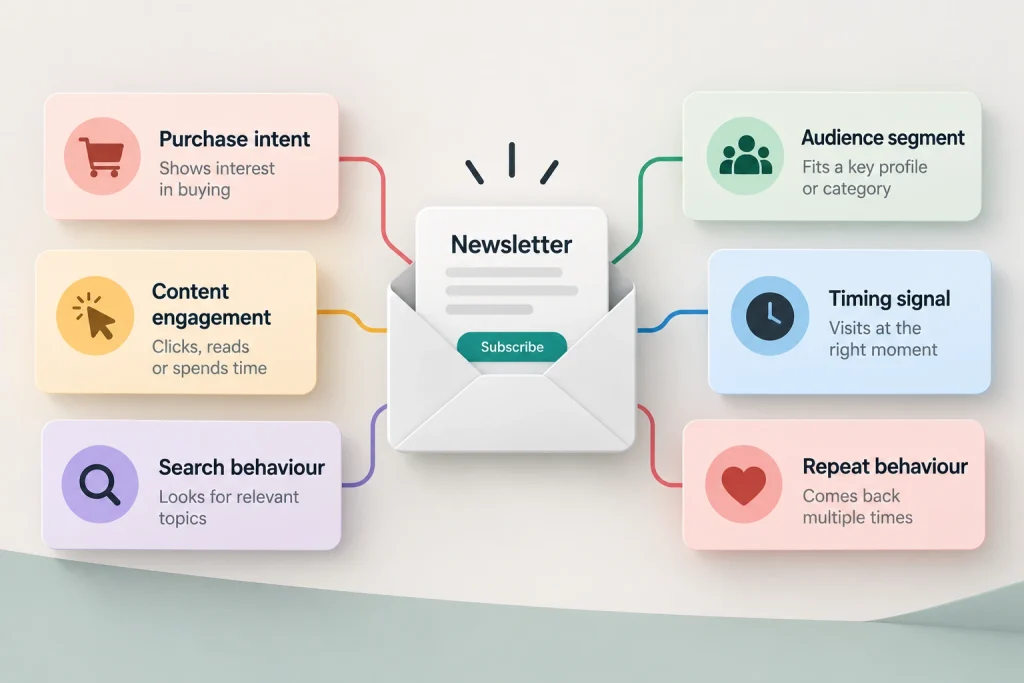
Every other marketing channel is rented. Meta and Google set the price of an impression, WhatsApp meters reach by tier, and search allocates visibility by rules that changed twice this year. A permission-based email list is the one audience nobody can reprice or take away. The condition is that it was collected lawfully, which most Indian lists were not — and since bulk sender requirements tightened, authentication failure is reported to cause rejection at the connection rather than delivery to a spam folder.
Count the channels an Indian business reaches customers through and ask who sets the price on each.
Meta and Google decide what an impression costs and change it whenever they like. WhatsApp meters how many people you may reach in a day and prices each conversation, as our WhatsApp work sets out in detail. Organic search allocates visibility by rules that have changed twice this year.
Every one of those audiences is rented. You are a tenant, the rent moves, and the landlord can end the arrangement.
An email list is the exception. Nobody can reprice it, throttle it, or take it away. It is the only marketing asset most businesses will ever actually own.
Which is why the rest of this article is mostly about the conditions attached to owning it, because that sentence is doing a great deal of work and most Indian businesses do not meet them.
The condition that decides whether you have an asset
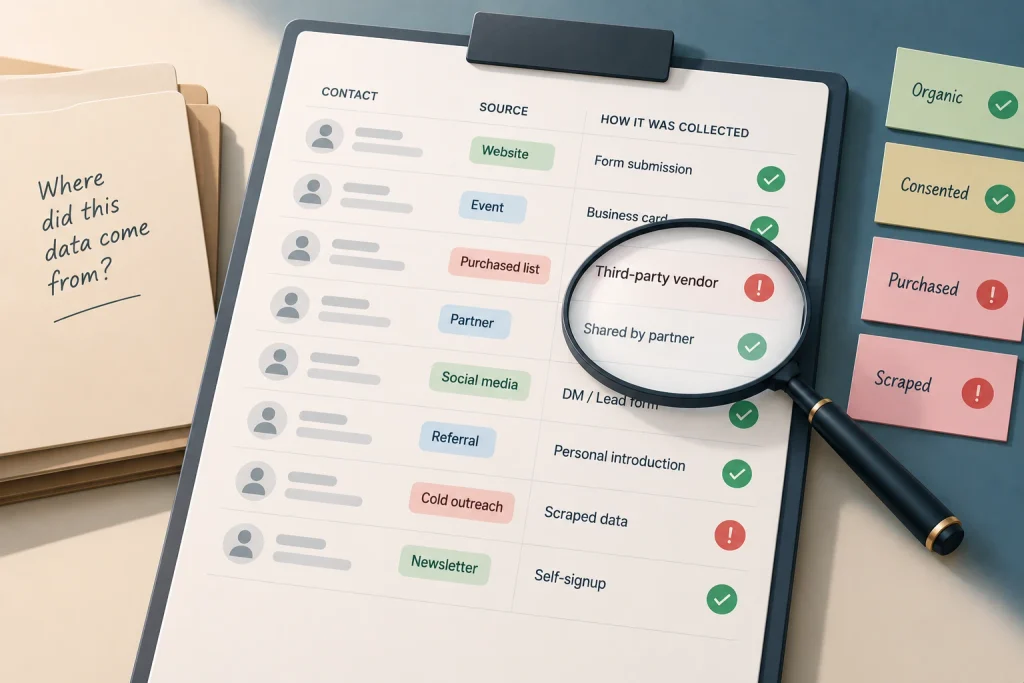
A list is only yours if it was collected in a way that survives being examined.
Most Indian lists were not. They are assembled from business cards collected at exhibitions, exported from a directory, taken from event registrations and repurposed, bought from somebody who bought it from somebody, or captured through a form that never carried a notice explaining what the address would be used for.
Our article on cold outreach under the Act sets out the position properly and we will not repeat the reasoning here. The short version is that marketing does not appear among the legitimate uses that permit processing without consent, and the burden of demonstrating consent sits with you.
Which produces an uncomfortable exercise worth doing this month. Take your list, pick twenty addresses at random, and try to establish for each one when and how that person agreed to receive marketing from you.
If you can, you have the asset described above and the rest of this article is worth your time.
If you cannot for most of them, you have a liability, and the work is rebuilding rather than sending. That is a slower and less enjoyable project than a campaign calendar, and it is the one in front of you.
Getting through the door at all
Before anything about content, the mechanical question, because a surprising number of Indian businesses have an email programme that is quietly not arriving.
The major providers now require senders above a volume threshold to authenticate properly — the three standard records that prove a message came from where it claims — to offer one-click unsubscribe on marketing messages, and to keep spam complaints below a stated ceiling.
The part that has not registered widely is the consequence of failing. It is reported to be rejection at the connection rather than delivery to a spam folder. The message does not arrive in an unread place. It does not arrive.
Two details worth knowing that are almost never written down.
The complaint threshold is 0.3 per cent, with under 0.1 per cent recommended — and the providers calculate it differently. One is reported to measure complaints against everything delivered, while another measures against messages that reached the inbox, excluding those already filtered. The same complaints produce a higher rate on the second. So a business sitting comfortably under the ceiling on one provider can be over it on another with identical behaviour.
And transactional messages are treated differently from marketing ones. Order confirmations and password resets are reported to be exempt from the unsubscribe header requirement — which matters because businesses frequently apply one configuration to everything and break something.
Whoever runs your website is not automatically the person who has checked this. It is a twenty-minute task and it is the first thing in our publishing order for this cluster, because a business whose email is being refused has no other email problem worth solving.
Do not send marketing from the domain your business runs on
A structural decision that costs nothing at setup and is painful to retrofit.
Most Indian businesses send everything from one domain. The invoices, the sales replies, the password resets, the newsletter, the festival campaign — all from the same place.
That means the reputation of your marketing sending is the reputation of your business sending. A campaign to a stale list that generates complaints hurts more than the campaign. It degrades the deliverability of the message your finance team sends about an overdue invoice, and of the reply your salesperson sends to somebody who asked for a quote.
The fix is to separate them. Marketing goes out from a subdomain of your main domain, so it inherits your identity while carrying its own reputation. Transactional messages go from another. Person-to-person business email stays on the main domain and is never used for bulk sending.
Three lanes, three reputations. If one is damaged, the other two continue.
This takes a competent person an hour at setup. It takes considerably longer once a domain’s reputation is already impaired, and there is no button to reset it.
We would put this immediately after the authentication check for any Indian business planning to send at volume, and it is almost never in a proposal because it is infrastructure rather than a deliverable.
Two different businesses are reading this
Email does different work for different businesses, and the advice diverges more than most guides admit.
For Indian B2B and services firms, the list is small, the sales cycle is long, and the value of email is that it keeps you present with a few hundred people who matter over a period measured in quarters. Nobody is buying from an email. They are remembering you exist at the moment something changes at their end.
That argues for fewer, better, more personal messages, sent from a named person, written to be answered rather than clicked. It argues against a designed template with a banner, which signals broadcast and gets treated as such. And it makes the quiet-enquiry sequence the highest-value thing on the list.
For consumer and ecommerce businesses, the mechanics are genuinely different. The list is larger, the cycle is short, the trigger points are numerous and the revenue is directly attributable. Automation earns its cost quickly, segmentation starts to mean something, and the post-purchase and abandoned-action sequences do most of the work.
The failure in each direction is copying the other. A B2B firm running consumer-style automated campaigns produces something nobody replies to. A consumer brand sending occasional plain-text notes from the founder leaves a great deal of revenue on the table.
Work out which of the two you are before taking any advice on this subject, including ours.
The newsletter is the wrong object
Indian email marketing is overwhelmingly broadcast. A monthly newsletter, a festival offer, an announcement when something happens.
Broadcast has its place. It is also the least valuable thing email does, and it is the only thing most businesses have built.
The messages that produce revenue are triggered by what somebody did. They arrive when the action is fresh, they are relevant because the recipient just did the thing they are about, and they run without anybody scheduling them.
Six that most Indian businesses do not have.
The welcome sequence. The first message after somebody joins is the most-read email you will ever send, because interest is at its highest point. Most businesses send nothing, or send a generic newsletter three weeks later.
The enquiry that went quiet. Somebody asked about your service, had one conversation, and stopped replying. In most Indian B2B firms this person is simply forgotten. A short sequence over the following weeks — not chasing, but sending something genuinely useful about the problem they raised — recovers a real proportion of them.
The post-purchase sequence. What to expect, what to do next, what usually goes wrong and how to avoid it. It reduces support load and it is the natural moment to ask for a review.
Renewal and repeat timing. Anything bought on a cycle has a moment where a message is welcome and a moment where it is irritating. Almost nobody maps it.
Abandoned action. Started a form, did not finish. Booked a call, did not attend.
Reactivation. People who used to open and no longer do, contacted once with a clear question, then removed.
Notice what those have in common. None of them is a writing problem. They need somebody to connect a trigger in your systems to a message, which is operational work, which is why the newsletter gets built instead.
The metric, given the usual one is broken
Open rates cannot be read the way they used to be, for reasons our comparison article covers in full. We are not going to re-argue it.
What we would put in its place for Indian B2B is simpler than any dashboard.
Count replies.
A reply is unambiguous. It is not inflated by anything loading in the background, it cannot be manufactured by a preview pane, and it is the thing you actually wanted — a person engaging rather than a pixel firing.
It also changes how you write. Emails built to be replied to are shorter, ask something specific, come from a person rather than a brand, and do not end in a button. That is a better email by most measures and it happens to be the one that produces a measurable outcome.
For consumer and ecommerce businesses the equivalent is clicks and completed actions, measured against messages delivered rather than opened.
Then track what happens after the reply, because that is where most Indian businesses lose it — a subject we cover in the enquiries nobody is watching.
How often to send
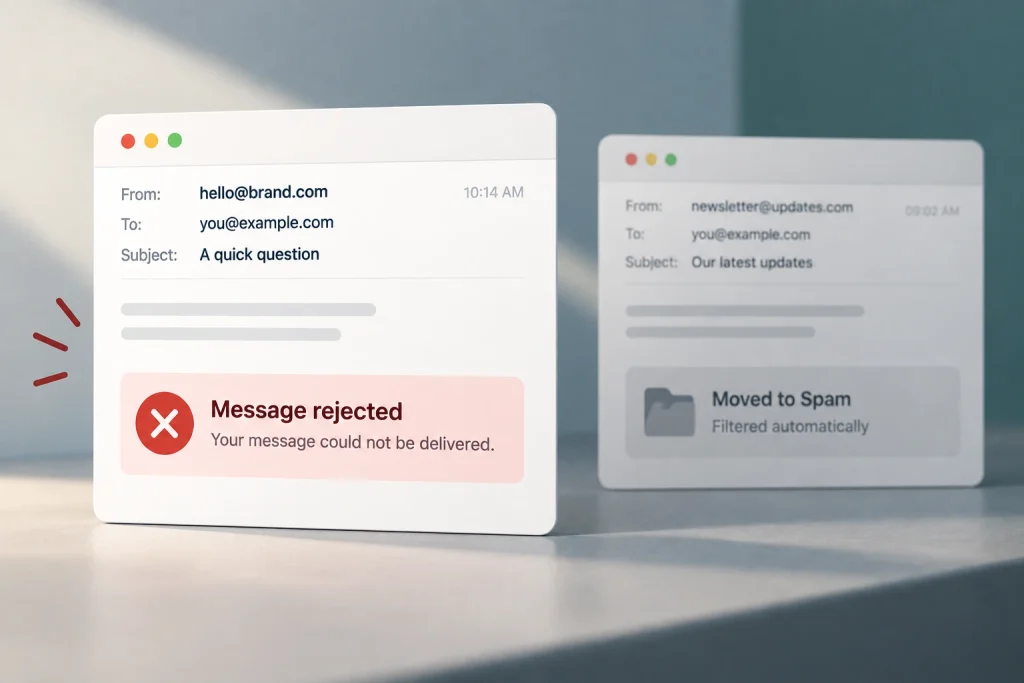
The honest answer is that frequency is a deliverability decision before it is a content decision.
Complaints are what damage you, and complaints come from people who do not remember agreeing. So the sustainable frequency depends less on tolerance and more on whether the relationship is clear — a list built from genuine sign-ups tolerates far more than one assembled from collected cards.
Which gives a rule that is more useful than a number. Send as often as you have something specific to say, and stop when you are filling a slot. A business that sends fortnightly with something real beats one that sends weekly with a template, and the difference shows up in complaint rate rather than in engagement.
What this pillar does not claim
Email is not a growth channel on its own. It converts and retains demand that something else created, and a business with no demand will find an email programme produces very little.
It is not fast. The list compounds and compounding takes quarters.
And it is not free. The sending is cheap; the operational work of connecting triggers to messages is the real cost, and it is usually somebody’s time rather than a subscription.
What we cannot tell you
We cannot give you Indian benchmark figures we trust. The published averages are global, calculated on inconsistent denominators, and distorted by the measurement problem covered elsewhere in our library.
We cannot tell you what proportion of Indian business lists would survive a consent review. Nobody has measured it, and our own impression from client work is not evidence.
And we cannot tell you exactly how each provider weighs the signals behind delivery. They publish requirements, not formulas.
Where to start
Check that your email is arriving at all. Then find out whether your list is an asset or a liability, on twenty addresses, honestly.
If it is an asset, build the welcome sequence and the quiet-enquiry sequence before you write another newsletter. Those two will produce more than the next year of broadcasts.
If it is a liability, stop sending and start collecting properly. It is the least satisfying recommendation in this article and the only one that ends with you owning something.
If you want help working out which of the two you have, you can reach out to us on whatsapp at +91 7738844851 .
More in Blog
Keep reading
All articles →
Ready to talk about your growth?
Tell us what's stuck and we'll tell you what we'd do first. Free, 30 minutes, no pitch.