
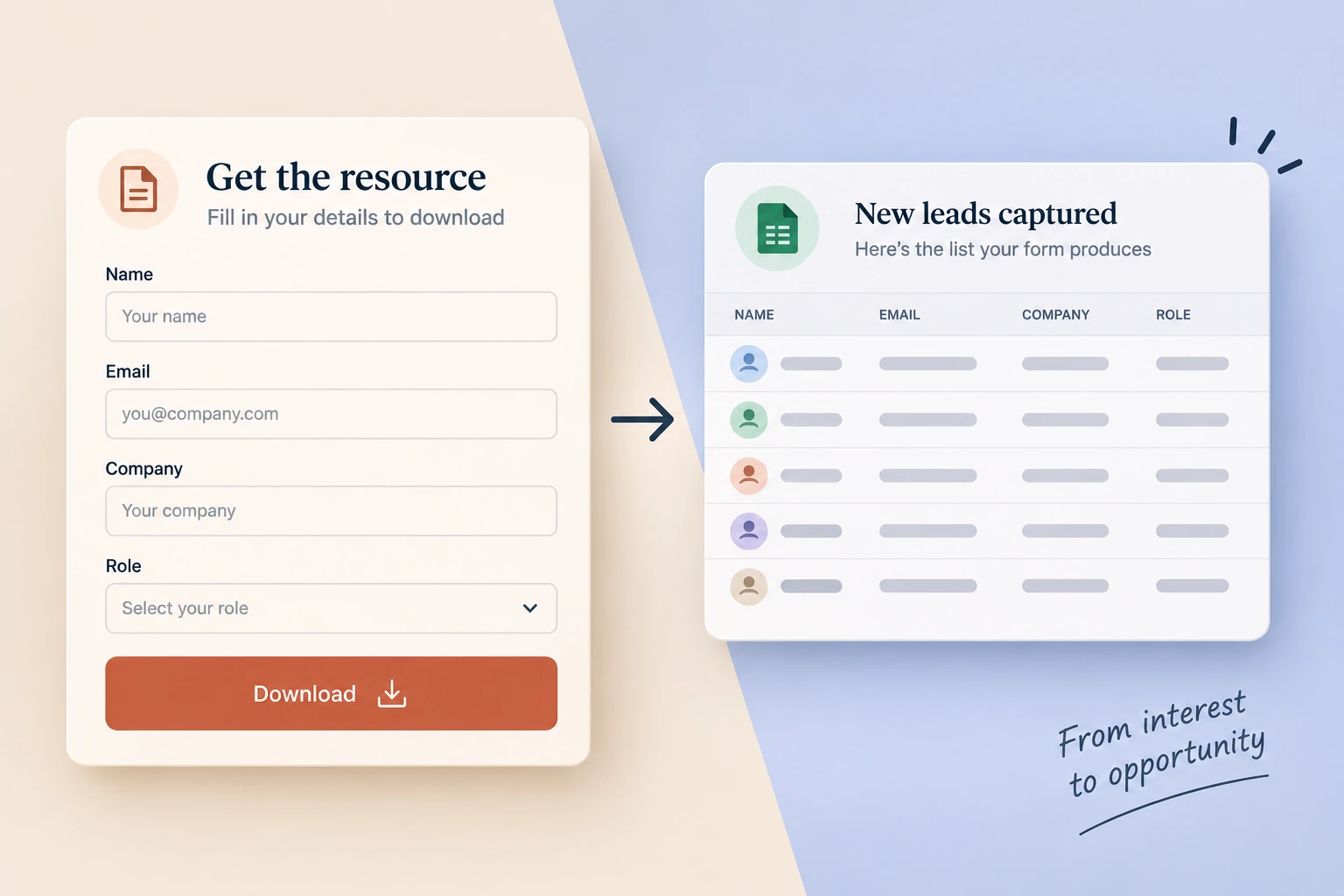
A download tells you somebody wanted a document, which is a different thing from wanting to hear from a business. The form also collects one address for two purposes — the file and the marketing list — which is both a compliance failure and the reason the resulting list underperforms and generates complaints. Permission is better asked at the point value has already been delivered, and the highest-quality unworked source in most Indian businesses is the people who have already emailed them.
The standard advice for building a list is to put something useful behind a form. A guide, a template, a calculator, a checklist. Addresses arrive, the number goes up, everybody is pleased.
What you have collected is a set of people who wanted that document.
That is a real thing to know about them, and it is not the same as knowing they want to hear from your business. Those two populations overlap far less than the tactic assumes.
The two permissions inside one click
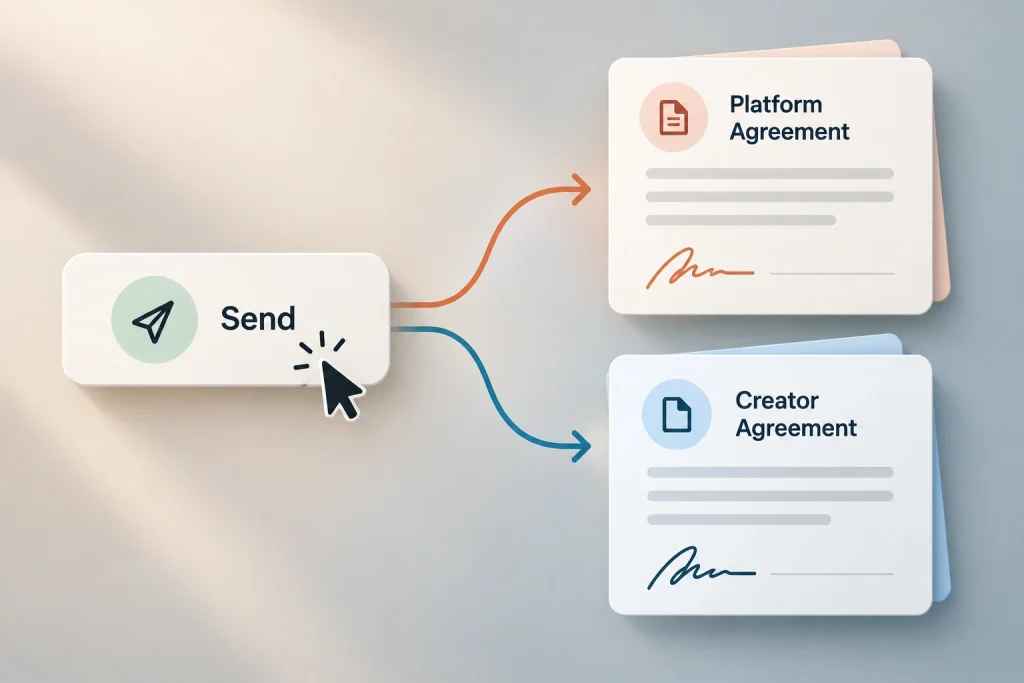
The download form collects an address so the file can be sent, and adds that address to a marketing list, in a single action.
Those are different agreements. Our article on lead form design covers why that matters legally and how the record should be built, and we are not going to repeat it.
The commercial half of the same fault is the part nobody writes down.
Somebody who traded an address for a checklist has not agreed to a relationship. They open your first message because the name is faintly familiar. They ignore the second. By the fourth they are looking for the unsubscribe link, and a proportion will reach for the spam button instead because it is closer.
Those complaints reach further than that person. They accumulate against your sending domain and degrade delivery for everybody on the list, including the people who genuinely wanted to hear from you — which is the mechanism our deliverability article sets out.
So the download-built list underperforms, and it damages the part of the list that works.
Ask after the value, not before it
The relocation is the most useful thing in this article and it costs nothing.
Most businesses ask for the address at the point of first contact, when the person has received nothing and owes you nothing. The trade is a document for an address, and both sides know it.
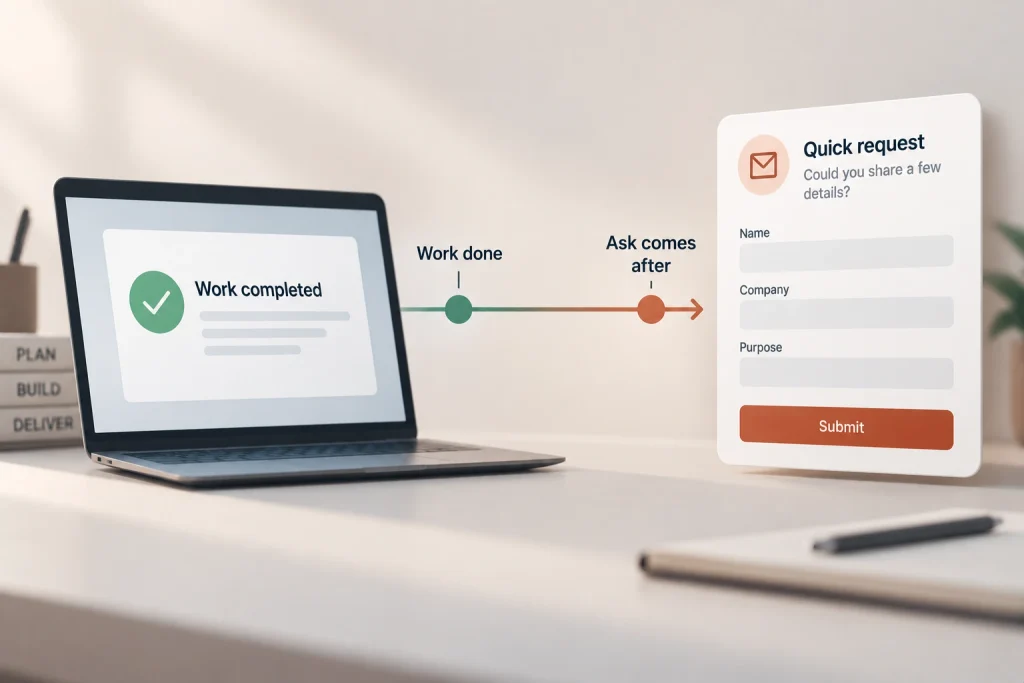
Ask instead at the point where value has already been delivered.
After the consultation call, when you have spent forty minutes being useful. After the job is finished and the client is pleased. After somebody has asked a technical question and you answered it properly, at length, for free, with no attempt to sell anything.
At that moment the ask reads as a natural continuation rather than a trade, and the answer is yes far more often — and more importantly, the yes means something, because the person has evidence that hearing from you is worth their attention.
The wording is unremarkable and should be. We send something once a fortnight on this subject — would you like it? Then record the answer properly, which is where the other article’s work applies.
The list already sitting in your inbox
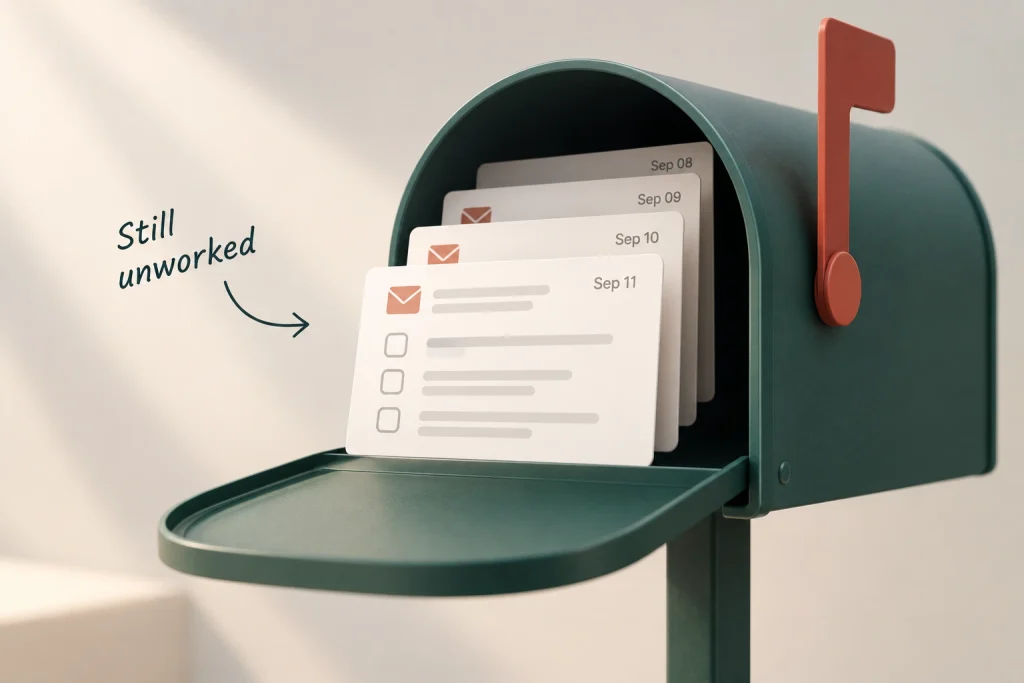
Here is the highest-quality unworked source in most Indian businesses.
Everybody who has ever emailed you. Enquiries that went nowhere. Past customers. The person who asked a question in March. Suppliers and partners. Somebody who came to your event and wrote afterwards.
These are people who know your business, chose to contact you, and in many cases have paid you money. As a population they are better than anything a download will ever produce.
And they have not agreed to receive marketing from you. Having emailed you about an invoice is not consent to a newsletter, which is the distinction our pillar turns on.
So the move is to ask them rather than add them — individually or in a small batch, in a message that is plainly a question rather than a campaign. Something short, from a person, saying what you send, how often, and asking whether they want it.
A meaningful proportion say yes. Those people are worth more than a thousand downloads, and the exercise is free.
Most businesses skip this and add them silently, which converts the best source they have into the largest part of their liability.
The exhibition problem
A specifically Indian failure, and it is worth naming because it is nearly universal.
Trade exhibitions produce a stack of business cards and a scanner full of badge data. That data is then bulk-loaded into a marketing list, and the first campaign goes out the following week to several hundred people who exchanged a card in a crowded hall.
The complaint rate on those sends is the highest of anything most businesses do, and it damages a domain quickly.
The fix happens at the stand, not afterwards. Ask the question there — shall I add you to what we send out? — and mark the card or the record accordingly. It takes four seconds, it is answered honestly, and it converts an unusable pile into a small, real list.
The ones who said no are still worth a personal follow-up from a salesperson. That is a different activity, done by a person, one at a time, and it is not affected by any of this.
What your website should actually offer
Every Indian business site has a box in the footer that says Subscribe, with a field beside it and nothing else.
Nobody knows what they would be agreeing to. Not what arrives, not how often, not what it is about. So nobody fills it in, and the business concludes that email does not work.
A subscription offer has to describe the thing. Three pieces, and they fit in two lines.
What it is, specifically. Not “our newsletter” — the actual subject. Notes on tax changes that affect small manufacturers. What we are seeing in freight rates this month. The mistakes we keep finding in Indian ad accounts.
How often, stated plainly. Fortnightly. Monthly. Whenever something changes, which is honest if it is true and dishonest if it means never.
Who it is for. Naming the reader excludes people, and excluding people is the point. A line saying this is written for finance heads at mid-sized manufacturers will lose you the wrong subscribers, which improves everything downstream.
Add one more thing if you can: a link to the last issue. Letting somebody read it before subscribing removes all the risk from the decision and is the single most persuasive element available. Almost nobody does it, usually because the last issue was not good enough to show — which is itself the finding.
The same three pieces belong wherever you ask: the site, the call follow-up, the exhibition stand and the message to your inbox.
Why the list should get smaller first
The uncomfortable recommendation, and the one businesses resist hardest.
If you cannot establish how most of your existing list arrived — the exercise our pillar describes — then the first move is not growth. It is reduction.
Our article on the Act covers re-permissioning as a mechanism. What we would add here is the commercial reality: it will shrink your list dramatically, and that is the point.
A business that goes from eleven thousand addresses to nine hundred has not lost anything. It has discovered that it had nine hundred. The other ten thousand were producing complaints, damaging delivery, inflating a number in a report and generating nothing.
There is a genuine catch worth flagging honestly. A re-permission message sent to a list you cannot evidence consent for is itself a marketing message to people who did not consent. That is an awkward position and there is no clean answer to it in a marketing article. It is a judgement to take with advice, and the alternative — carrying on sending campaigns — is worse on every dimension.
Nine hundred beats eleven thousand
The arithmetic is worth doing once because it defuses the size argument permanently.
Eleven thousand addresses, mostly cold, delivering poorly, producing a handful of replies and a steady complaint rate that is quietly degrading everything you send.
Nine hundred people who asked, receiving mail that arrives, replying at a rate you can see.
The second is a better business asset by every measure except the one on the slide. And it compounds, because a list built by asking grows by asking, and every new person arrives the same way.
The metric that shows this properly is replies rather than size, which the eleventh article in this cluster covers.
What not to do
Short, because these are all versions of the same mistake.
Do not buy a list. Do not scrape one. Do not use a tool that finds addresses from company domains. Do not export a directory. Do not add somebody because you met them once. Our article on cold outreach sets out the position on all of it.
And do not treat a form fill as consent to everything you might ever send. That is the download problem again, wearing a different form.
What we cannot tell you
We cannot tell you what proportion of your list will survive a re-permission exercise. It varies enormously with how the addresses were collected, and any figure quoted to you is somebody else’s list.
We cannot tell you how fast a properly built list grows. It depends entirely on how many people you deliver value to, which is a function of the business rather than the marketing.
And we cannot tell you the right size. There is no threshold. A B2B firm with four hundred correct addresses may have everybody who matters in its market.
Final thoughts
Stop asking strangers for permission in exchange for a document.
Ask the people you have already helped, at the moment you have helped them. Ask the people already in your inbox, properly, once. Ask at the exhibition stand rather than after it.
And before any of that, find out whether the list you have is an asset or a number.
If you want help working out which of your existing addresses can be kept, you can reach out to us on whatsapp at +91 7738844851 .
More in Blog
Keep reading
All articles →
Ready to talk about your growth?
Tell us what's stuck and we'll tell you what we'd do first. Free, 30 minutes, no pitch.