
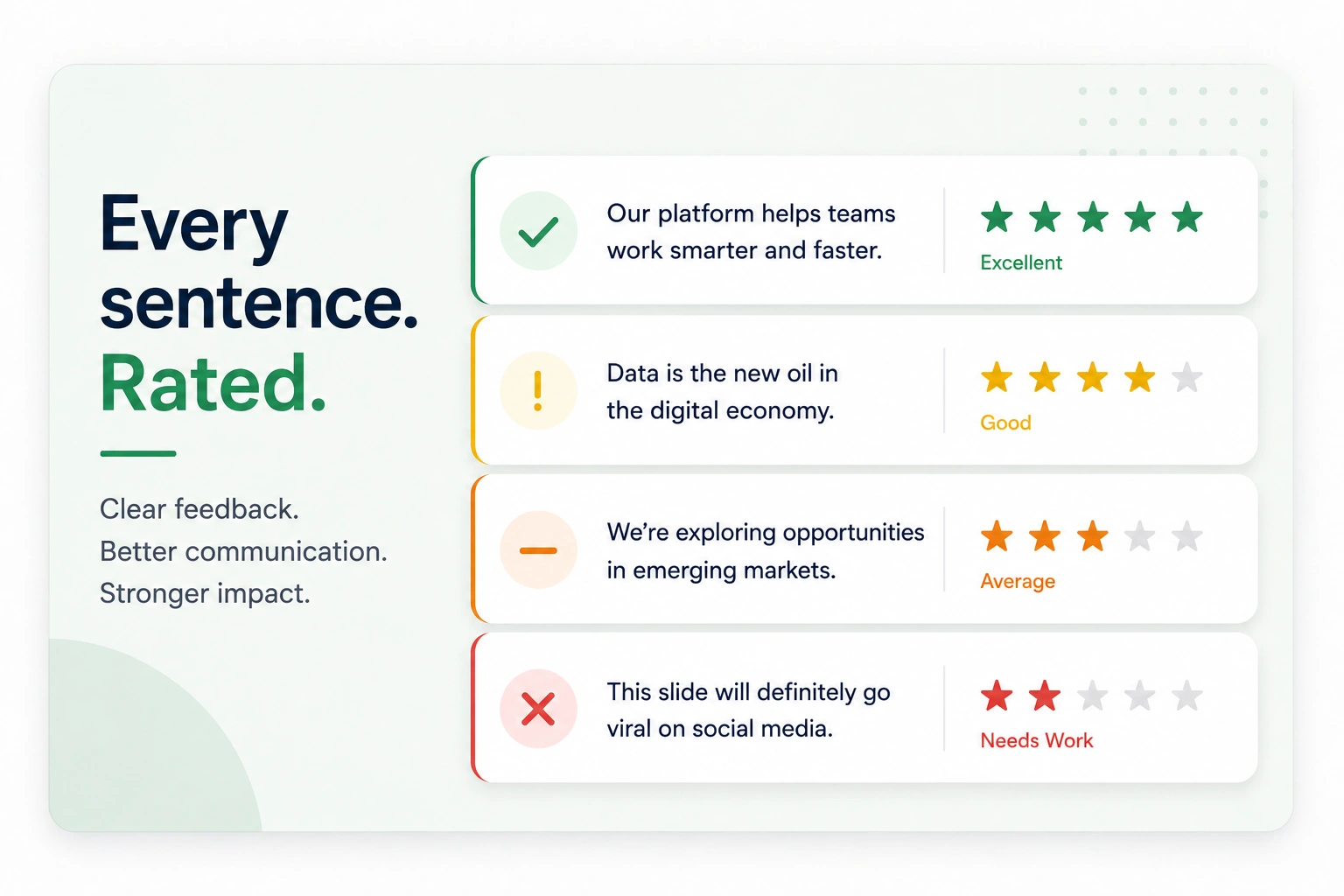
An average rating was built for a reader who skims three reviews. A system asked whether a business is any good reads all of them and can return what they have in common. Which means eight matching complaints across two years survive being surrounded by ninety positive ones — volume dilutes a score and does not dilute a theme. The durable response is operational rather than promotional, and public replies now sit inside the same readable record.
For twenty years the reputation game was a scoring game. Get the number up, keep it above the threshold where people stop worrying, and the individual reviews mattered mainly as fuel for the average.
That worked because the reader was skimming. Somebody looking at 4.6 from two hundred reviews reads three of them and moves on.
Ask an assistant whether a company is any good and something different happens. It reads them. All of them, at once, and it can return what they have in common.
Customers report delays after the sale. Several mention difficulty reaching support. Reviews are positive on quality and mixed on timelines.
That is a different exposure, and most Indian businesses have not looked at their reviews through it.
Themes do not dilute
Here is the consequence that undoes the standard defence.
The received play against bad reviews is volume. Gather enough good ones and the average recovers, and the bad ones sink down the page where nobody scrolls.
That works on a score. It does not work on a theme.
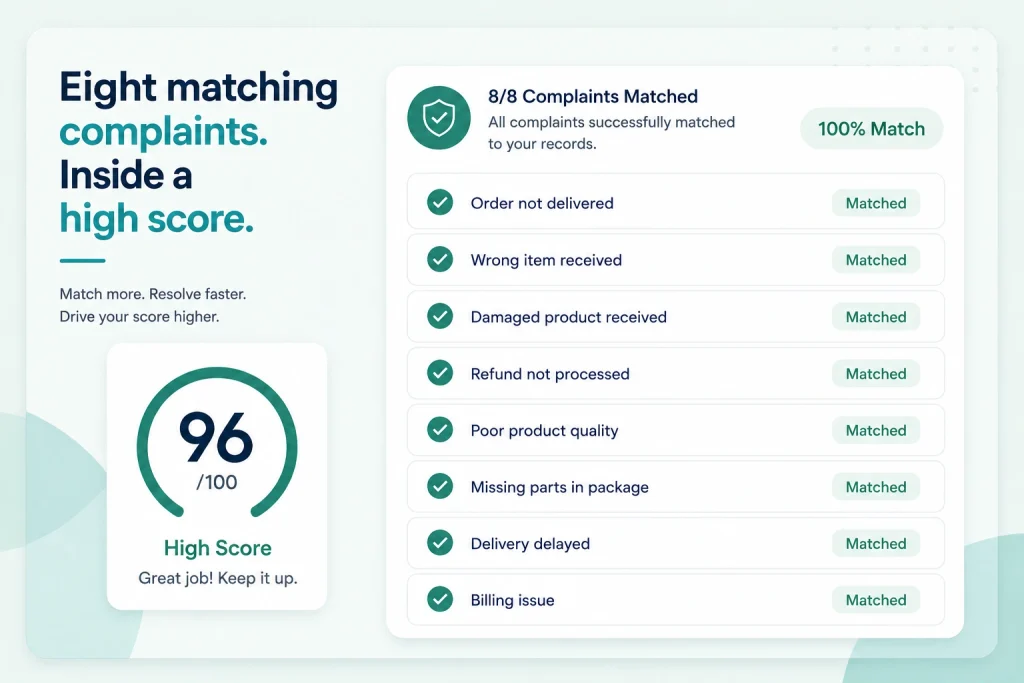
If eight customers across two years described the same failure — in different words, spread across three platforms, surrounded by ninety positive reviews — the pattern is still there. A system reading for substance finds patterns; that is what reading for substance means. The ninety positive reviews do not cancel it, because it was never an arithmetic problem.
Which means a business can have a strong average and a weak summary, and until somebody checks, it will not know.
That check takes ten minutes. Ask two or three systems what customers say about your company, in those words, and read what comes back. Our article on measurement covers making that a monthly habit.
Which makes the fix operational
If themes cannot be diluted, the only durable response is to stop producing the theme.
That is not a marketing task. If eight people mention slow post-sale support, the answer is somebody owning post-sale support, and then a period during which new customers describe a different experience.
The sequence matters and businesses get it backwards. Fixing the operation and then asking for reviews produces reviews about the fixed version. Asking for reviews first produces more evidence of the problem, at speed.
This is a slower and less satisfying recommendation than the one review platforms are built to sell. It is also the only one that survives the change described above.
Your replies are part of the text
A second consequence, cheaper to act on.
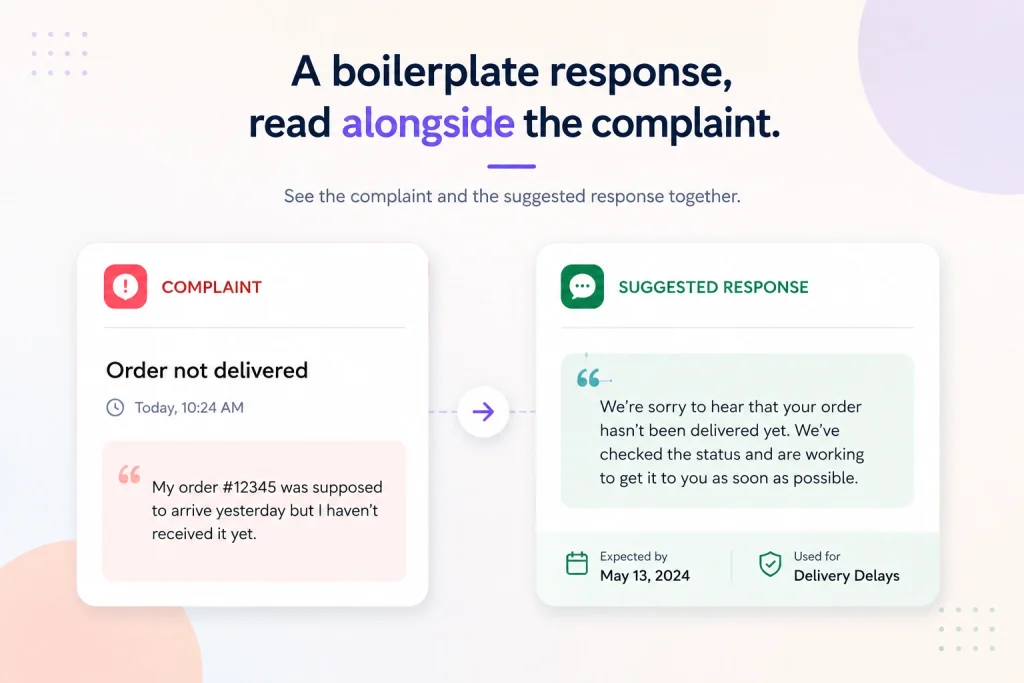
Your public response to a review sits on the same page as the review, in the same text. Anything reading the complaint reads your answer to it.
Which changes what a reply is for. It was a signal to the next human who scrolled past. It is now part of the record of how your company behaves when something goes wrong.
Three things follow.
Boilerplate is worse than nothing. Twenty complaints answered with the same sentence about valuing feedback establishes a pattern of not engaging, in your own words, permanently.
Arguing is a permanent record of arguing. Businesses in India frequently reply to unfair reviews by disputing the facts at length. Sometimes the reviewer is being unfair. The reply is still there, and read alongside the complaint, a long defensive response rarely reads the way its author intended.
A reply that describes a fix is genuinely valuable. This was a real failure, here is what we changed in March. That sentence sits permanently next to the complaint and answers it for every future reader, human or otherwise.
Reply to everything, briefly, specifically, and without heat.
Bought reviews fail on their own terms now
The policy argument against purchased reviews is set out in our article on local search — they are prohibited, and enforcement being uneven is a different thing from the practice being safe.
There is now a second argument that does not rely on policy at all.
Purchased reviews are generic, because generic is cheap. Great service, highly recommended, very professional. They contain no specifics because specifics require knowing something about the business.
Against an average, that is fine — a five-star review counts as five stars whatever it says. Against a system reading for substance, it contributes nothing. It has no information in it.
So a business that has bought two hundred reviews has moved a number that matters less than it did, while the twelve real reviews carrying actual detail continue to supply the entire summary.
That is an unusually clean case where the wrong thing has simply stopped working, independent of whether anyone catches you.
The thread you cannot reply to
Reviews at least come with a reply box. A community discussion does not.
Somebody asks a forum whether anyone has used your company. Four people answer. The thread sits there for years, it is discursive rather than scored, and it is frequently more influential than a listing because it reads as people talking rather than customers rating.
You cannot claim it, cannot reply as the business in most communities without disclosure, and cannot have it removed because it is somebody’s opinion.
Three honest options.
Participate openly, as yourself, identified as the company, if the community permits it. Some do. Answering a factual question plainly — yes that was us, here is what happened, here is what we changed — reads well and stays there alongside the criticism.
Give the community something better to say, which is the slow route and the same one as everything else in this cluster.
Or accept it. Not every thread is worth an intervention, and a two-year-old grumble from one person carries less weight than the effort of engaging with it.
What not to do is post as a customer. These communities are unusually good at spotting it, the accounts get identified, and the identification becomes a new thread that is considerably worse than the original. It also breaks the platform’s rules, which our article on link building covers in a different context and which applies just as directly here.
The reviews nobody in marketing reads
One more source, and it surprises people.
Employee review sites carry opinions about your company that a B2B buyer evaluating a supplier may well encounter — and anything reading broadly about your business reads them too.
For a services firm this matters more than it looks. A buyer choosing between two agencies is buying continuity of the people doing the work. A pattern of reviews describing high turnover, unpaid overtime or chaotic management speaks directly to whether their project will be delivered by the same team in six months.
No marketing department monitors these. They are treated as an HR matter and frequently as an unfair one.
We are not going to suggest managing them, because the honest answer is the same as everywhere else in this article: the pattern is describing something real, and the fix is operational.
What we would suggest is reading them. If you have never looked, look this week. It is ten minutes, it is uncomfortable, and it is information your competitors’ prospects may already have about you.
Where an Indian buyer’s opinion is actually recorded

The last piece is knowing which sources exist for your category, because being absent from them means being absent from the comparison answers.
For consumer and local businesses, the major mapping and listing platforms hold most of it. For software, the international review platforms carry weight even in India, and being unlisted there is a real gap for anyone selling a product. For services and industrial suppliers, it is more fragmented — marketplace ratings, association listings, and thread discussions in communities the vendor rarely visits.
Two cautions.
Paid inclusion in a top-ten listing is usually worth nothing here. Aside from the disclosure questions, a listing on a site nothing draws from supplies nothing to anything. The test is whether the site is named when you run the check described above.
And do not screenshot reviews onto your own website expecting it to help with this. A review republished by you is you saying it about yourself. For professional firms there is a further restriction, which we cover in when your professional body has a view.
Ask everybody, without filtering by expected sentiment, at the point the work is done — and ask them to mention what they actually bought, because a specific review contributes to a summary and a vague one does not.
What we cannot tell you
We cannot tell you how heavily any of these systems weights review content against everything else it reads. Nobody publishes that.
We cannot tell you a review count to aim for. There is no threshold and any number quoted is a guess.
And we cannot tell you that a fixed operational problem will clear from the record quickly. Old reviews stay where they are. What changes is the balance of what is being read, and that takes as long as it takes to accumulate new material.
Final thoughts
Go and ask three systems what customers say about your company. Read the answer properly, twice.
If it names a theme you recognise, you have found the actual work, and it is not a marketing project.
If it names one you do not recognise, that is worth more than any report you will read this month.
If you want help finding where a theme came from and what to do about it, you can reach out to us on whatsapp at +91 7738844851 .
More in Blog
Keep reading
All articles →


Ready to talk about your growth?
Tell us what's stuck and we'll tell you what we'd do first. Free, 30 minutes, no pitch.