
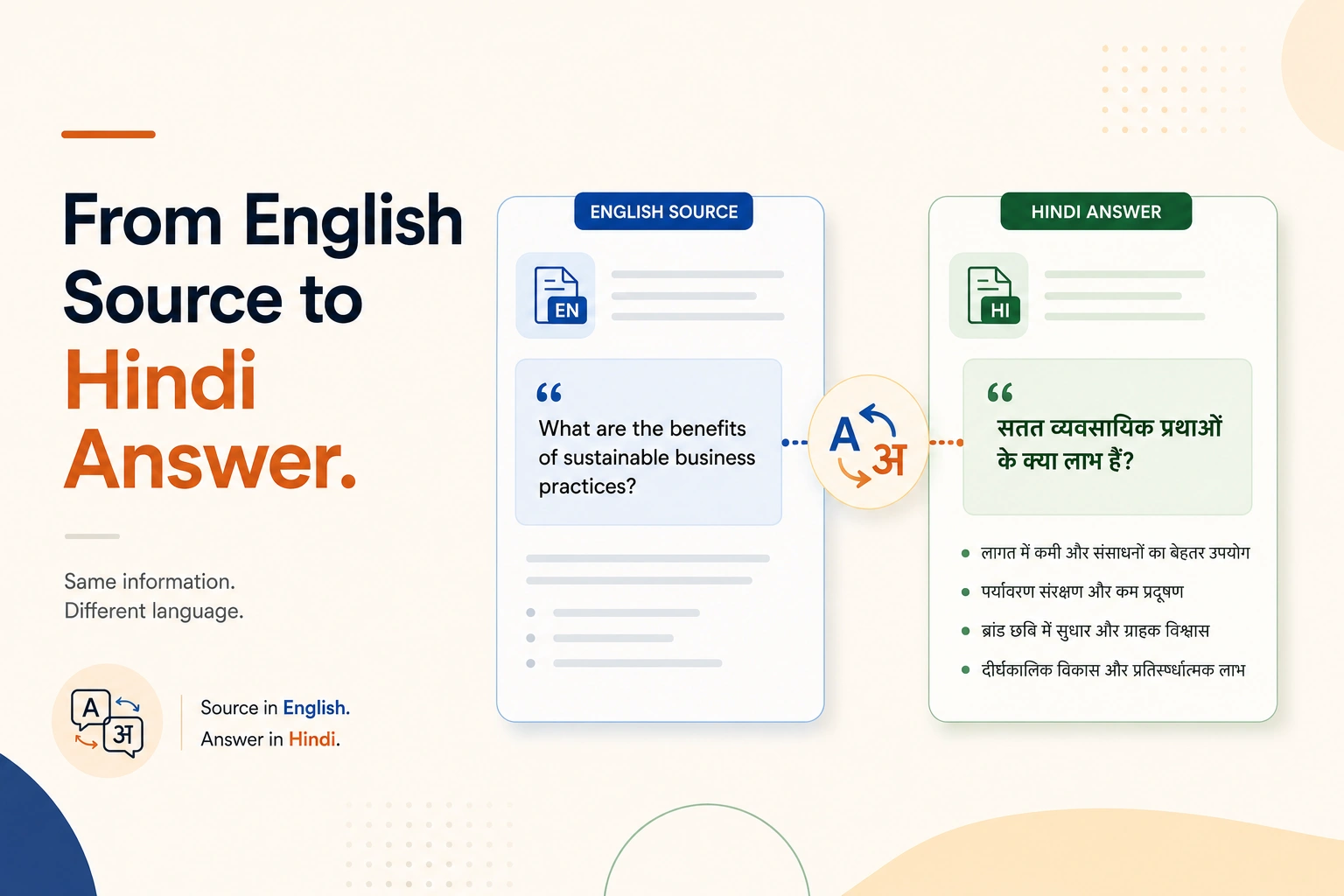
These systems answer in the language they are asked in while drawing on sources in any language, so an English page can be cited in a Hindi answer. That makes translation optional for eligibility rather than necessary. It also means the competition for a Hindi answer includes the entire English corpus, while a genuinely good Marathi or Tamil source is scarce — which makes publishing in one Indian language a scarcity decision. Almost nothing has been published measuring any of this for India.
Before anything else: this is the least evidenced article we have published.
Almost nothing has been written about how these systems handle Indian language queries. The citation research is American, the samples are English, and nobody has run the equivalent work here. What follows is reasoning from how the mechanism works rather than reporting from measurement, and we will say so again where it matters.
With that stated, the mechanism itself tells you something useful.
These systems answer in the language they are asked in, and draw on sources in whatever language holds the information. Retrieval and response are not tied together. So a question asked in Hindi can be answered from an English page, and the person asking may never know which language the source was in.
Which changes what translation is for
The standard response to Indian language demand is to translate the site into six or eight languages. It is expensive, it is sold aggressively, and on this reasoning it is not necessary for eligibility.
Your English page is already available to a Hindi question.
But stopping there would be the wrong conclusion, because the second half of the argument points the other way.
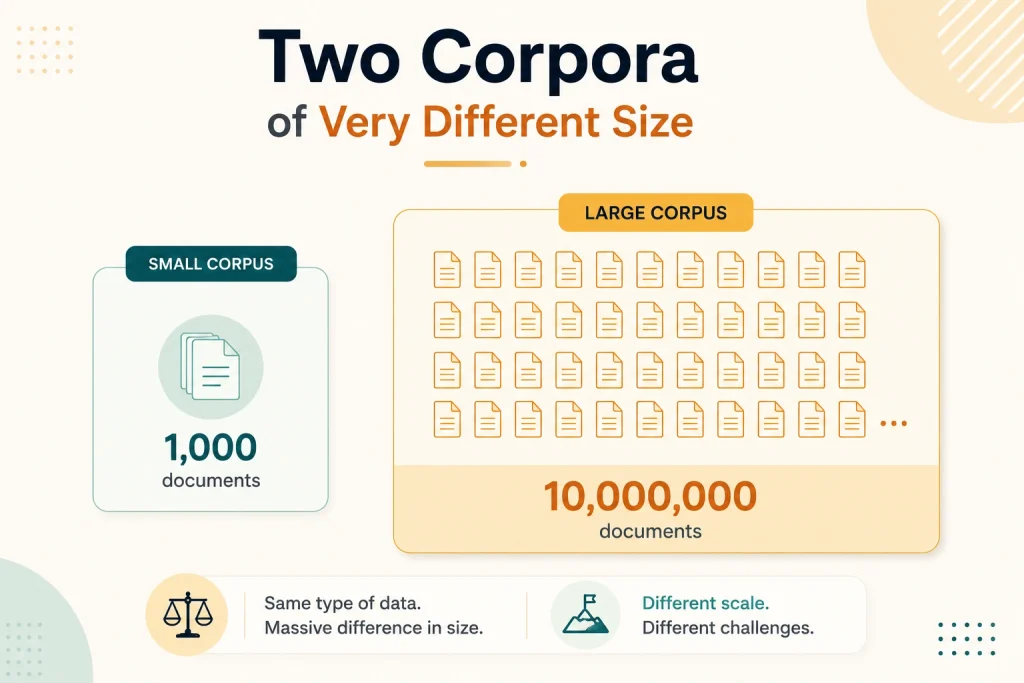
If English sources can serve a non-English answer, then the competition for that answer includes the entire English corpus. Every well-linked, well-written, thoroughly researched English page on the subject is a candidate.
A genuinely good Marathi, Tamil, Bengali or Gujarati source on the same question is scarce.
So the position we would take is narrower than either of the ones on offer. Publishing in an Indian language is optional for being eligible and advantageous for being chosen. It is a scarcity play, not a compliance requirement.
That distinction changes the budget conversation entirely. You are not buying coverage. You are buying a less crowded shelf, and you only need it where the shelf is worth standing on.
Which means one language, properly
If it is a scarcity play, the implications are the opposite of the usual recommendation.
Pick one language. The one your buyers actually transact in, not the one with the largest national speaker count. A Pune manufacturer sells in Marathi. A Coimbatore engineering firm sells in Tamil. The national figures are irrelevant to either of them.
Write originally in it. Not translated — written, by somebody who works in that language and understands the subject.
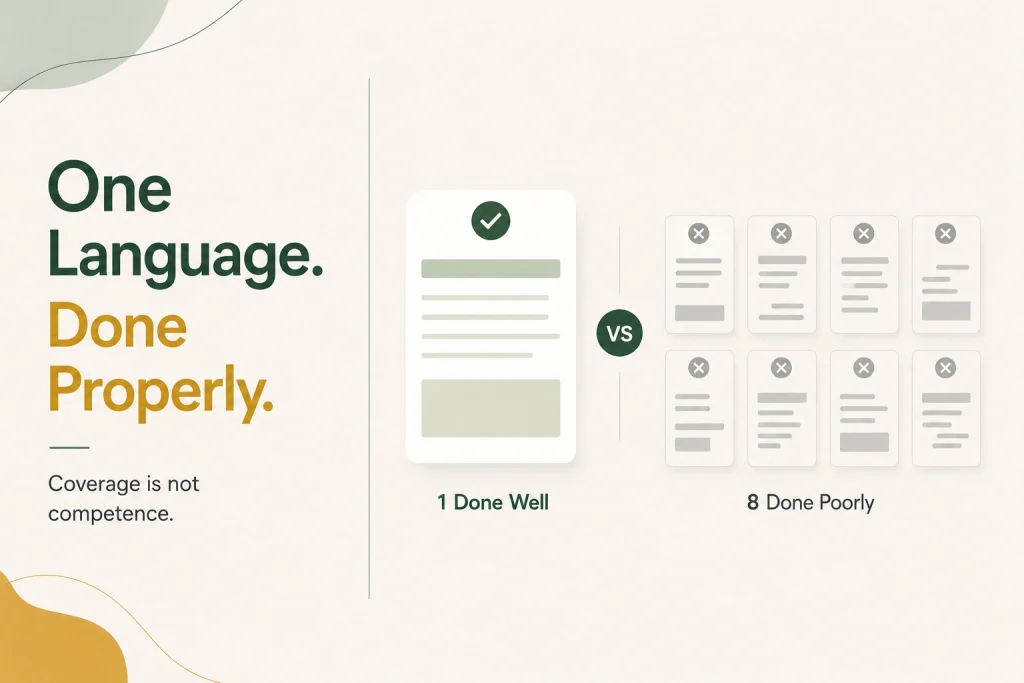
Do fewer pages. Ten genuinely good pages in one language beat two hundred translated ones across eight, because scarcity is the entire mechanism and two hundred mediocre pages create no scarcity anywhere.
This is cheaper than what is usually proposed, which is the main reason it is rarely proposed.
Why translated libraries do not work
Worth being specific about the failure, because machine translation is cheap and the temptation is real.
Terminology goes wrong in ways that are invisible to the person commissioning it. Technical, legal and financial vocabulary in Indian languages is used inconsistently in practice — professionals frequently use the English term inside an otherwise regional-language sentence. A translation that renders everything faithfully produces text no practitioner would write, and a reader in the field notices immediately.
Register goes wrong. Formal written Hindi and the Hindi people actually use in business are different, and machine translation defaults to the formal one. The result reads like a government circular.
And nothing scarce is created. A translation of a page that exists in English adds no information to the corpus. If the argument for publishing in the language is scarcity of good sources, a translation of an existing source is not scarce. It is the same source, again.
The version worth paying for is somebody who works in that language writing what they know. That is a different purchase from translation and it costs more per page and less in total, because you need far fewer pages.
What is worth translating anyway
The argument above is about content written to be cited. It is not an argument against translation generally, and the distinction is worth drawing because otherwise this reads as more sceptical than we mean.
Utility translation is cheap, useful and worth doing. Your contact details, service descriptions, forms, delivery areas, payment options, opening hours, and the sentences a customer needs in order to transact. If a meaningful share of your buyers are more comfortable reading Marathi, having those in Marathi is straightforwardly good, and machine translation with a human check is adequate for it.
Content translation is the one that fails, for the scarcity reason above. Translating your library adds no new information to the corpus, and it costs more than the utility layer.
So the split is: translate the parts people need to complete a transaction, write original material in the parts meant to be found. Those are different budgets with different people doing the work, and conflating them is how businesses end up spending a lot for a translated blog nobody reads.
On where it lives: for one additional language, a folder on your existing domain is the straightforward answer, for the same consolidation reasons our article on internal linking gives about blogs on subdomains. Language annotations in the markup help search understand which version is which and are worth having correct.
Who can actually write it
The hardest part of this recommendation is staffing, and it is worth being blunt about.
The person who can write business content in Marathi or Tamil about your industry is not a content writer with a language listed on their profile. Translation agencies will offer you one and the output will read as translated even when it was not, because the writer does not know the subject.
The people who can do this are practitioners who happen to write, and journalists from that language’s trade and business press. Both exist in every Indian language and neither is looking for content work, which is why they are rarely found.
The practical consequence is that this is a recruiting problem before it is a content problem, and it takes longer to solve than the writing takes to do. A firm that finds one such person and keeps them has an asset its competitors cannot quickly copy — which is a different proposition from a translation subscription anybody can buy tomorrow.
Budget for fewer pages and a better writer. Ten pages a year from somebody who knows both the language and the work is worth more than a hundred from anyone else.
How Indians actually type the question
The other half of this, and it is the part tools cannot see.
Indian search queries mix languages and scripts constantly. A question about repair costs might be asked with English nouns inside a Hindi sentence, written in Roman script. The same person might ask it three different ways in a week.
Keyword tools handle this badly. Our article on keyword difficulty covers why demand below a tool’s detection threshold is reported as nothing — and code-mixed, transliterated queries fragment across so many written forms that each variant individually looks like nothing.
Two things follow.
Do not use tool volume to decide whether Indian language demand exists. It will tell you it does not.
And write the way people speak, including the English terms they use inside their own sentences. A page that renders every technical term into pure Marathi is less findable and less readable than one that uses the words practitioners actually use.
The same applies to voice, which is a large and growing share of Indian queries and produces longer, more conversational phrasing than typing does. That suits this format, and it favours pages written in sentences rather than in keyword-optimised headings — which is the craft argument in our article on writing for extraction.
The data gap, stated properly
We have now said in three articles in this cluster that nobody has published Indian data on this subject. It is worth saying once, precisely, what is missing.
Nobody has published which sources get cited for Indian language queries. Nobody has published whether the citation concentration described in our article on citation sources holds here, or whether Indian language answers draw on a narrower or broader set. Nobody has published whether an English source or a regional-language source is more likely to be named in a Hindi answer.
That last question is the one this entire article turns on, and we are reasoning about it rather than reporting it.
We would rather be transparent about that than write with borrowed confidence. And we intend to fix it: running a fixed set of Indian language questions monthly and recording what is cited is not difficult, and after a year we would have the only such record in this market.
What we cannot tell you
Whether regional-language sources are actually favoured in regional-language answers. That is the central question and it is unmeasured.
Whether the effect differs by language, by subject or by how much material exists in that language already. We would expect it to, substantially.
Whether any of this holds in six months, given how fast the surrounding systems are changing.
And we cannot give you a volume figure for any Indian language query, for the reasons above.
Final thoughts
Do not translate your site into eight languages because somebody told you Indian search is going vernacular. Your English pages are already eligible.
Do consider writing originally in one language where your buyers actually transact, because that shelf is nearly empty and the English one is not.
And treat every confident claim you read about this — including the reasoning in this article — as provisional until somebody publishes the measurement.
If you want help deciding whether the language play is worth it for your specific market, you can reach out to us on whatsapp at +91 7738844851 .
More in Blog
Keep reading
All articles →
Ready to talk about your growth?
Tell us what's stuck and we'll tell you what we'd do first. Free, 30 minutes, no pitch.