
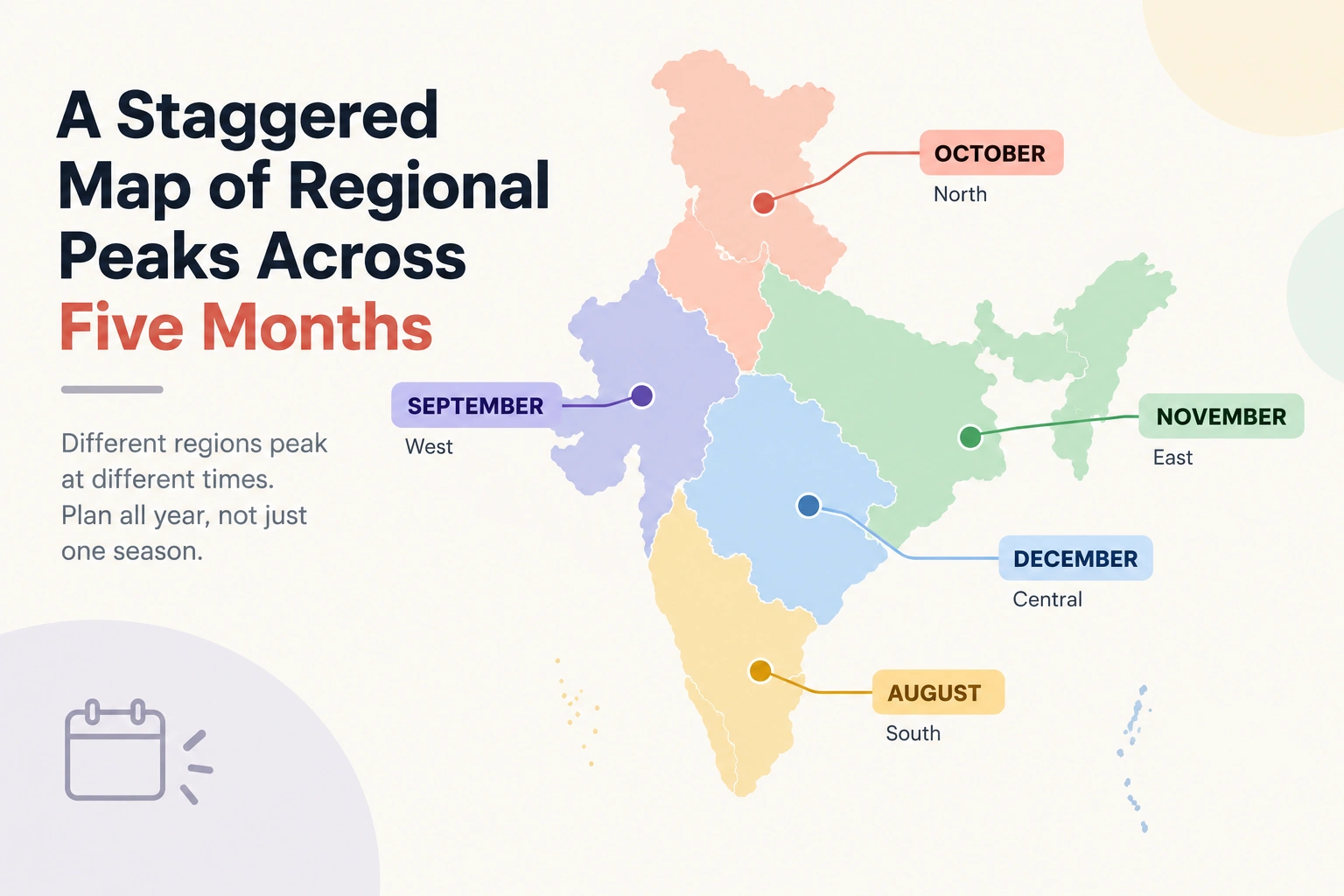
India has no single festive date, and most marketing calendars are built as though it does. The season is a set of regionally staggered peaks — Onam in Kerala weeks ahead of everything, Ganesh Chaturthi in Maharashtra, Durga Puja in Bengal, Navratri in Gujarat, and Pongal and Sankranti in January after the national campaign has been switched off. Because almost every advertiser concentrates on the national week, the regional peaks are the least contested inventory of the year, and the buying happens in the run-up rather than on the day itself.
Open any Indian marketing calendar and it has one large marker on it.
Everything is planned around that marker. Creative is briefed for it, budget is loaded against it, and the team works backwards from a single week in October or November.
For a business selling in Kerala, that plan misses the season entirely.
The season is a stagger, not a date
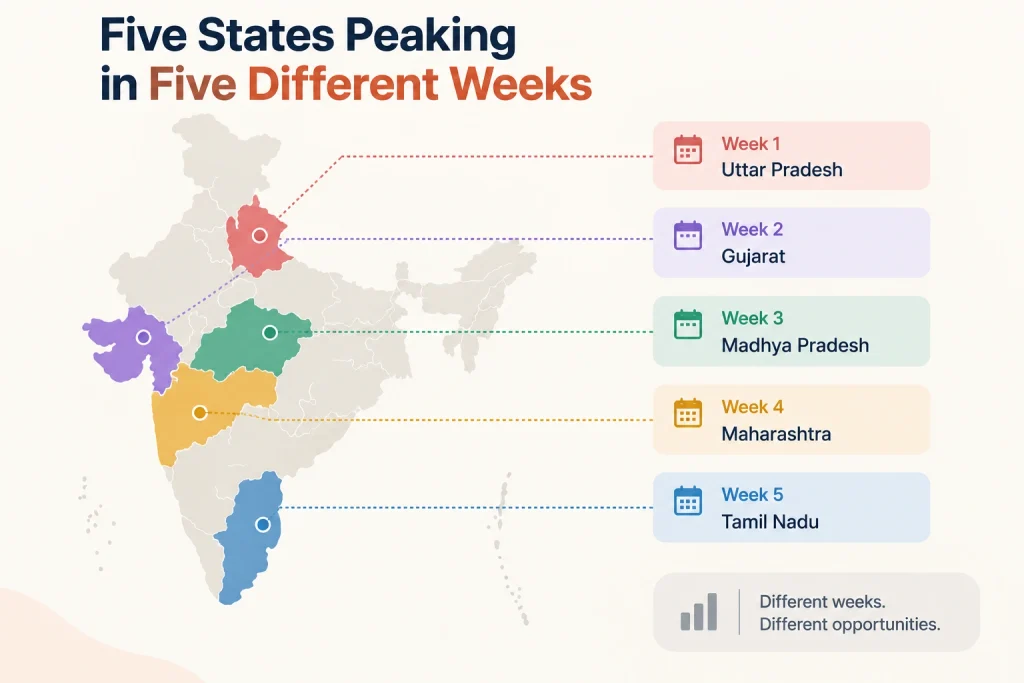
Onam arrives in Kerala well before the rest of the country begins. By the time a national campaign launches, the Kerala buying period has been and gone.
Ganesh Chaturthi is the Maharashtra peak, and for a Mumbai or Pune business it frequently matters more than the national week does. Durga Puja is the Bengal season and it operates on its own commercial logic entirely. Navratri drives Gujarat. Pongal and Sankranti arrive in January, by which point most Indian marketing budgets have been switched off and the team is discussing next year.
There are more, and which ones matter depends entirely on where your customers are rather than on where your office is.
A national calendar built around one week is therefore wrong for most of the country for most of the season — early in Kerala, late in Bengal, and absent in January when a large part of the south is buying.
The dates move, and reused calendars drift
Most of these follow lunar reckoning, so they shift against the Gregorian calendar every year.
Which means the spreadsheet from two seasons ago is not slightly stale. It is pointing at the wrong fortnight, and a business planning in June from last year’s plan will brief creative for a window that has already moved.
The dates also differ in observance rather than only in timing. A day that is a full commercial shutdown in one state is an ordinary working day two states away, which matters as much for your own operations as for your advertising.
Two sources are worth more than any marketing calendar for settling this. Government holiday notifications give you gazetted and restricted days by year. And the banking holiday schedule, published state by state, is an unusually good proxy for which regions actually stop — because banks close where commerce pauses.
Check both in April, before anybody briefs anything.
The peaks nobody bids on
Here is the part that turns a calendar into a media plan.
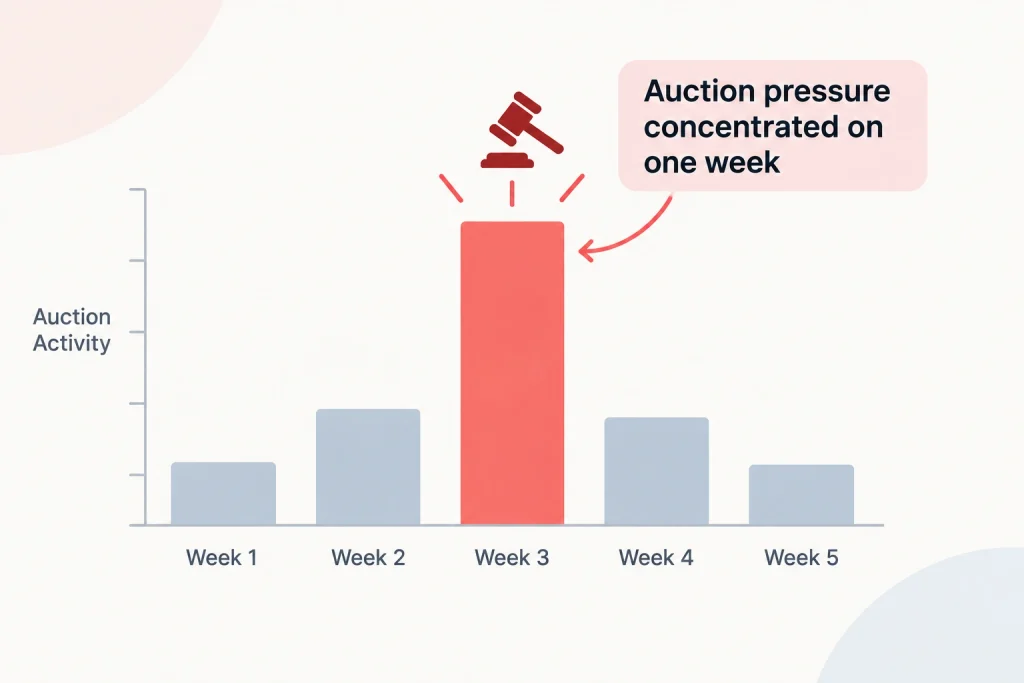
Our festive pillar sets out what happens to the auction during the national week, and what it costs simply to hold the position you already had.
Every one of those bidders is concentrated on the same fortnight.
The regional peaks are not. A business advertising into Onam, or into Durga Puja, or into Pongal, is competing against a far thinner field — because the national advertisers are not there yet, or have already stopped, or have never built a campaign for that market at all.
So for a business whose customers are regionally concentrated, the least contested inventory of the entire year sits outside the week everybody plans for.
That is a genuine arbitrage and it is available to precisely the businesses least able to afford the national auction — the regional SME competing against national brands with budgets it cannot match. In its own market, in its own week, that asymmetry disappears.
The language question sits alongside this and is a separate decision, covered in our article on regional language advertising. Peaking in the right week and speaking the right language are two different choices, and doing the first without the second still works.
The window opens before the festival
The other timing error, and it recurs every single year.
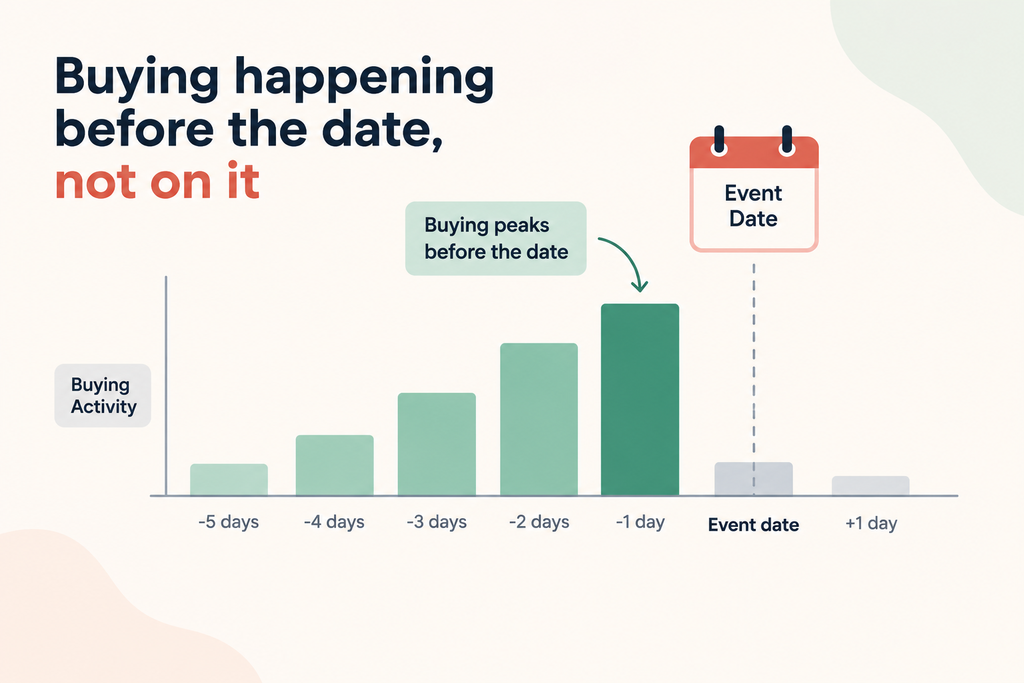
Buying happens in the run-up. People purchase in the days and weeks before a festival, because the thing has to arrive, be wrapped, be worn, be given or be installed by the day itself.
A campaign that launches on the date is advertising into the aftermath. The decision has been made, the money has been spent, and the impressions are being served to people who have finished.
How long the run-up runs differs by category. Anything requiring delivery needs a longer lead than something bought in a shop. High-consideration purchases start earlier than impulse ones. A service booked for the festival — a photographer, a caterer, a decorator — is chosen weeks ahead and is effectively unavailable to advertising in the final fortnight.
Work backwards from the date rather than forwards. And build the calendar around when the decision is made, which is the only week that matters.
Your own blackouts belong on the same calendar
The part that gets planned last and causes the most damage.
Your team is also observing these festivals. So is your agency, your developer, your warehouse and your delivery partner.
A campaign scheduled to launch on a day when nobody is available to approve it, monitor it or answer the enquiries it produces is a campaign that runs unattended into the highest-cost auction of the year.
Mark two things alongside the commercial dates. When your own people are away, region by region if your team is distributed. And when your suppliers are away, which is frequently a different set of days.
Then move the launches. A campaign starting two days earlier, with somebody watching it, beats one starting on the optimal date with nobody at a desk.
What this does to the other channels
Two consequences worth planning for, both covered properly elsewhere.
Email cadence. A schedule set in January will land sends inside these windows, and our frequency article covers why a message arriving when nobody is reading costs more than the send.
Message volume. If you are planning a festive broadcast, the constraint is how many people you can reach in a day rather than how many messages you may send — the finding in our article on messaging limits, and a forty-thousand-contact list is a multi-day send that has to start before the window rather than inside it.
What we cannot tell you
We cannot give you dates in this article, and we deliberately have not. They move annually, an article carrying them is wrong within a year, and the authoritative sources are a government notification and a banking calendar rather than a marketing blog.
We cannot tell you which festivals matter for your business. That follows from where your customers are, which you know and we do not.
And we cannot tell you the size of the regional cost advantage. It varies by category, by state and by year, and it is measurable in your own account within one season by comparing the same campaign in two windows.
Final thoughts
Replace the single marker with a map. Which regions do your customers actually sit in, which weeks matter there, and when in each of those does the deciding happen.
Then check the government and banking calendars in April, mark your own team’s absences beside the commercial dates, and move every launch to the run-up.
The businesses that do this find the cheapest inventory of their year in a week nobody else was bidding on.
If you want the map built for your specific markets before next season, you can reach out to us on whatsapp at +91 7738844851 .
More in Blog
Keep reading
All articles →

Ready to talk about your growth?
Tell us what's stuck and we'll tell you what we'd do first. Free, 30 minutes, no pitch.