

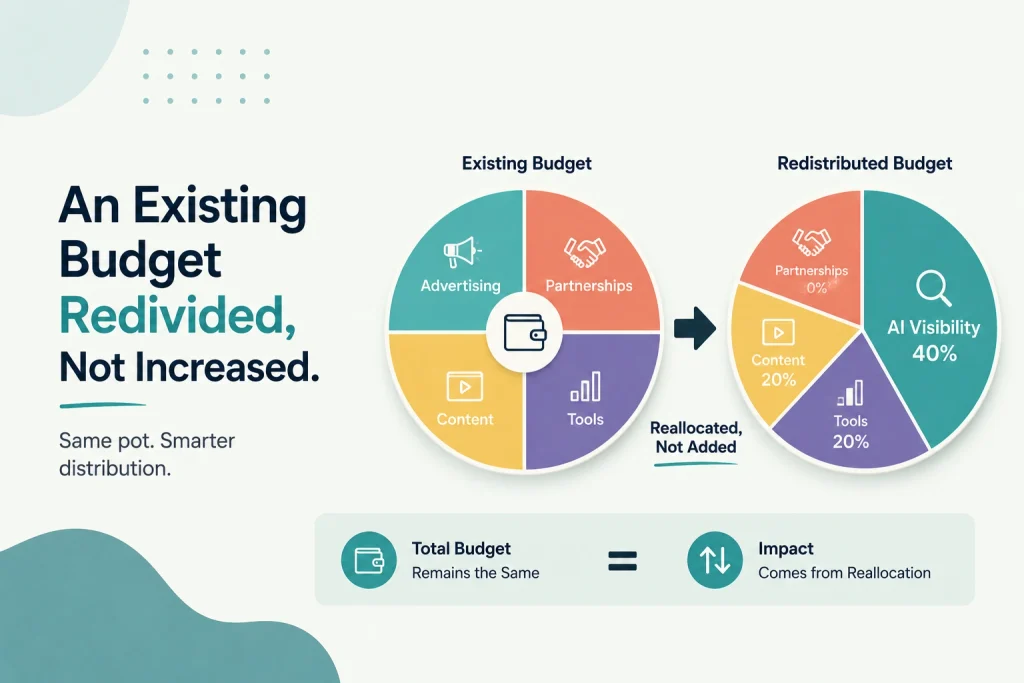
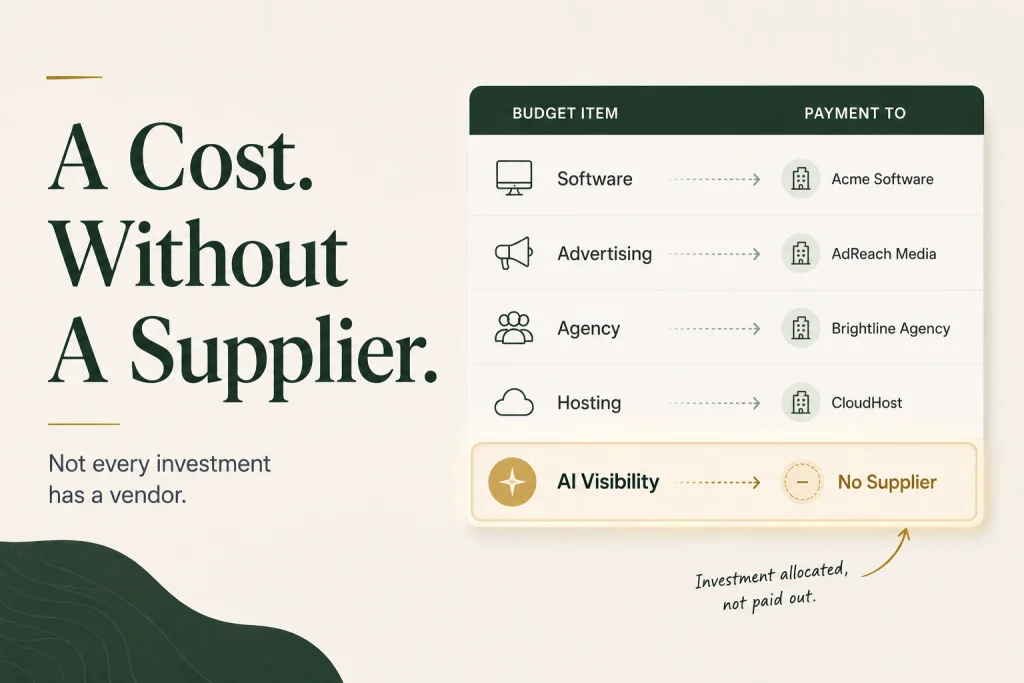
A typical GEO package contains an llms.txt file, a schema implementation, an FAQ section, a visibility dashboard and AI-optimised content. Four of those five are dead, duplicated or conditional, and the fifth is an existing content budget relabelled. Everything that actually moves AI visibility — being indexed, fetchable, mentioned, accurate and quotable — was already meant to be happening, which makes this a reallocation of existing spend rather than a new budget line.
We sell marketing services and could sell you a GEO package tomorrow. Hold that in mind, because this article argues that most of one should not exist.
Read back through everything that actually moves visibility in AI answers and list it. Be indexed. Be readable without scripts. Be mentioned by other people. Have your facts consistent everywhere. Write things specific enough to quote. Answer the questions that decide a purchase rather than the ones that open a conversation.
Every item on that list is something you were already meant to be doing.
Which is the whole argument. A separate line called AI visibility creates a separate workstream, with a separate report, delivered by somebody whose incentive is to show movement on it. The work itself is not separate and never was.
Open the package

Here is what is typically inside one, and what each item is actually worth.
An llms.txt file. The evidence against it is unusually clear and we set it out in full in our assessment of the file — near-total non-fetching, no measured correlation with citation, and Google stating it does not use it. Worth nothing for this purpose.
A schema implementation. Worth something, occasionally, and frequently sold for result types that no longer render. Structured data establishes eligibility for a feature; if no feature exists for your content, it produces no visible change. Worth checking, not worth a monthly fee.
An FAQ section for every page. The rich result this chased was withdrawn in May 2026. Worth nothing, and it makes your pages longer.
A visibility dashboard. Potentially worth real money for a large brand tracking many products across markets. For most Indian businesses it is a number generated from a query set somebody else chose, and whether it means anything depends on questions our measurement article sets out. Ask those before paying.
AI-optimised content. This is content. Written to be quotable rather than to cover everything, which is a craft adjustment rather than a new product. You already have a content budget. This is that budget, better spent.
Four of the five are dead, duplicated, or conditional. The fifth is a relabelling.
So what should you actually spend
Start with the things that cost nothing, because a business that has not done them should not be buying anything.
Check your important pages render their content without JavaScript. Check what your site currently permits crawlers to do. Make the facts about your business agree across every place they appear. Publish one plain page of current facts. Fill in your own enquiry form and see whether anybody replies.
That is a week of somebody’s attention and no invoice. It is also the majority of the controllable ground.
Then the reallocation, and it has three parts.
Move content budget from volume to specificity. Fewer pages, each answering something precisely, with numbers and named conditions in them. This is not more expensive. It is frequently cheaper, because the constraint becomes having something to say rather than having somebody to write.
Move some agency budget to senior internal time. The work in what to send a journalist — being available on the day something happens, bringing a number nobody else has — cannot be delegated. Two hours a week of somebody senior outperforms a retainer spent on distribution, and it is the item most likely to be missing from any proposal.
And fund one piece of original data. Something only your business can count, published annually. It is the scarcest thing in this entire subject and the most reliable route to being cited.
Notice that none of those three is a new supplier.
The bill nobody itemises
The real cost of doing this properly is internal, and it is the reason most programmes fail.
Somebody senior has to say something specific and defensible, on short notice, repeatedly. Somebody has to know what the business actually observes and be willing to publish it. Somebody has to answer the question a journalist asks on the day they ask it.
None of that is purchasable. An agency can shape it, structure it, publish it and chase it. It cannot generate it, and a proposal that implies otherwise is describing a service that does not produce results in this channel.
Which means the honest budget conversation is partly about calendar time rather than money — and that is a harder thing to approve than an invoice, which is precisely why businesses prefer the invoice.
Who owns it internally
The related question is which desk this sits on, and there is a wrong answer that is becoming popular.
Do not create a role for it. A GEO specialist in 2026 is a person hired to own a subject that has existed for about eighteen months, with no established body of practice, whose job security depends on the subject remaining separate. That is a poor incentive to install in a small marketing team.
It belongs with whoever owns content, because that is where nearly all of the work is. The technical items are a handful of checks that belong with whoever owns the website, done once and reviewed annually.
The genuinely new responsibility is small and specific: somebody runs the monthly presence check, records who is being named, and brings that to the content conversation. An hour a month, added to an existing job.
If a proposal or a job description makes it bigger than that, ask what the extra time is being spent on.
If you already bought a package
A fair number of readers will be mid-contract, and the useful thing is what to do about it rather than how it happened.
Cancel nothing in a temper. Open the deliverable list and mark each item against the inventory above.
The file, if it is a recurring charge, is worth ending. The FAQ implementation should stop being added to new pages, though existing ones do no harm and can be removed the next time you touch those pages. The schema work is worth one honest conversation about which result type it is aimed at — if the supplier cannot name one that still exists, that item is finished.
The dashboard is the one to be careful with. If it is answering the sampling questions properly it may be the most useful thing in the package, and cancelling it removes your only continuity of measurement. Ask first.
And the content component is worth keeping and redirecting, not cutting. Fewer pages, more specific, with a named claim in each.
That conversation usually goes better than people expect. A supplier who is behind the evidence is often relieved to be told what the client actually wants, and one who becomes defensive about an llms.txt file has told you something useful for free.
When to spend nothing at all
A real share of Indian businesses should spend zero on this, and no article written by an agency ever says so.
If your buyers do not research online. Plenty of Indian B2B still runs on referral, relationship and trade networks. If your last twenty customers came through introductions, this is not your constraint.
If you have not done the free checks. Spending on visibility while your pages are not indexed is spending on the wrong problem.
If your enquiries are not being answered. We have found forms delivering to abandoned mailboxes and profile messages unread for months. Fix that first. It is the cheapest revenue in any business.
If you are three people and growing through delivery. The capacity to serve more clients is the binding constraint, not visibility. Being found by people you cannot serve is not a win.
What we would sell you
Since we are an interested party, it is only fair to say what we think is worth buying, from us or from anybody.
The week of checks, done properly and written up as three things to fix. A content programme aimed at fewer, sharper pages. Help identifying and publishing the one number your business holds. And the monthly presence check, run and reported honestly rather than dashboarded.
That is a smaller engagement than a GEO package and a longer one, because it produces a slow, compounding result rather than a deliverable.
We would rather sell that and be judged on it than sell a file that nothing fetches.
What we cannot tell you
We cannot give you a rupee figure. It depends entirely on what you already have, and any range quoted without seeing that is invented — which is a position our article on hiring an agency takes about SEO pricing generally.
We cannot tell you the return. Most exposure produces no click, as our article on AI Mode sets out, and the path from a citation to an enquiry is not traceable end to end.
And we cannot tell you this analysis holds in a year. If the systems begin using something that can only be supplied by a specialist, a specialist budget will become correct. That is not the current position.
Final thoughts
Do not open a new budget line. Open the proposal and price the contents.
Do the free week first. Then reallocate what you already spend toward fewer and sharper pages, senior time that cannot be outsourced, and one number nobody else has.
And if a supplier’s answer to AI visibility can be delivered without ever asking what your business knows that others do not, you are looking at a package rather than a plan.
If you want somebody to open the proposal with you, you can reach out to us on whatsapp at +91 7738844851 .
More in Blog
Keep reading
All articles →


Ready to talk about your growth?
Tell us what's stuck and we'll tell you what we'd do first. Free, 30 minutes, no pitch.