
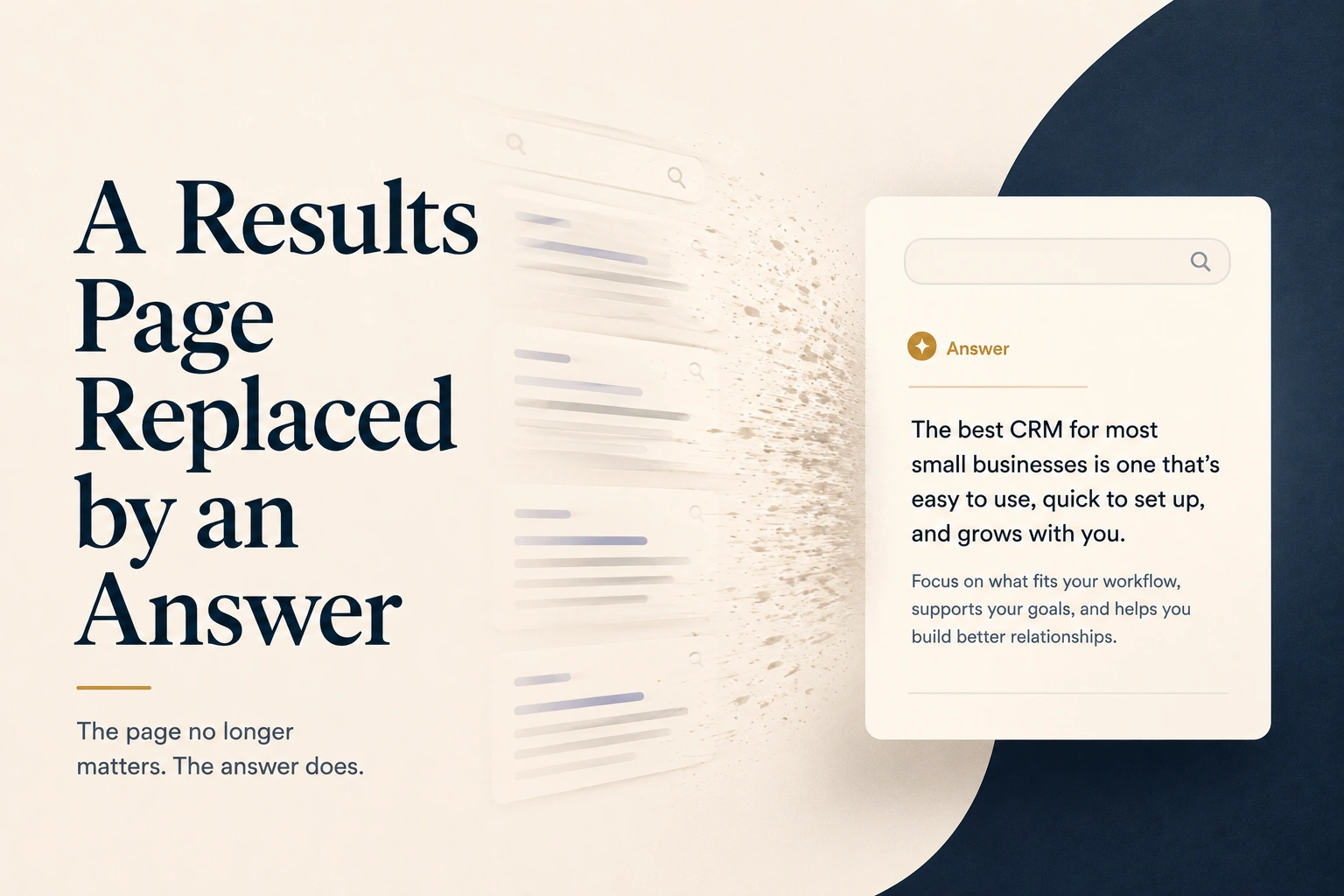
Google is reported to have made AI Mode the default search experience globally on 19 May 2026, and India received it in August 2025. Reported zero-click rates run around 83 per cent for AI Overviews and near 93 per cent for AI Mode. So the click is now the exception rather than the outcome, and a business can hold every position it had while enquiries decline. AI Mode is also conversational, which moves the deciding questions somewhere query data cannot see.
Most marketing conversations in India still describe search the same way: there is an AI answer at the top now, and the real results underneath it.
That describes a layout which is reportedly no longer the default.
Google is reported to have made AI Mode the default search experience globally at its developer conference on 19 May 2026 — the conversational interface as the primary product rather than an optional tab beside the others.
India is further into this than the coverage suggests. AI Mode reached India in August 2025. Your customers have been using it for a year.
The number that decides everything else
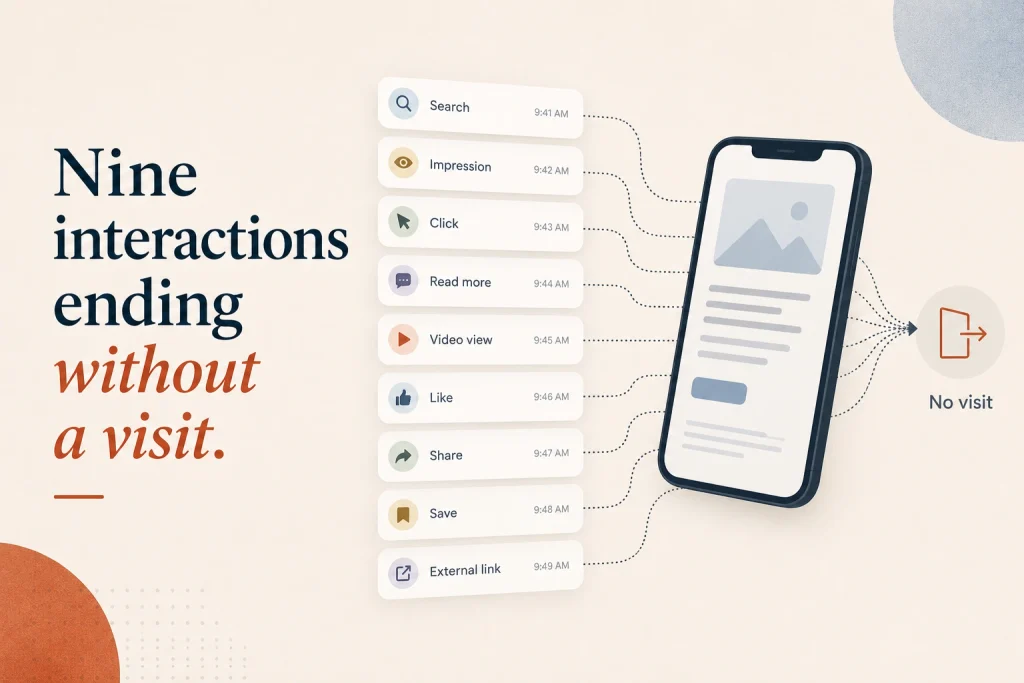
Reported zero-click rates put AI Overviews around 83 per cent and AI Mode near 93 per cent.
Treat those as directional rather than precise — they come from different studies with different definitions — but the direction has been consistent across everything published this year.
Nine interactions in ten end without anybody visiting a website.
Which forces a conclusion that marketing departments have been avoiding. If the click is the exception, the click was never the product. It was a delivery mechanism for something else — being the source of an answer, being named, being the company somebody remembers when they decide.
That was always true. It was disguised for twenty years by the fact that the delivery mechanism was measurable and the thing being delivered was not.
What this actually changes, which is less than it sounds
The alarming version of this story ends with SEO being finished. It is not, and we set out why in our pillar: these systems draw on the open web, and being in the index and being about something specific remain the entry conditions.
Almost nothing changes tactically. What changes is what you expect and what you report.
Sessions stop being the primary outcome. A page can be doing its entire job and produce no session at all. Continuing to report organic traffic as the headline number means reporting a decline while performance improves — and our article on measurement covers what belongs there instead.
Presence becomes the thing to watch, with the three layers set out in tracking AI search traffic.
And the mention becomes more valuable than the link, for the reason our article on mentions gives: being named survives a zero-click interaction and a link does not travel through one.
That is the whole adjustment. It is more a change of accounting than of activity, which is why the panic is out of proportion and the complacency is also unwise.
The conversation you cannot see
Here is the consequence nobody has written about, and we think it is the most important one for B2B.
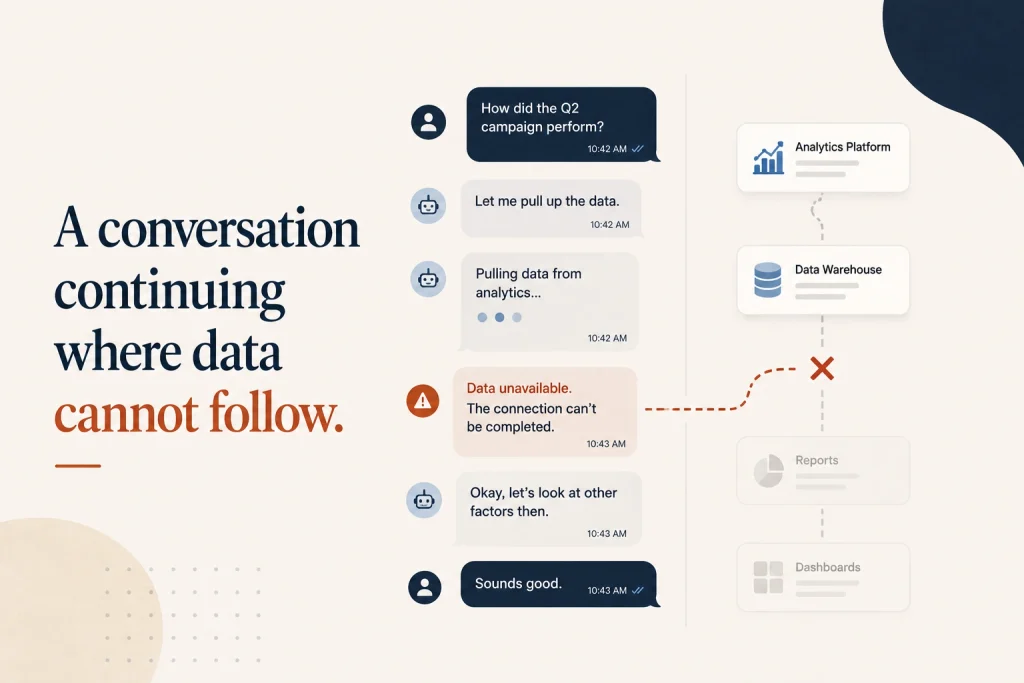
AI Mode is conversational. Somebody asks a question, receives an answer, and then asks the next thing — inside the same interface, without returning to a search box.
So the second, third and fourth questions in a buying process now happen somewhere that generates no query data you can access.
Think about what those questions usually are. The first is broad: what is this thing, how does it work. The later ones are the ones that decide a purchase: which of these two is better for a company like mine, what does it cost, what goes wrong with it, who should I not use.
Those are the queries a business most wants to be present for, and they have moved into a conversation.
Two practical consequences follow.
Your Search Console query data is now a partial picture of the actual demand. It shows what people typed to begin with. It does not show where the conversation went. Reading it as the complete set of questions your market asks will mislead you.
And the answer to a follow-up question is assembled at that moment, drawing on whatever addresses that specific thing. So the pages worth having are the ones that answer the second and third questions plainly — comparisons, costs, failure modes, unsuitability — rather than the introductory pages most businesses publish.
If your library is all definitions and no comparisons, you are present for the opening question and absent for the deciding ones.
The pages that answer the deciding questions
If the later questions are the ones that matter, it is worth being specific about which pages answer them — because they are consistently the pages Indian businesses do not publish.
Comparisons against named alternatives. Not a table of your own features. An honest account of when the other option is the better choice.
Prices, or the structure of prices. Most Indian B2B sites carry none. “Contact us for a quote” answers nothing, and a question about cost asked in a conversation will be answered from whoever did publish something.
What goes wrong. Failure modes, common mistakes, what the project looks like when it goes badly. Buyers ask this and almost nobody writes it.
Who this is not for. The single most underused page type in Indian marketing. A page saying plainly which businesses should not buy from you is disproportionately persuasive to the ones that should.
What it actually costs in time and effort on the client side, which is the question every experienced buyer asks second.
Notice the pattern. These are the pages that require naming competitors, publishing numbers, and admitting limitations — the three things marketing departments are structured to avoid.
That avoidance was survivable when the opening question brought people to your site and a salesperson handled the rest. It is expensive now, because the deciding questions are being answered by whoever was willing to write the answer down.
Is your traffic down because of this, or because of something else

Worth knowing, because the two have opposite responses and businesses regularly attribute an ordinary problem to the fashionable cause.
Open Search Console and compare impressions with clicks over twelve months.
If impressions are flat or rising while clicks fall, that is the pattern this article describes. You are still being shown; people are finding the answer without visiting. The response is everything above — change the reporting, get present in the answer, chase the mention.
If impressions are falling too, this is not your problem. Something else is happening: an indexation issue, a ranking loss, a technical fault, a competitor doing better work. That needs the ordinary diagnosis rather than a new theory, and our audit article sets out the order to check things in.
And if clicks are falling while conversions hold, you are almost certainly fine. Fewer, better-informed people are arriving — which is what you would expect if the browsers are being served upstream and the buyers are still coming through.
That third pattern is more common than the panic allows, and most businesses have never checked which of the three they have. It takes five minutes and it decides whether the next quarter is a rebuild or a reporting change.
Where the paid side is going
One paragraph, because the detail belongs to our Google Ads work rather than here.
Advertising is reported to be appearing in roughly a quarter of AI-generated results, growing quickly. The inventory is moving into the same surface as the answers.
We would not rebuild a paid account around this today. The formats are changing, the reporting is immature, and anyone claiming a settled playbook is ahead of the evidence. What we would do is stop assuming your paid strategy is insulated from the organic change, because the two are converging on one interface.
Can you turn it off
People ask, and the honest answer is that this is not a setting you control on behalf of your customers.
Individual users can often reach a more traditional results view, and a proportion do. But your buyers’ defaults are set by Google, not by you, and planning on the assumption that they will opt out is planning on a preference that most people never exercise.
The same applies to hoping this reverses. It might change shape — this subject has changed shape twice already this year — but the direction has been consistent for two years and there is no serious reading of it that returns to ten blue links.
What we cannot tell you
We cannot confirm the usage figures independently. The large numbers come from Google or from tracking vendors, and both have reasons to present growth favourably.
We cannot tell you how Indian usage differs from the global picture, and we would expect it to differ substantially given language, device and connectivity patterns here. Nobody has published that, which is a gap somebody should fill.
We cannot tell you what proportion of Indian commercial queries now resolve without a click. The published rates are global.
And we cannot promise the description above is current in three months. This page carries the shortest review cycle of anything we publish after the pillar itself.
Final thoughts
Stop describing search as a page with an AI box on it. That was 2024.
Then do three things. Change what your reports lead with. Check whether your content answers the second and third questions or only the first. And accept that a large share of your market’s buying conversation now happens somewhere you cannot observe, which makes being named in it worth more than being clicked from it.
If your traffic is down and your business is not, you can reach out to us on whatsapp at +91 7738844851 — that is a specific pattern and it usually has a specific explanation.
More in Blog
Keep reading
All articles →
Ready to talk about your growth?
Tell us what's stuck and we'll tell you what we'd do first. Free, 30 minutes, no pitch.