
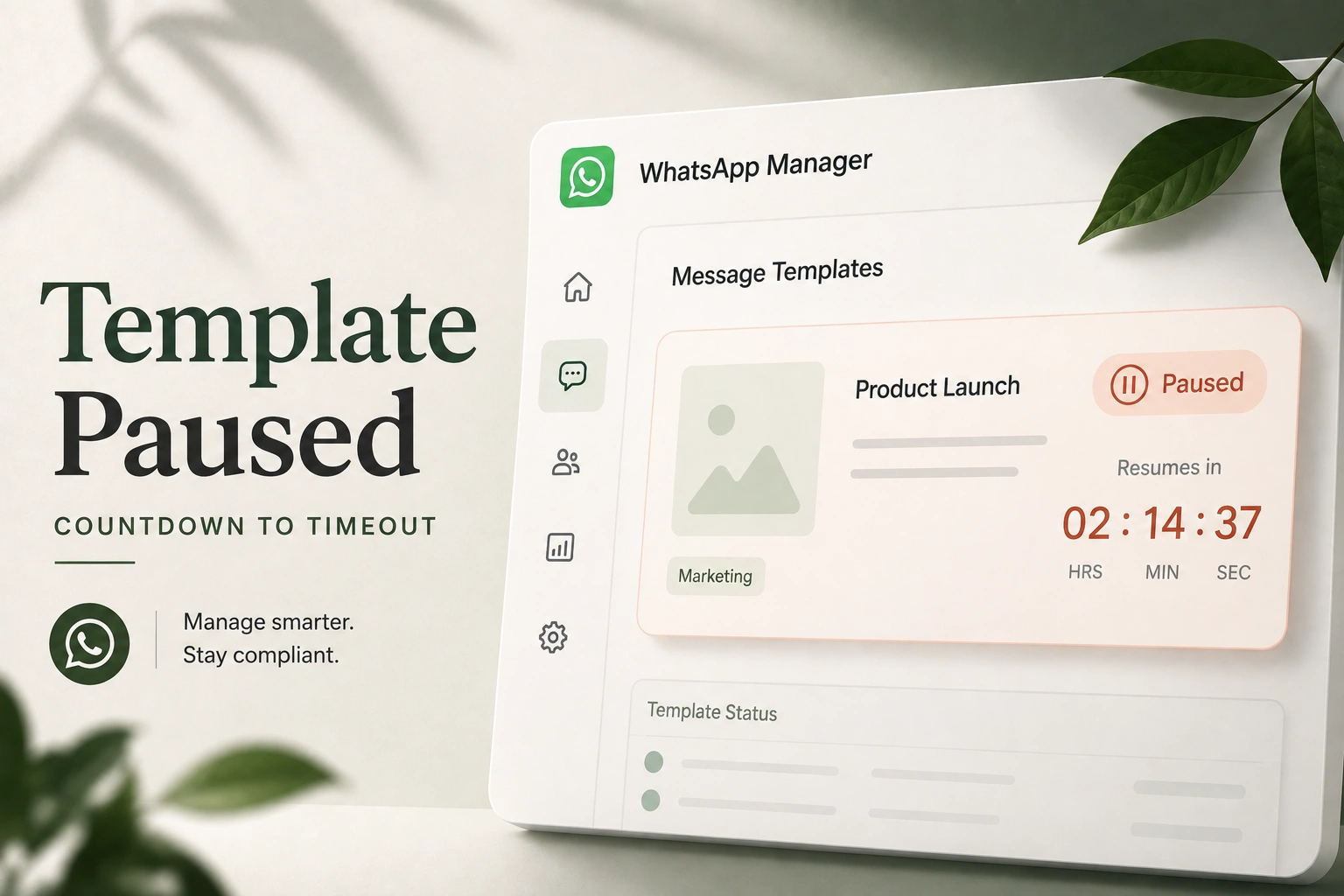
If you are reading this because sending stopped and you have an error code in front of you — 132015, template is paused — the immediate answer is that it will resume on its own, and the first pause is short.
The part worth staying for is what happens the third time.
The ladder
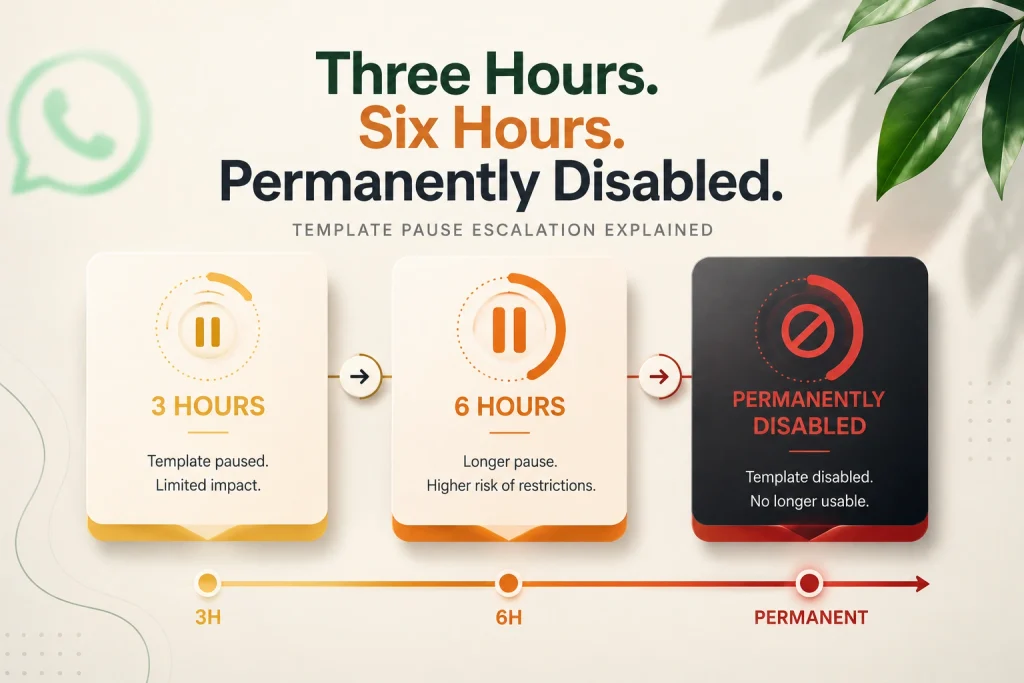
A template that reaches the lowest quality rating is paused automatically. Reported behaviour:
First occurrence — paused for about 3 hours. Annoying, recoverable, easy to dismiss as a glitch.
Second occurrence — paused for about 6 hours. Still recoverable, and now a pattern.
Third occurrence — permanently disabled. The template cannot be used again. You rebuild it, resubmit it, and wait for review.
Most businesses never learn the ladder exists, because the first pause resolves itself before anybody investigates. The template resumes, sending continues, and nothing is changed — which is precisely the behaviour that produces the second and third strikes.
So treat the first pause as the warning it is. It is the only one that costs you nothing.
What the rating is actually measuring
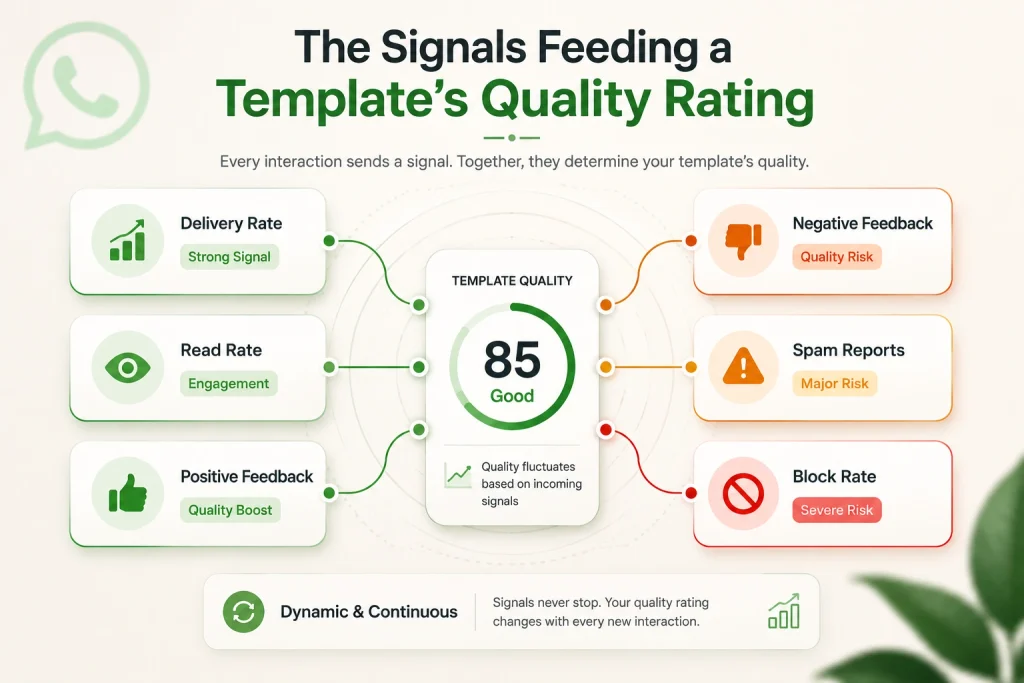
Every template carries a quality rating — High, Medium or Low — and it is not a judgement about your writing.
It is built from what recipients did. Blocks. Spam reports. And engagement signals, including read rates and whether anybody replied.
Which means a paused template is user feedback arriving through a billing system. People blocked you, reported you, or ignored you in enough volume that Meta acted on their behalf.
High means little or no negative feedback. Medium means some negative feedback or weak read rates, and the template is at risk. Low triggers the pause.
Two things follow from that framing.
You cannot fix this in the template settings. There is no configuration that makes people stop blocking you.
And the metric is relative to your audience, not to a benchmark. The same message can rate High to a warm, opted-in list and Low to a purchased one.
Why it usually happens
Four causes, in the order we see them.
The list. Numbers collected for one purpose and messaged for another. Someone who gave a phone number for a delivery update did not agree to a festive offer, and a meaningful share of them will say so with the block button.
The category. Marketing templates attract negative feedback at a rate utility templates almost never do — because one is expected and the other is not. A business sending mostly promotional broadcasts is running a structurally higher risk than one sending order updates, and it is paying seven and a half times more for the privilege. Which category a message genuinely falls into is covered at the test Meta actually applies.
The frequency. The same audience, the same template, repeatedly. Read rates fall, blocks rise, and the rating follows.
The relevance. Broadcasts to everybody rather than to the segment the message concerns. A discount on a product someone already owns reads as spam because functionally it is.
Notice what none of these are. None is a wording problem, and none is fixed by editing the template.
What to do when it happens
Right now — nothing technical. The pause lifts on its own. Resending immediately, or duplicating the template under a new name to get around the block, is the fastest route to the second strike and it is visible.
Today — find out which template and which send. Identify the campaign that preceded the pause. In almost every case there is one obvious candidate: the biggest send, to the broadest list, with the least specific message.
This week — stop sending that template to that audience. Not a rewrite. Stop.
Then check three things. How the numbers on that list were collected and what those people were told. Whether the message was genuinely relevant to all of them or to a fraction. And how recently the same audience heard from you.
Before you send again — segment. Send to the portion of the list for whom the message is actually true. A smaller send to a relevant segment protects the rating; a large send to everybody is what damaged it.
If the template has been permanently disabled, rebuild it as a genuinely different message rather than a renamed copy. The rating attached to the old one was earned by its content and its audience, and reproducing both reproduces the outcome.
The consequence that matters more than the template
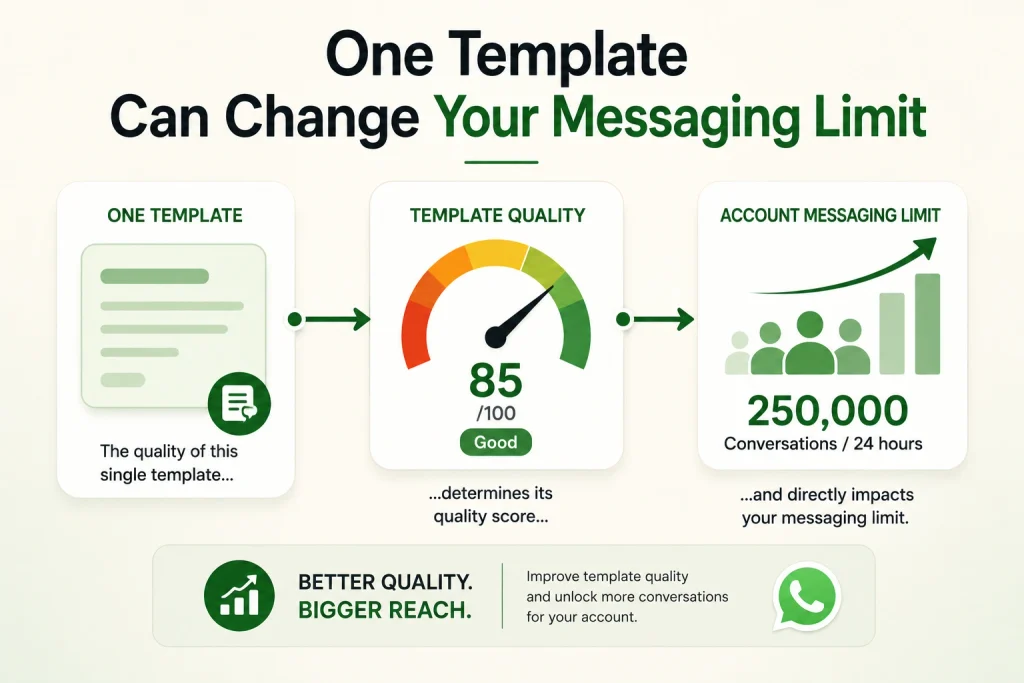
A paused template is a local problem. The account-level effect is the one worth worrying about.
Repeated low-quality templates are reported to reduce your messaging limit — the number of unique users you are permitted to message in a rolling period.
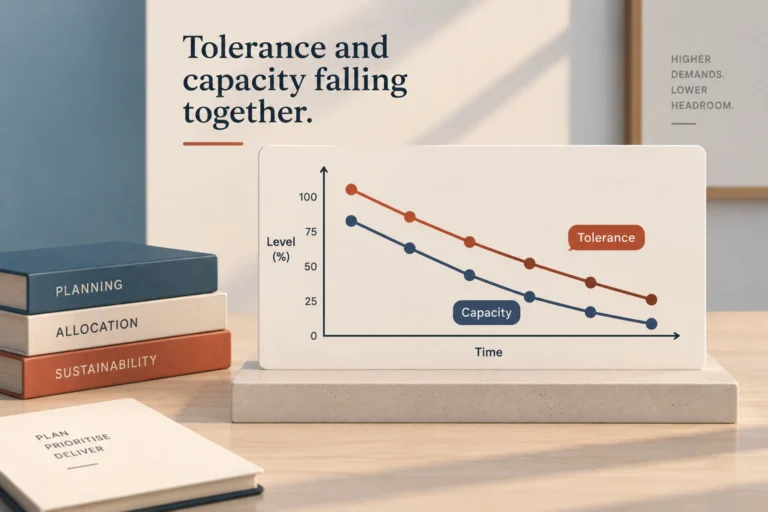
That is not one campaign stopping. That is your capacity shrinking. And it recovers slowly, because it recovers on the same signals that damaged it.
Which reframes the whole thing. A template pause looks like a technical interruption and behaves like a credit downgrade. The volume of messages available to you next month depends on how the people you messaged this month reacted.
Broadcast volume and messaging tiers are their own subject and we will cover them separately. For now the relevant point is that quality and capacity are connected, and most businesses discover the connection in the wrong direction.
How to avoid it entirely
Send fewer marketing templates. The single most effective measure, and it also cuts your bill by roughly seven and a half times per message moved.
Prefer conversations you did not start. Messages inside a window the customer opened attract almost no negative feedback, because the person is already talking to you — what the free window is really worth covers how to generate those deliberately.
Segment before every broadcast. If a message is not true for someone on the list, they are not on the list for that send.
Make opting out easy and visible. An opt-out is a far cheaper outcome than a block, and blocks are what the rating counts.
Watch the rating rather than the pause. Quality ratings are visible before anything stops working. A template sitting at Medium is telling you something and it is the last free warning you get.
And check ratings after every large send, not weekly. The signal arrives fast and the ladder does not reset quickly.
Questions we get asked
Why is my WhatsApp template paused?
Its quality rating dropped to Low, driven by blocks, spam reports or poor engagement from the people who received it. It is a reaction to a send, not a fault in the template.
What is error 132015?
The API error returned when you attempt to send a template that is currently paused.
How long does a WhatsApp template stay paused?
Reported as roughly three hours on the first occurrence and six on the second. A third occurrence is reported to disable the template permanently.
What is template quality rating?
A High, Medium or Low score per template, derived from recipient feedback such as blocks and reports, and from engagement signals such as read rates.
Can a disabled WhatsApp template be recovered?
A permanently disabled template cannot be reinstated. You create a new one and submit it for review — and if it is a copy of the old one sent to the same list, expect the same outcome.
Does a paused template affect my whole account?
One pause, no. A pattern of low-quality templates is reported to reduce your account’s messaging limit, which affects everything.
The check worth running this week
Open your template list and look at the quality rating column rather than the status column.
Anything sitting at Medium is a template that has already had negative feedback and has not yet been paused. That is the only point in this process where you get to act without a cost attached.
Then look at what that template has in common with the sends around it — the same list, the same frequency, the same broadness — because the fix is there rather than in the template.
If you want your template ratings reviewed against your send history and the underlying list problem identified, you can reach out to us on whatsapp at +91 7738844851 .
More in Blog
Keep reading
All articles →
Ready to talk about your growth?
Tell us what's stuck and we'll tell you what we'd do first. Free, 30 minutes, no pitch.