JioMart Partner Guide: Selling on JioMart as a Brand or Seller
JioMart partner explained: the difference between the retailer and seller routes, how JioMart seller registration works, documents to prepare, and selling tips.

The short answer
“JioMart partner” can mean two things. For kirana shop owners, it usually means partnering with Reliance Retail as a retailer to source stock and serve local customers. For brands and sellers, it means listing products on the JioMart marketplace. This guide covers the second. To sell on JioMart, go to JioMart’s “Become a Seller” page (identity.seller.jiomart.com/jiomartseller), register with your business details, and submit tax and bank information before listing products. Expect to need a GSTIN, PAN, bank account and pickup address. JioMart is strongest in grocery and daily needs, and also sells fashion, electronics and home goods.
Two meanings of JioMart partner
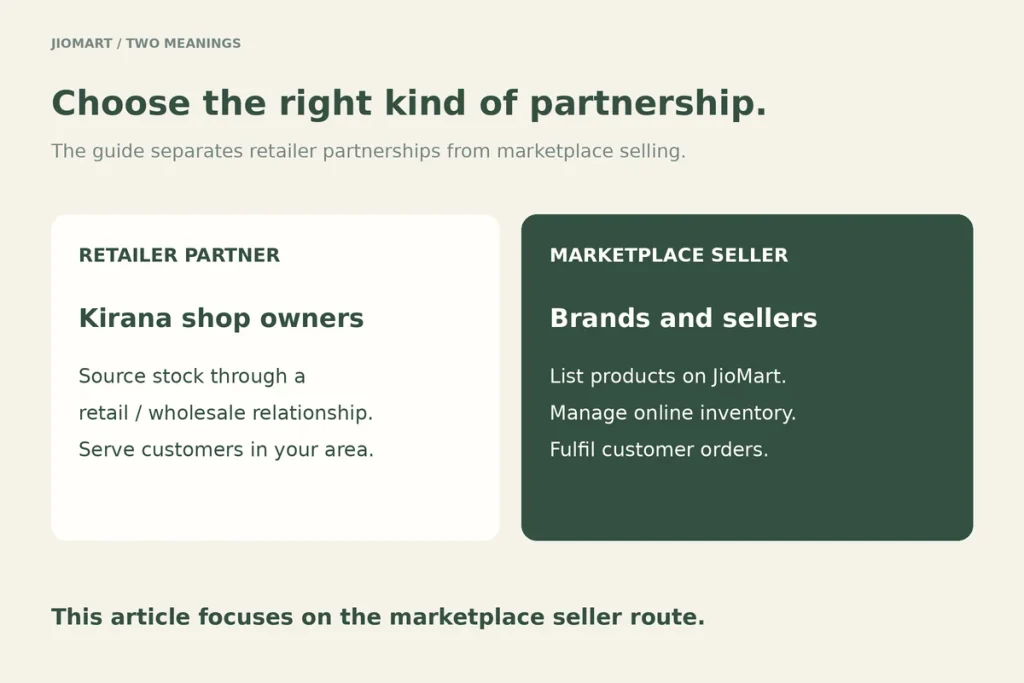
Retailer partner (kirana). Shop owners who work with Reliance Retail to buy stock and serve customers in their area. This is a retail and wholesale relationship, not online selling to consumers across India.
Marketplace seller. Brands, manufacturers and sellers who list products on JioMart and ship orders to customers. This is the route we explain below.
If you’re a kirana owner, contact Reliance Retail through its official channels for the retailer programme.
How JioMart seller registration works
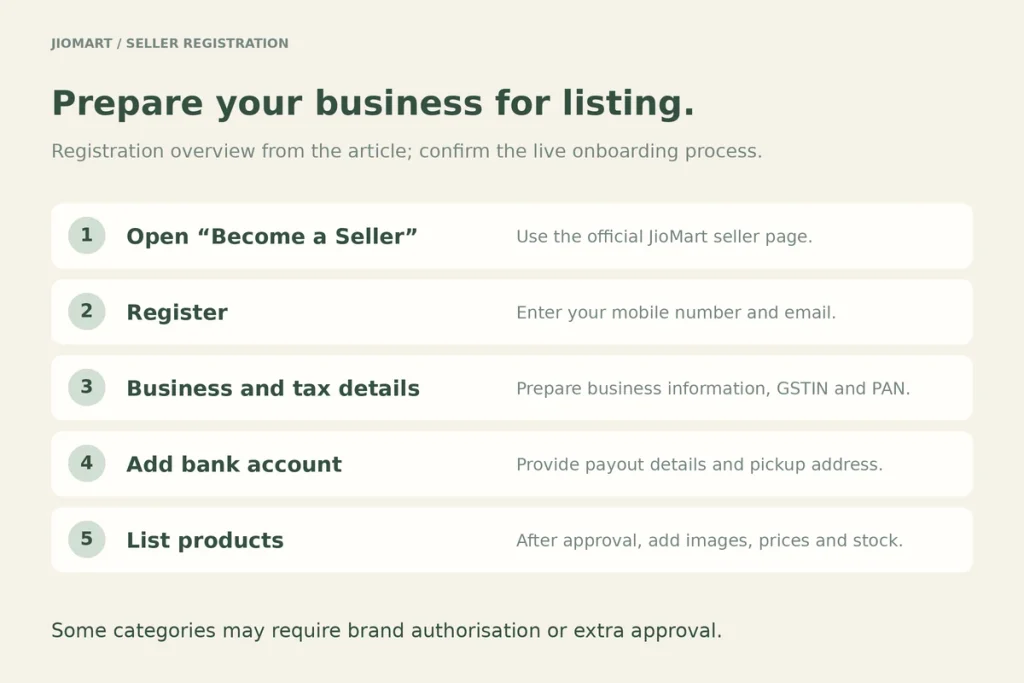
- Open JioMart’s Become a Seller page
- Register with your mobile number and email
- Submit business details: business name, address, GSTIN, PAN
- Add your bank account for payouts
- Add your pickup address or warehouse
- List products after approval, with images, prices and stock
Some categories may need brand authorisation or extra approvals.
Documents to prepare
- GSTIN
- PAN
- Bank account with cancelled cheque
- Pickup address
- Brand authorisation or trademark, if your category needs it
- Food licence (FSSAI) for packaged food products
Confirm the current list on JioMart’s seller page before you start.
Fees on JioMart
JioMart doesn’t publish a single public rate card that we could verify. Commission and fees usually depend on category. Blog posts quoting exact percentages rarely cite a source, so get terms from JioMart in writing and calculate your full cost per order.
Tips to sell well on JioMart
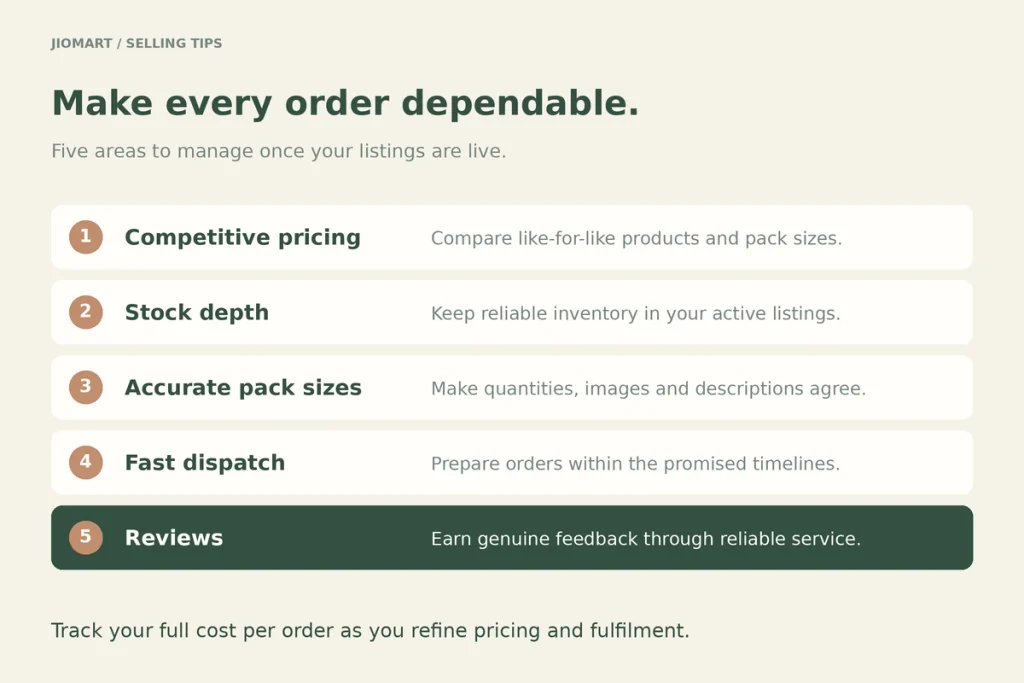
- Competitive pricing. Grocery and daily-needs buyers compare prices closely
- Stock depth. Running out hurts visibility
- Accurate pack sizes and images. Avoid returns from mismatched quantities
- Fast dispatch. Speed matters in daily needs
- Reviews. Ask satisfied buyers to rate
For fast-moving goods, also look at quick commerce: Blinkit and BigBasket are covered in that series.
Mistakes to avoid
Following the kirana route when you want to sell online. They are different programmes.
Listing food without FSSAI details. Packaged food needs it.
Relying on blog commission figures. Confirm with JioMart.
Checklist
- Route chosen: marketplace seller (not retailer)
- GSTIN, PAN, bank account and pickup address ready
- FSSAI licence for food products
- Brand authorisation if needed
- Terms and full cost per order confirmed
Questions we get asked
Can I sell on JioMart without GST?
JioMart’s seller route generally asks for a GSTIN. Check the Become a Seller page for current options.
Is JioMart only for grocery?
No. Grocery is its strength, but it also sells fashion, electronics, home and more.
How does JioMart compare with Amazon?
Amazon has broader reach across categories; JioMart is strong in daily needs. See Amazon seller registration.
Final thoughts
Decide which “JioMart partner” you mean, then follow the right route. For sellers, prepare documents first and confirm terms in writing. Compare all online selling platforms before you commit.
Want help growing on grocery and daily-needs marketplaces? Book a consultation. You can reach out to us on whatsapp at +91 7738844851 .
More in Blog
Keep reading
All articles →

Ready to talk about your growth?
Tell us what's stuck and we'll tell you what we'd do first. Free, 30 minutes, no pitch.