Online Selling Platforms in India: 13 Options and How to Pick the Right One
Online selling platforms in India compared: Amazon, Flipkart, Meesho, Myntra, AJIO, Nykaa and more, who each suits, fees, and selling without GST.

The short answer
The main online selling platforms in India are Amazon, Flipkart, Meesho, Shopsy, Snapdeal and JioMart for general products; Myntra, AJIO and Tata CLiQ for fashion and lifestyle; Nykaa for beauty; and quick commerce apps like Blinkit and Zepto for fast-moving goods. You can also sell on your own website or through ONDC seller apps. The right choice depends on four things: what you sell, your price point, whether you have GST registration, and whether you own a brand. Fees have changed a lot recently: Meesho states 0% commission, and Flipkart and Amazon have both cut or removed commission on many lower-priced products. Always check the current fee page before you list.
Key takeaways
- Start with one or two platforms that match your category, not all of them
- Value marketplaces (Meesho, Shopsy) suit low-priced products and sellers without GST
- Fashion and beauty platforms are more brand-focused and often ask for trademark or brand authorisation
- Since 1 October 2023, small sellers under the GST threshold can sell goods within their own state through marketplaces using a GST enrolment ID
- “Zero commission” rarely means zero cost: shipping, closing and return fees still apply
The platforms, grouped by what you sell
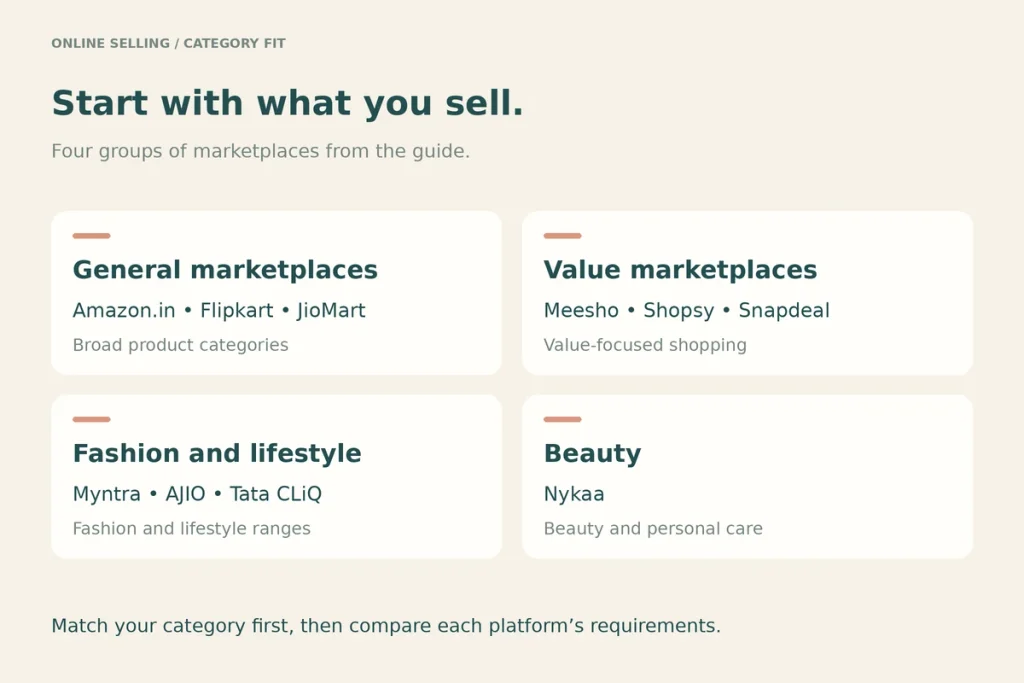
General marketplaces: everything from electronics to home goods
- Amazon.in. Open to all sellers with GST (PAN-only for GST-exempt goods). See Amazon seller registration
- Flipkart. Large reach, especially outside metros. See Flipkart seller account
- JioMart. Reliance’s marketplace, strong in grocery and daily needs. See JioMart partner
Value marketplaces: low price points, smaller towns
- Meesho. States 0% commission and accepts non-GST sellers with an enrolment ID. See Meesho seller registration
- Shopsy. Flipkart’s value app. See Shopsy seller
- Snapdeal. Value-focused marketplace. See Snapdeal seller
Fashion and lifestyle: more curated
- Myntra. See Myntra seller
- AJIO. Asks for brand trademark or authorisation. See AJIO seller
- Tata CLiQ. See Tata CLiQ seller
Beauty and personal care
- Nykaa and Nykaa Fashion. Application-based. See Nykaa seller
Other routes
- Quick commerce. Blinkit, Zepto, Swiggy Instamart and BB Now for fast-moving goods. See our quick commerce guide
- ONDC. The Open Network for Digital Commerce connects sellers to buyers through seller apps rather than one marketplace
- Your own website. Higher margin and customer data, but you bring the traffic. See your own D2C website
How to choose: four questions
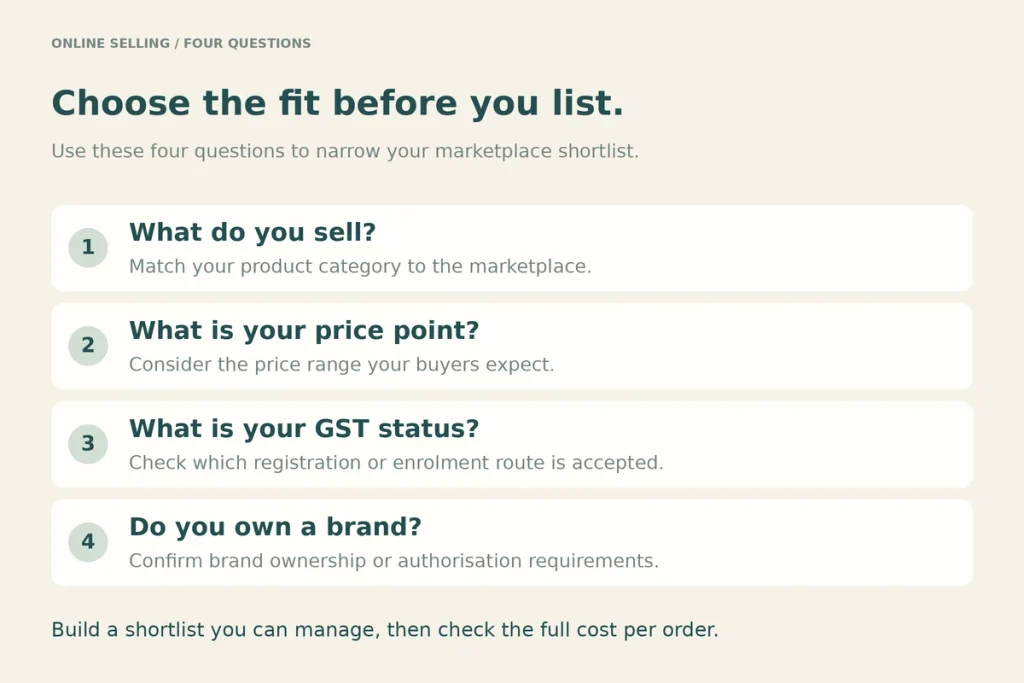
1. What do you sell? Fashion brands belong on Myntra and AJIO; beauty on Nykaa; daily-needs on quick commerce and JioMart; general goods on Amazon and Flipkart.
2. What’s your price point? Low-priced products (for example, under ₹500) often do well on Meesho and Shopsy, where buyers expect value. Premium products need the trust signals of Amazon, Myntra or Nykaa.
3. Do you have GST registration? If not, Meesho openly accepts sellers with an enrolment ID. Most others ask for a GSTIN.
4. Do you own a brand? Fashion and beauty platforms usually want brand owners or authorised distributors. Resellers find it easier on general and value marketplaces.
A common path for a new brand: start on one general marketplace plus one category platform, prove sell-through, then add your own website and ads.
Can you sell online without GST?
Yes, within limits. CBIC Notification 34/2023-Central Tax, in force from 1 October 2023, lets suppliers of goods sell through e-commerce operators without GST registration if their turnover is below the registration threshold.
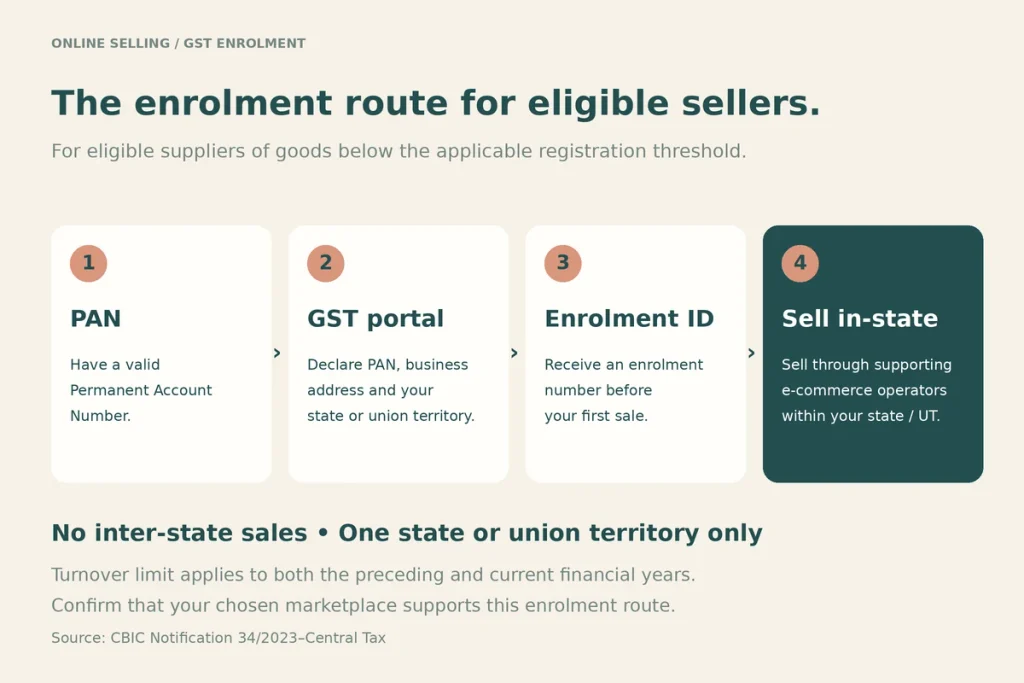
The main conditions:
- No inter-state sales of goods
- Selling in only one state or union territory
- A valid PAN, declared on the GST portal with your business address
- An enrolment number issued before your first sale
Not every marketplace supports this route in practice. Meesho does; Amazon’s guide asks for a GSTIN except for GST-exempt goods. Check with a chartered accountant before relying on it.
What fees to expect
Fee structures vary by platform and category. Common components:
- Commission or referral fee: a percentage of the sale price. Several platforms now waive it on lower-priced items. Flipkart announced in November 2025 that products priced below ₹1,000 would not be charged a commission fee; Amazon.in says its referral fee “starts at 0%” and varies by category
- Closing or fixed fee: a small amount per order
- Shipping or weight-handling fee: based on weight and distance. Amazon lists it as starting at ₹37 per item
- Return and reverse-shipping costs
- Advertising: optional but usually necessary to grow. See Amazon PPC and Flipkart ads
Build your price from the full cost per order, not just commission.
Documents most platforms ask for
- PAN (personal or business)
- GSTIN, or GST enrolment ID where the platform accepts it
- Bank account in the business or proprietor’s name, with a cancelled cheque
- Pickup address
- Brand trademark or authorisation letter (for fashion and beauty platforms, and brand-gated categories)
Mistakes we see new sellers make
Listing everywhere at once. Inventory, pricing and customer service get out of control.
Pricing on commission alone. Shipping and returns can cost more than commission.
Weak listings. Poor photos and thin titles lose to competitors on the same search.
No ad budget. Organic visibility on marketplaces is limited for new sellers.
Ignoring returns. Fashion return rates can erase margin; plan sizing charts and quality checks.
Checklist
- Category and price point matched to one or two platforms
- GST status confirmed (GSTIN or enrolment ID, with CA advice)
- PAN, bank account and pickup address ready
- Brand authorisation or trademark ready, if needed
- Full cost per order calculated (fees, shipping, returns, ads)
- Listing photos, titles and descriptions prepared
- Starting ad budget set
Questions we get asked
Which online selling platform is best for beginners?
For low-priced products and sellers without GST, Meesho is usually the easiest start. For branded or higher-priced products, Amazon or Flipkart.
Which platform has zero commission?
Meesho states 0% commission across categories. Flipkart and Shopsy announced zero commission on specific price bands or verticals, and Amazon waives referral fees on many products under ₹1,000. Other fees still apply.
Should I sell on a marketplace or my own website?
Usually both, in stages. Marketplaces bring ready buyers; your own site brings margin and customer data.
Final thoughts
There’s no single best platform. Match the platform to your category, price and GST status, start small, and add channels once one is working. Each platform guide in this series covers registration step by step.
Want help choosing and growing on the right marketplaces? You can reach out to us on whatsapp at +91 7738844851 and book a consultation.
More in Blog
Keep reading
All articles →
Ready to talk about your growth?
Tell us what's stuck and we'll tell you what we'd do first. Free, 30 minutes, no pitch.