What Is the AIDA Model? Attention, Interest, Desire, Action With Examples
What is AIDA model? It stands for attention, interest, desire, action. See each stage, its history, a Reel and landing page example, and its limits.

The short answer
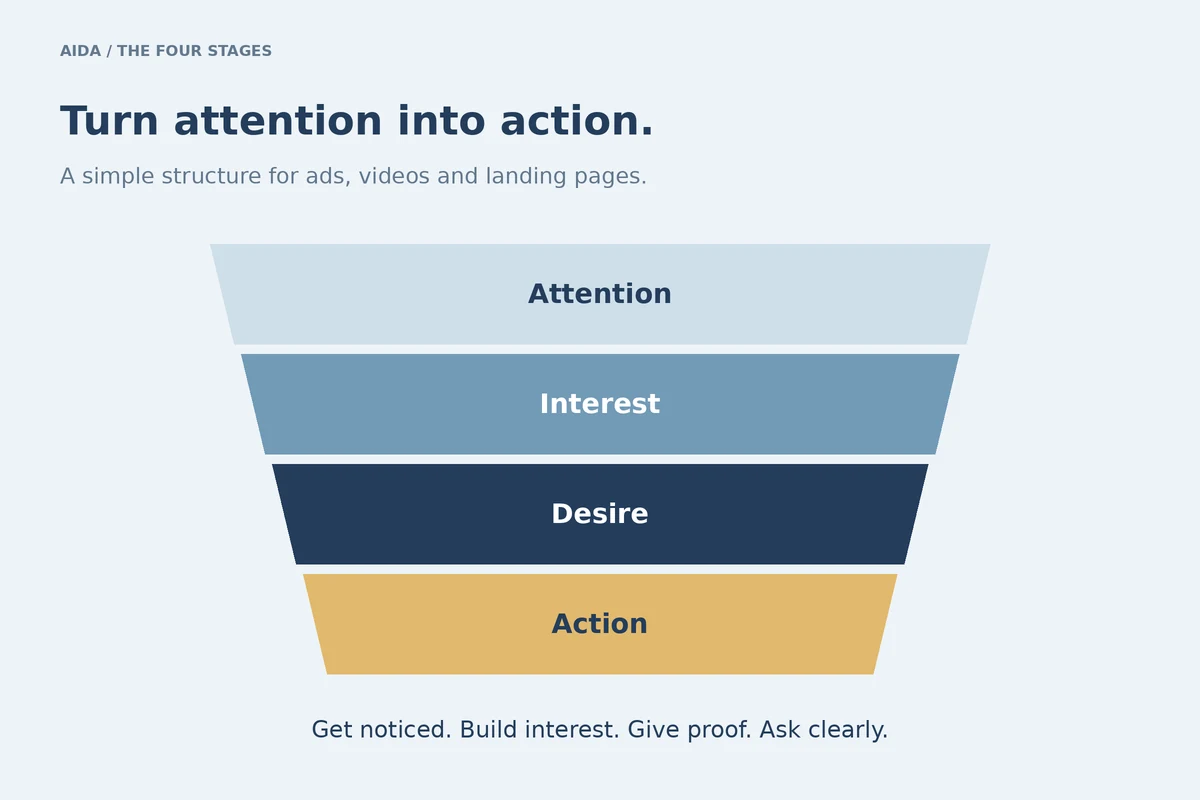
What is AIDA model? It describes four steps a person goes through before acting on an ad: attention, interest, desire, action. First you get noticed. Then you make them curious. Then you make them want it. Then you ask them to act. The idea is usually credited to E. St. Elmo Lewis, an American advertising pioneer; an early form appeared in the trade journal Printers’ Ink in 1898, and the AIDA acronym itself appeared in 1921. Marketers still use it to structure ads, videos, landing pages and sales pitches. Its main limit: it stops at the sale and ignores what happens after.
What AIDA stands for
A: Attention. The person notices your ad, post or page.
I: Interest. They want to know more: what is this, is it for me?
D: Desire. They start to want it, because of a benefit, proof or offer.
A: Action. They click, call, buy or sign up.
Each stage has one job. If an ad fails at attention, nothing after it matters.
How each stage works in digital marketing
Attention. In a scrolling feed, people decide almost instantly whether to stop. Strong visuals, movement and a clear opening line matter. For video, hook rate measures this stage.
Interest. Name the problem or the outcome. Show the product in use. Keep it specific to the viewer.
Desire. Give reasons to believe: your USP, reviews, a demo, a before-and-after, a guarantee, or a limited offer.
Action. Make one clear call to action and remove friction: fast page, short form, easy payment.
AIDA example: a 30-second Reel
Illustrative example for a water purifier service brand:
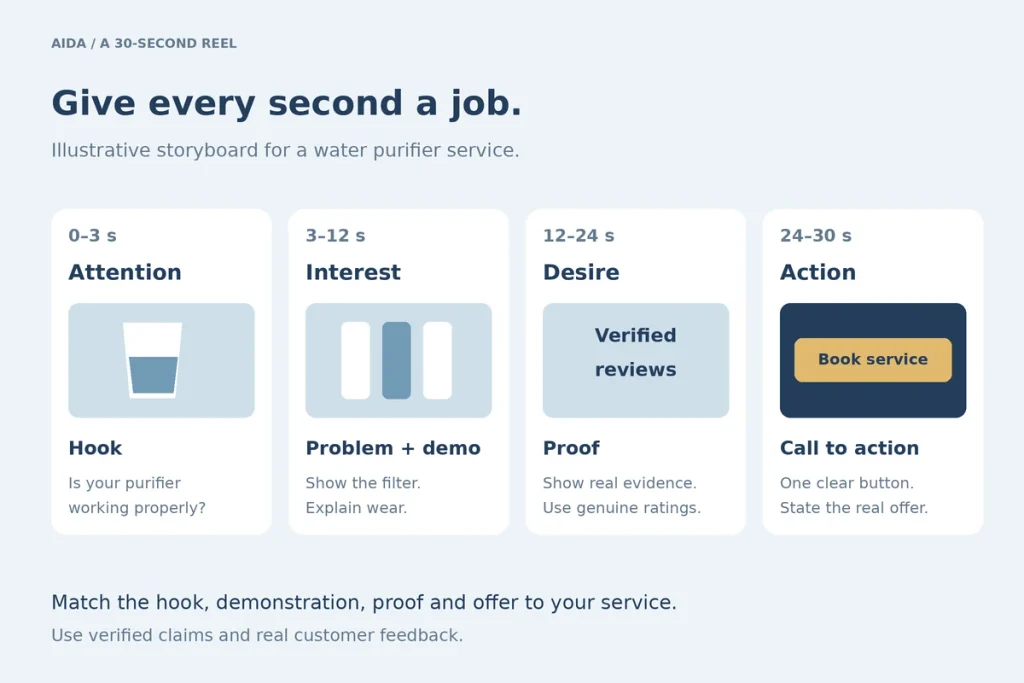
- Attention (0–3 s): A glass of tap water under a TDS meter showing a high reading. Text: “Is your RO actually working?”
- Interest (3–12 s): A technician explains that filters wear out and taste changes slowly, so most people don’t notice
- Desire (12–24 s): Before-and-after TDS readings; “Service in 24 hours in your city”; 4.7-star rating shown on screen (use your real rating)
- Action (24–30 s): “Tap Book service. ₹299 visit charge adjusted in the bill.” (Use your real offer)
AIDA example: a landing page
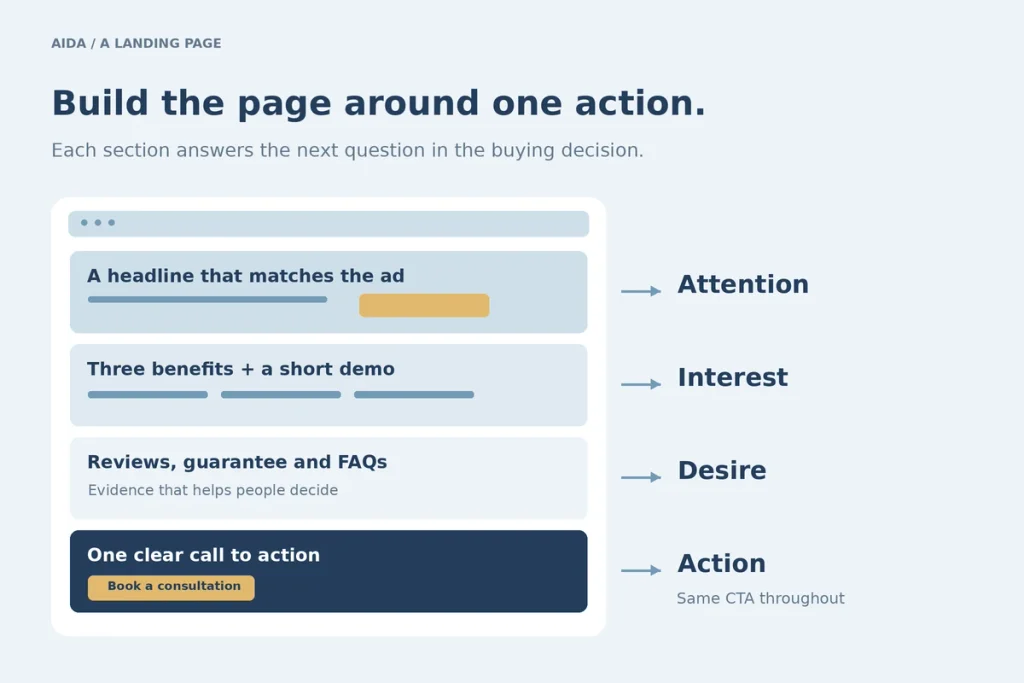
- Attention: A headline that matches the ad, plus a clear product image
- Interest: Three short benefit points and a 30-second video
- Desire: Reviews, photos from customers, guarantee, FAQs that handle objections
- Action: One button repeated at the top, middle and bottom
More on building pages that convert in our guide to landing page optimisation.
Limits of AIDA, and AIDAS
AIDA is simple, which is why it lasts. But it has gaps.
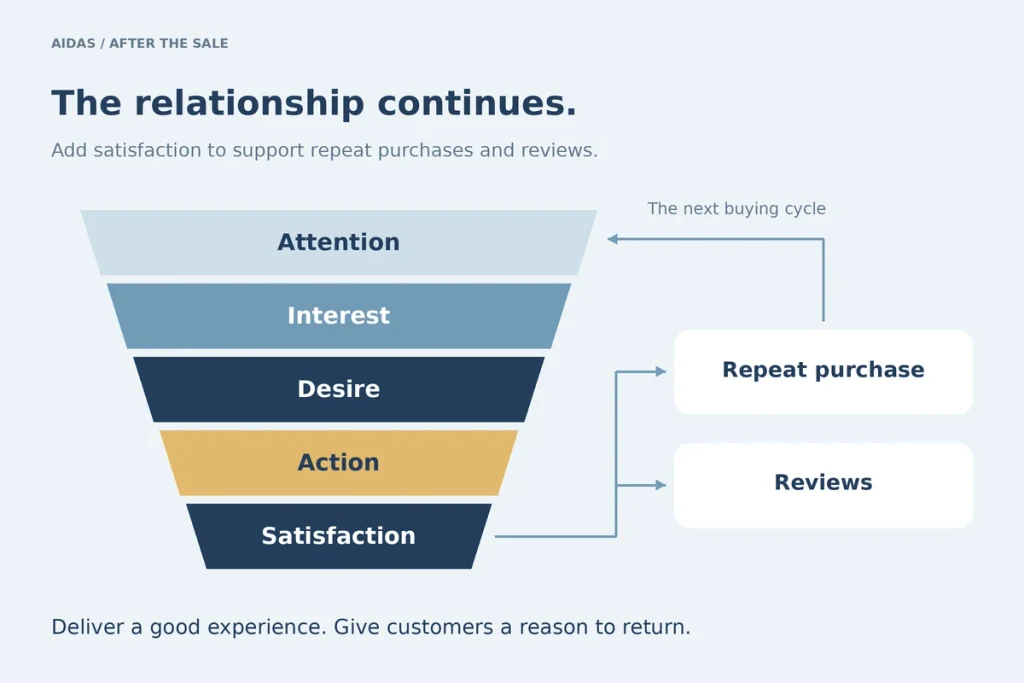
- It stops at the sale. Repeat purchases and reviews matter a lot in digital marketing. The AIDAS variant adds a fifth step: satisfaction
- It assumes a straight line. Real buyers see ads, leave, search, read reviews and come back. Retargeting exists for this reason
- It fits single messages best. For a full buying journey, a performance marketing funnel is more useful
Mistakes to avoid
Skipping interest. Jumping from a flashy opening straight to “Buy now”.
Desire without proof. Claims with no reviews, demos or numbers.
Several actions at once. “Call, WhatsApp, visit, follow and download” in one ad.
Ad and page don’t match. The attention you earned is lost on a generic homepage.
Checklist
- First line or first seconds win attention
- Problem or outcome named for interest
- Proof and USP shown for desire
- One clear action with low friction
- Landing page continues the same message
- Post-purchase step planned (the S in AIDAS)
Questions we get asked
What is the full form of AIDA?
Attention, interest, desire, action.
Who created the AIDA model?
It’s usually credited to E. St. Elmo Lewis. An early version appeared in Printers’ Ink in 1898, and the acronym was published in 1921.
Is AIDA still relevant?
Yes, as a structure for single ads and pages. For full customer journeys, pair it with funnel and retention thinking.
Final thoughts
AIDA is a checklist for any ad: are you getting noticed, keeping interest, building desire and asking for action? Most weak ads fail one step clearly. More terms in our guide to digital marketing terms.
Want your ad creatives reviewed against AIDA? Book a consultation. You can reach out to us on whatsapp at +91 7738844851.
More in Blog
Keep reading
All articles →
Ready to talk about your growth?
Tell us what's stuck and we'll tell you what we'd do first. Free, 30 minutes, no pitch.