The YouTube Algorithm: What YouTube Has Actually Said
How the YouTube algorithm works, using only what YouTube has said: clicks, watch time, satisfaction surveys, and what that means for business videos.

The short answer
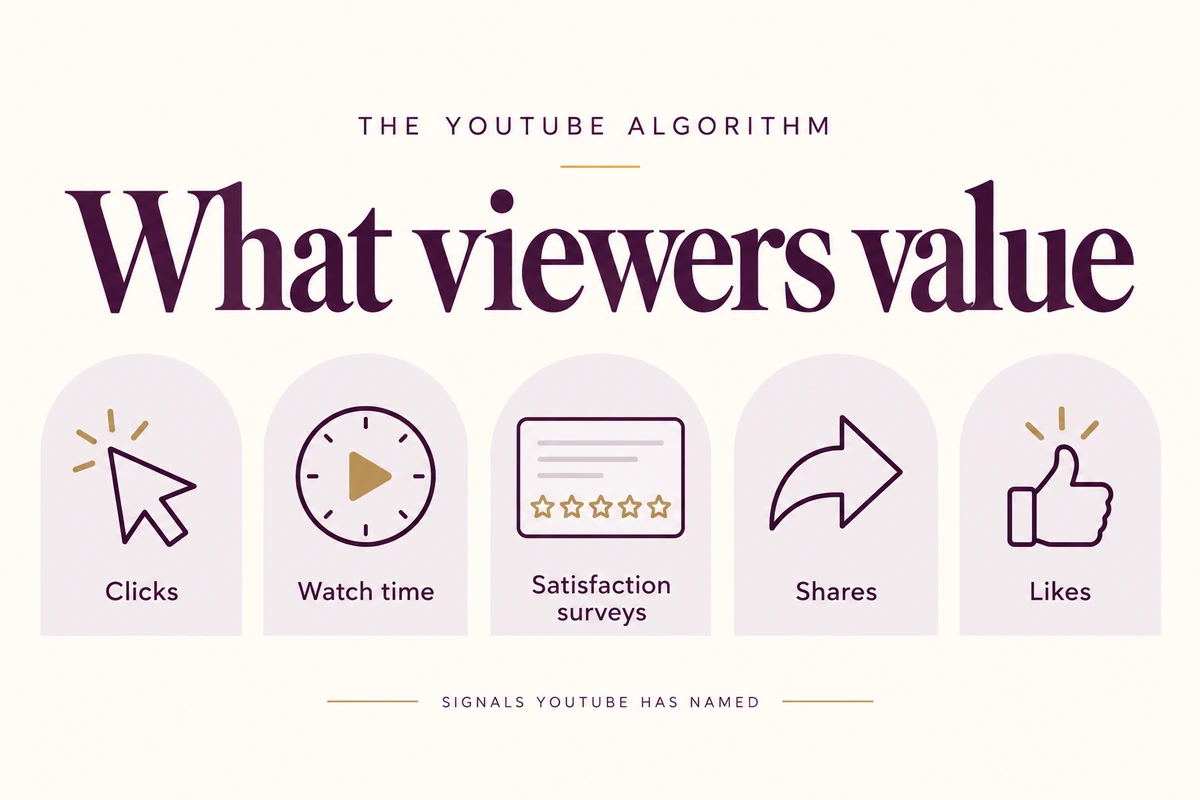
The “YouTube algorithm” is a set of recommendation and search systems that try to show each viewer videos they’ll find valuable. YouTube has said on the record that it uses clicks, watch time, survey responses, shares, likes and dislikes. It measures “valued watchtime” through viewer surveys, not raw minutes alone. Its Test & Compare tool picks the winning title and thumbnail by watch time, not click-through rate. So the practical rule is simple: make videos people click, keep watching and are glad they watched. There’s no posting-time trick or tag hack that beats that.
What YouTube has said on the record
September 2021, YouTube’s VP of Engineering, Cristos Goodrow:
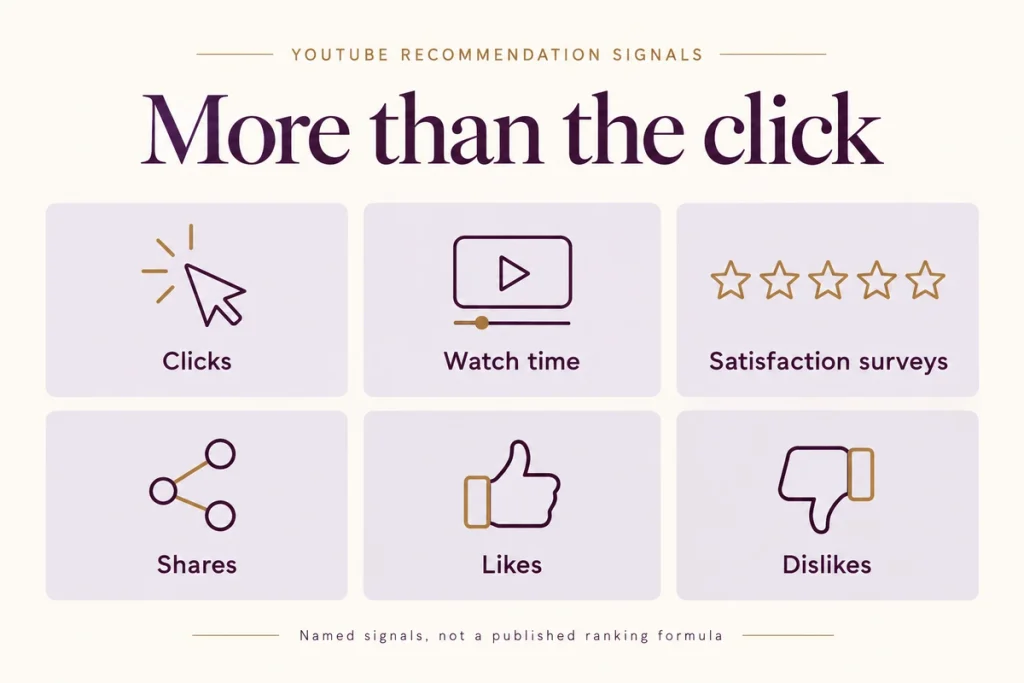
- Clicks are a signal, but not enough on their own
- Watch time was added in 2012 to find videos people actually watch
- Surveys ask viewers to rate videos (1 to 5 stars), creating “valued watchtime”
- Shares, likes and dislikes also count as satisfaction signals
- For news and information, YouTube raises authoritative sources and demotes borderline content
YouTube Help on tags: tags “play a minimal role” in discovery; title, thumbnail and description matter more.
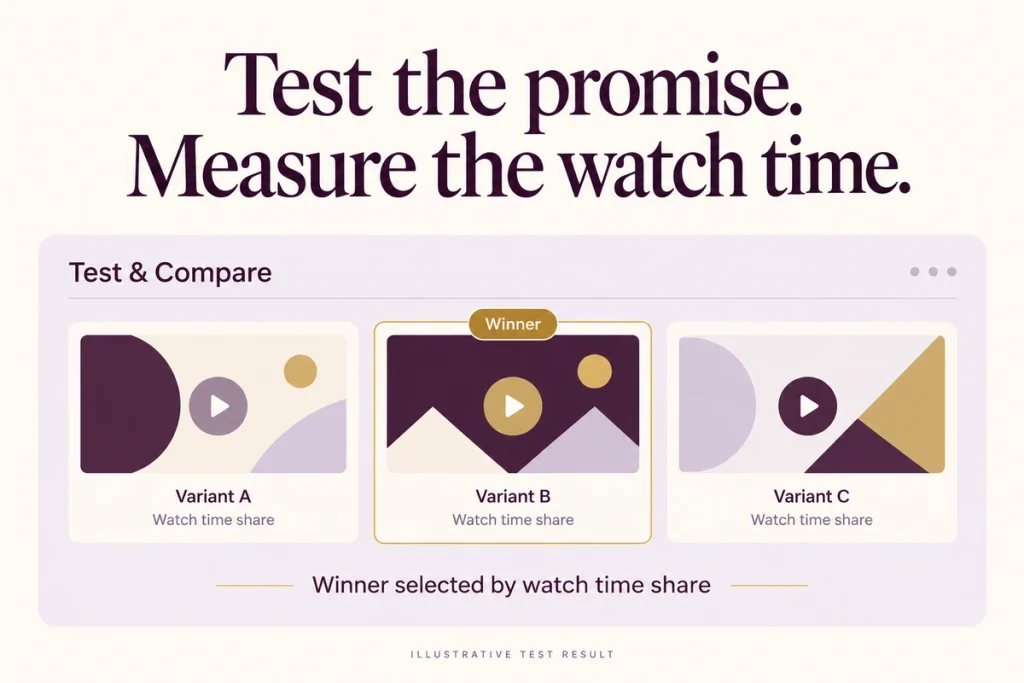
YouTube Help on Test & Compare: you can test up to three titles and thumbnails, and the one with the highest watch time share wins.
That’s the solid ground. Anything more specific you read online (exact weights, secret upload times) is guesswork.
Different surfaces, different jobs
Search. Relevance to the query comes first: title, description, and how well the video answers it. Then engagement. See YouTube SEO.
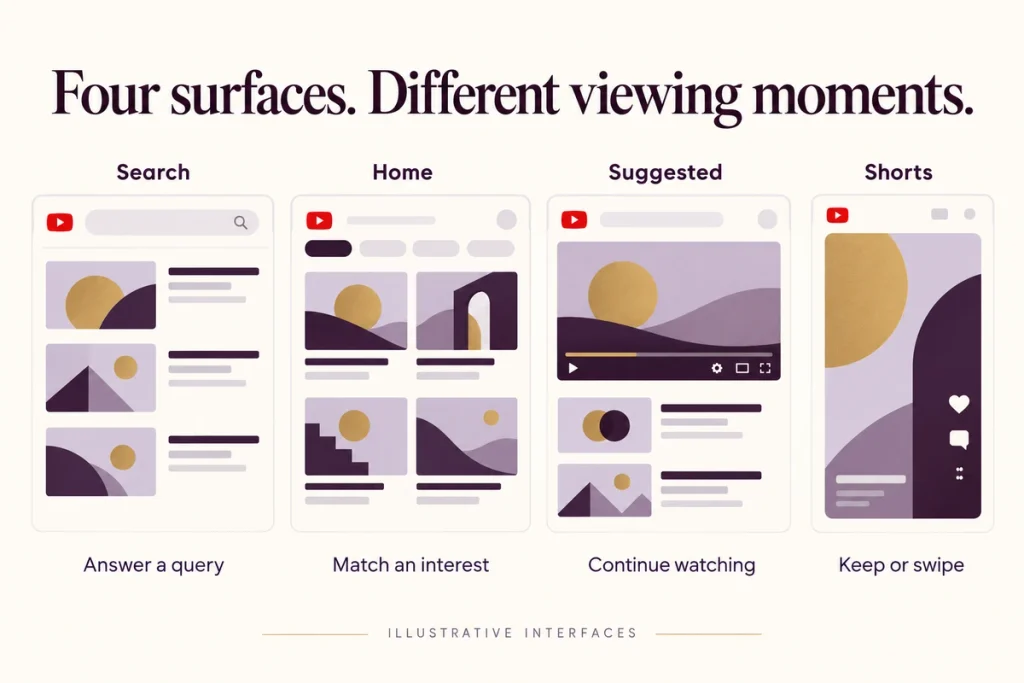
Home (Browse). Personalised. YouTube looks at what the viewer has watched and liked, and at how similar viewers responded to your video.
Suggested (next to other videos). Videos often watched together, on related topics.
Shorts feed. Vertical videos up to three minutes (since October 2024), shown in a swipe feed. Whether viewers keep watching or swipe away matters, so the opening seconds decide a lot. See our guide to the hook.
What this means for a business channel
1. Win the click honestly. A clear thumbnail with one idea and a title that promises what the video delivers.
2. Deliver fast. Open with the answer or the problem. YouTube Analytics shows how many viewers stay past 30 seconds; see watch time.
3. Make viewers glad they watched. Satisfaction surveys mean bait-and-switch hurts long-term.
4. Serve a clear audience. YouTube matches videos with people similar to those who enjoyed them. A focused channel gets clearer signals.
5. Test titles and thumbnails. Use Test & Compare in YouTube Studio (desktop) on long videos. It judges by watch time, which is what you want too.
Myths to ignore
“Post at 6 pm or the algorithm buries you.” Timing may affect early views from subscribers. It doesn’t decide long-term recommendations.
“Use 30 tags.” YouTube itself says tags play a minimal role.
“Delete and re-upload underperforming videos.” You lose any data and comments the video had gathered. Improve the title and thumbnail instead.
“Shorts hurt your long videos.” YouTube hasn’t said this. Track your own channel’s numbers.
“Longer videos always rank better.” Watch time favours videos people finish, not padding.
YouTube vs Instagram
Both rank on satisfaction-type signals. Instagram’s head has named watch time, likes and sends as top signals; YouTube names clicks, watch time and surveys. The biggest difference is search: YouTube is used as a search engine, so answer-led videos keep earning views for years. For the Instagram side, see our Instagram strategy guide.
Mistakes to avoid
Chasing views from off-topic viral trends. They attract viewers who don’t watch your next video, muddying signals.
Misleading thumbnails. Short-term clicks, long-term damage.
Judging the “algorithm” from one video. Look at patterns across 10 or more.
Checklist
- Each video has one clear promise in title and thumbnail
- The answer or problem appears in the first 30 seconds
- Retention reviewed against your typical retention
- Test & Compare used on important long videos
- Channel focused on a clear audience
- No reliance on tags or posting-time tricks
Questions we get asked
Does the algorithm favour big channels?
YouTube hasn’t said so. Recommendations depend on how viewers respond to each video; smaller channels can get recommended.
How does the Shorts algorithm differ?
YouTube hasn’t published a separate detailed explanation. The swipe format makes the opening seconds critical.
Can we pay to improve organic reach?
No. Ads are separate. They can bring viewers to your channel, but organic recommendations still depend on viewer response.
Final thoughts
The YouTube algorithm rewards what viewers value. Make honest, useful videos, fix what analytics tells you, and test titles and thumbnails. That’s the Browse shelf of YouTube marketing.
Want help diagnosing your channel’s recommendation traffic? Book a consultation. You can reach out to us on whatsapp at +91 7738844851 .
More in Blog
Keep reading
All articles →
Ready to talk about your growth?
Tell us what's stuck and we'll tell you what we'd do first. Free, 30 minutes, no pitch.