YouTube Marketing: A Three-Shelf Strategy for Indian Businesses
YouTube marketing for Indian businesses: how to win search, recommendations and Shorts, what to post, when to run ads and how to turn views into leads.

The short answer
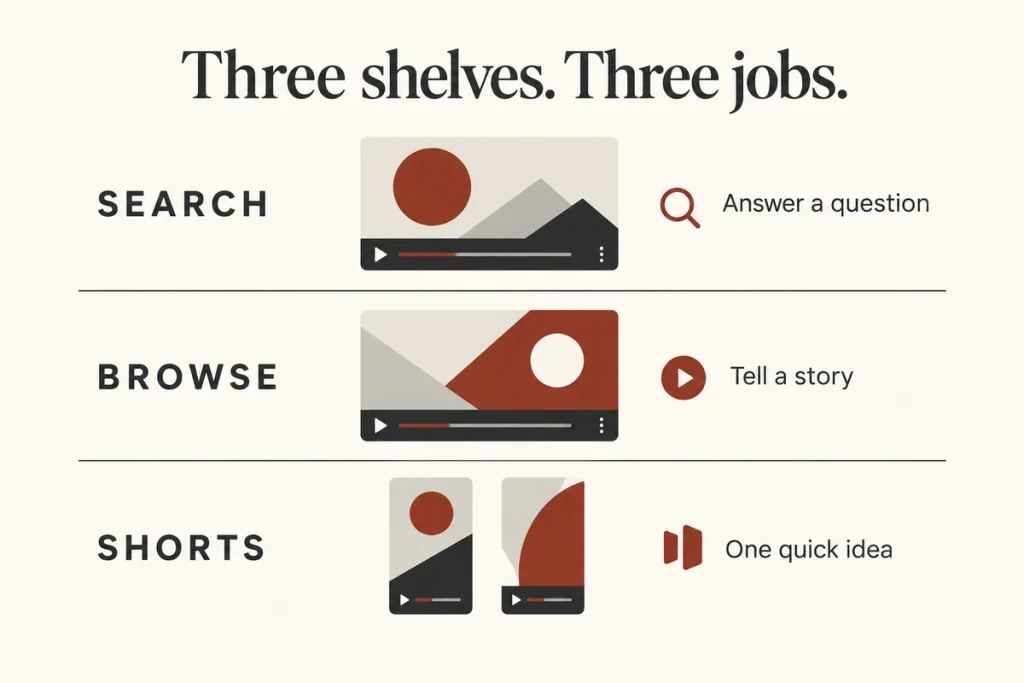
YouTube marketing means using videos on YouTube, organic and paid, to get found, build trust and win customers. For a business, it works on three “shelves” that follow different rules. Search: videos that answer what buyers type. Browse: videos YouTube recommends on the home page and next to other videos, driven by clicks, watch time and viewer satisfaction. Shorts: vertical videos up to three minutes. Build a few videos for each shelf, then a sales library that answers pre-purchase questions. With 500 million YouTube users in India (DataReportal, late 2025), the audience is there. The work is making videos people choose to watch.
Key takeaways
- YouTube is the largest social platform in India by users: 500 million, against 481 million on Instagram (DataReportal)
- Search, Browse and Shorts each need a different kind of video. Most business channels only make one kind, badly
- YouTube’s own guidance: tags “play a minimal role”. Titles, thumbnails and descriptions matter more
- YouTube’s recommendation system looks at clicks, watch time, survey responses, shares, likes and dislikes, not views alone
- Your first 20 videos should answer the questions your sales team hears every week
Why YouTube is different from Instagram
Instagram content is mostly consumed within a day or two. A good YouTube video can bring views for years, because people search YouTube like they search Google.
A Pune CA firm’s video titled “GST on rent explained for landlords” can keep getting views every filing season. An Instagram post on the same topic is gone from feeds in a week.
YouTube also holds attention longer. A buyer comparing two ₹8 lakh machines will watch a 12-minute demo. They won’t read a 12-slide carousel twice. That makes YouTube strong for considered purchases: property, education, B2B software, industrial goods, healthcare, financial services.
The Three Shelves
Every business video should be built for one shelf. A video that tries to serve all three usually serves none.
Shelf 1: Search
What it is: viewers type a question into YouTube or Google and find your video.
What wins: a title that matches the query, a clear thumbnail, a description that explains the video, and content that answers the question quickly. YouTube advises picking one or two main words that describe the video and using them in the title and description.
Examples for Indian businesses:
- “How to apply for a home loan with a low CIBIL score” (a housing finance company)
- “Zoho Books vs Tally: which is better for a small business?” (a software reseller)
- “JEE Main 2027 syllabus changes explained” (a coaching institute)
Read more: YouTube SEO, writing a YouTube description and whether YouTube tags still matter.
Shelf 2: Browse (home page and suggested videos)
What it is: YouTube recommends your video to people who didn’t search for it.
What wins: a thumbnail and title people want to click, then a video they keep watching and are glad they watched. YouTube’s engineering head wrote in 2021 that its system uses clicks, watch time, survey responses and signals like shares, likes and dislikes to predict what viewers will find valuable.
Examples:
- “We visited 5 under-construction projects in Thane. Here’s what we found” (a real estate advisory)
- “Inside our factory: how a stainless steel water tank is made” (a manufacturer)
Read more: how the YouTube algorithm works and why watch time is the number to watch.
Shelf 3: Shorts
What it is: vertical videos in the Shorts feed. Since October 2024, Shorts can be up to three minutes long.
What wins: a hook in the first seconds, one idea, and a reason to watch to the end. Shorts reach people fast. They rarely sell a complex product on their own.
Use them to: test topics cheaply, point viewers to a longer video, and stay visible between long uploads. The same rules on hooks apply as on Instagram Reels; see hook rate.
The sales library
Behind the three shelves sits a library of videos that help people who are already close to buying:
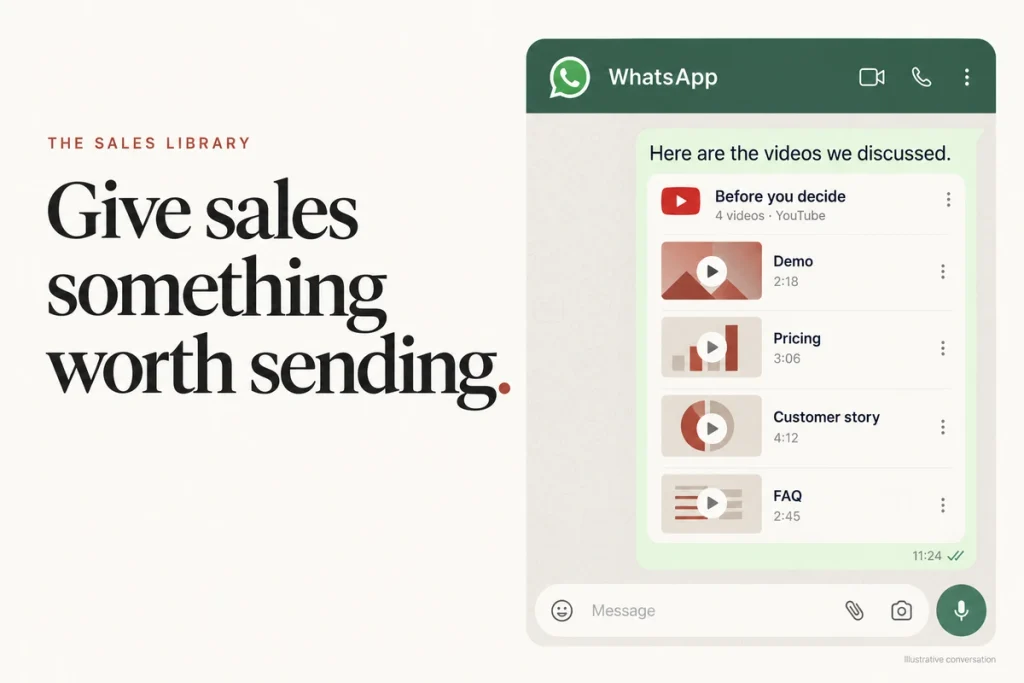
- Product demos and walkthroughs
- Pricing and “what’s included” explainers
- Customer stories (with permission)
- FAQ videos answering objections
- “How we work” or process videos
These rarely go viral. They close deals. Share them on your website, in WhatsApp follow-ups and in sales emails. Link them together with playlists and end screens.
What to post: the first 20 videos
Start with your sales team’s inbox. Write down the 20 questions buyers ask most. Each one is a Search-shelf video. Then add a few Browse and Shorts pieces.
A simple starting split:
- 12 Search videos answering buyer questions, 5 to 12 minutes each
- 3 Browse videos with a strong story or behind-the-scenes angle
- 5 Shorts cut from the best moments of the long videos
Our guide to YouTube content ideas has more topic formats for Indian businesses.
Channel basics that matter
Channel name and handle. Your brand, plus category if the brand is unknown.
Banner and About section. Say who you help and link to your website and WhatsApp.
Playlists. Group videos by buyer question or product. Playlists keep people watching your videos in sequence.
Channel trailer. A 60-second “who we are and what you’ll learn here” for non-subscribers.
Consistency. One strong long video a week, or even every two weeks, beats three rushed ones.
YouTube ads: when to pay
Organic YouTube is slow. Ads give reach immediately. Google’s video formats include skippable in-stream ads (you pay when someone watches 30 seconds, or the whole ad if shorter, or interacts), non-skippable ads of 15 to 60 seconds, 6-second bumper ads, in-feed ads, Shorts ads and the Masthead.
Use ads to:
- Remarket to people who visited your website, with a demo or testimonial video
- Push your best organic videos to a lookalike or interest audience
- Build awareness with bumpers during a launch or festive season
For budgets, see YouTube advertising cost in India. For choosing formats, see YouTube ad types.
How to measure it
YouTube Studio shows where views come from. Check it monthly.
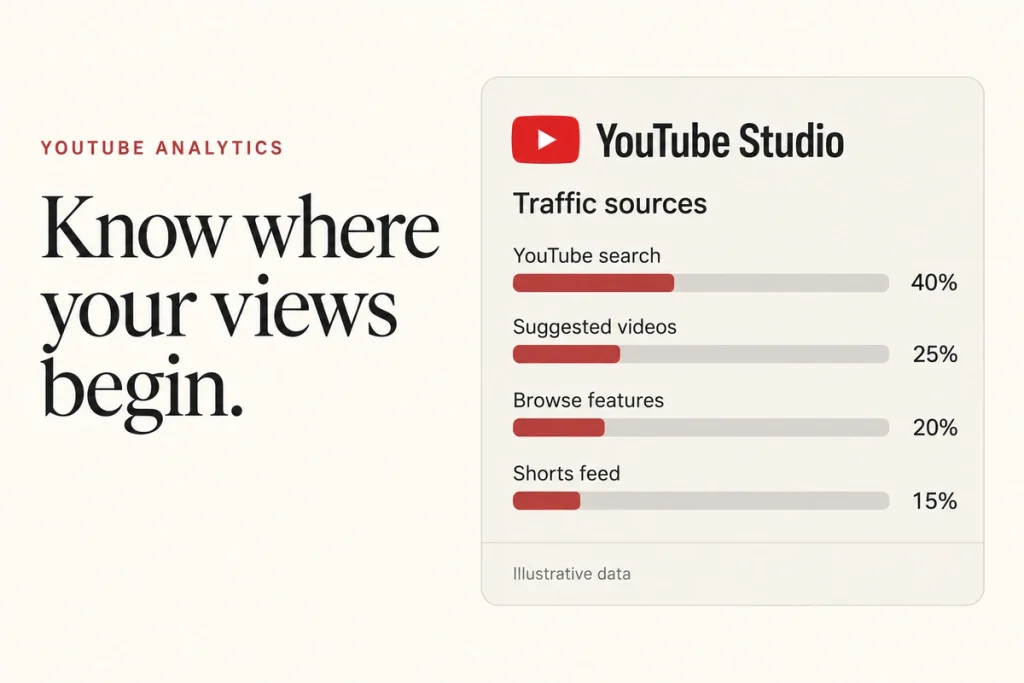
- Traffic sources. Search, Browse, Suggested and Shorts feed. Tells you which shelf is working
- Average view duration and retention. Are people staying?
- Click-through rate on impressions. Are titles and thumbnails working?
- Subscribers gained per video. Which topics build an audience? See how to increase YouTube subscribers
- Business outcome. Clicks to your site, WhatsApp chats and leads that mention a video. Add UTM tags to description links
Mistakes Indian businesses make on YouTube
Uploading TV ads and event photos. A 30-second brand film has no search demand and nobody recommends it.
Talking about the company instead of the buyer’s problem. “About Us” videos get few views. “How to choose…” videos get many.
Long intros. Logo animations and “welcome to our channel” cost viewers in the first 30 seconds, which YouTube Analytics measures directly.
Ignoring Hindi and regional languages. Many Indian buyers search in Hindi, Tamil, Marathi or Hinglish. A Hindi version of your top video can open a new audience; see regional language ads.
Giving up after ten videos. Search-shelf videos often take months to find their audience.
When YouTube is the wrong channel
If your buyer makes a quick, low-value, impulse purchase, Instagram Reels or Meta ads may do more for less effort. If nobody on the team can appear on camera or record a clear screen walkthrough, start with paid ads using creator content. And if you need leads this month, YouTube organic won’t deliver them. Ads might.
YouTube marketing checklist
- Channel name, handle, banner and About section set up for buyers
- 20 buyer questions listed from sales conversations
- First 12 Search videos planned with titles that match real queries
- 3 Browse videos with a strong story or visual angle
- Shorts cut from the best moments of long videos
- Playlists grouped by buyer question or product
- End screens on every long video pointing to the next step
- Descriptions written with one or two main keywords and a UTM-tagged link
- Monthly review of traffic sources, retention and leads
- Ads plan for remarketing and launches
Questions we get asked
Is YouTube marketing worth it for small businesses?
Yes, if your buyers research before purchasing. A local clinic, coaching institute or interior designer can win with 20 good answer videos. It’s less useful for impulse products.
How long does YouTube take to work?
Search videos can take three to six months to gather steady views. Ads work from day one.
Do we need expensive equipment?
No. A recent phone, a clip-on microphone and daylight are enough for most business videos. Sound quality matters more than camera quality.
Should we make long videos or Shorts?
Both. Shorts test topics and bring new viewers; long videos build trust and rank in search.
Final thoughts
YouTube rewards businesses that answer questions well and consistently. Build for the three shelves, keep a sales library, and measure leads, not just views. It fits alongside your Instagram marketing strategy: Instagram for frequency and familiarity, YouTube for depth and search.
Want help planning your first 20 videos or setting up YouTube ads? You can reach out to us on whatsapp at +91 7738844851 .
More in Blog
Keep reading
All articles →
Ready to talk about your growth?
Tell us what's stuck and we'll tell you what we'd do first. Free, 30 minutes, no pitch.